


Written by: Dr. Ashutosh Shah, M.Ch., DNB (Plastic Surgery)
Director, Elegance Clinic, Surat
Dr. Ashutosh Shah is a Board-Certified Plastic, Cosmetic & Reconstructive Surgeon with more than 22 years of surgical experience. He has completed M.Ch. in Plastic Surgery from The M.S. University of Baroda and DNB in Plastic Surgery, with additional training in microvascular and cosmetic surgery. His approach to facial aesthetics focuses on understanding individual facial anatomy, muscle movement and skin changes before recommending treatment.
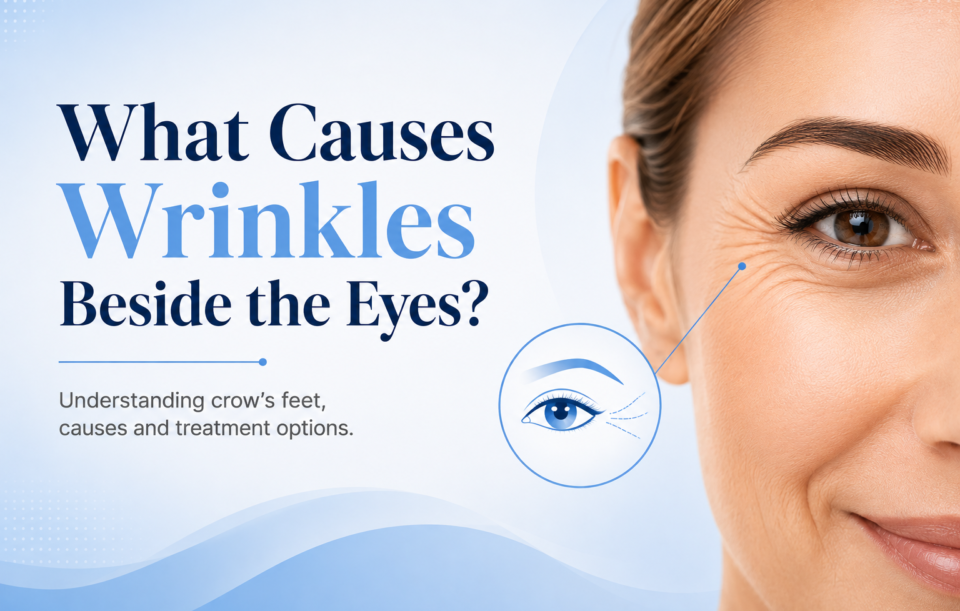
Wrinkles beside the eyes are one of the earliest facial changes many people notice. These fine lines often become more visible while smiling, squinting or making other facial expressions. Because the skin around the eyes is delicate and constantly moving, this area can gradually develop lines even when the rest of the face still appears relatively smooth.
These wrinkles are commonly called crow’s feet. They are often related to repeated movement of the muscles around the eyes, but ageing, sun exposure, changes in skin elasticity and other factors can also contribute.
The good news is that having wrinkles beside the eyes does not automatically mean that the skin is unhealthy or that treatment is necessary. Understanding why they appear is the first step in deciding whether skincare, lifestyle changes, or an aesthetic treatment may be appropriate.
Why Do Wrinkles Develop Beside the Eyes?
The skin around the eyes is thinner and more delicate than many other areas of the face. It also moves repeatedly throughout the day as a person smiles, squints, laughs or reacts emotionally.
Over time, repeated muscle contraction can create dynamic wrinkles—lines that are initially noticeable mainly during facial expressions. With natural ageing, these lines may gradually become visible even when the face is relaxed.
Several factors can contribute to wrinkles around the eyes:
Repeated Facial Expressions
Everyday expressions activate the muscles surrounding the eyes. Frequent contraction can gradually make expression lines more noticeable.
Natural Ageing
As skin ages, collagen and elastin production change, while skin may gradually lose some firmness and elasticity. These changes can make fine lines easier to see.
Sun Exposure
Ultraviolet radiation can contribute to premature skin ageing. Regular unprotected sun exposure may accelerate the development of fine lines and changes in skin texture.
Skin Quality and Lifestyle
Genetics, smoking, sleep patterns, nutrition and general skincare habits can also influence how quickly facial lines become visible.
Because several factors can contribute at the same time, treatment should be based on the individual’s specific concern rather than simply treating every wrinkle in the same way.
Are Wrinkles Beside the Eyes the Same as Crow’s Feet?
The terms are often used interchangeably. Crow’s feet generally refers to fine lines that extend outward from the corners of the eyes, particularly when smiling or squinting.
These lines are usually considered dynamic wrinkles when they are primarily caused by muscle movement. However, lines around the eyes can also be influenced by skin laxity, volume changes and surface ageing.
This distinction matters because different causes may respond to different approaches.
What Can Help Reduce Wrinkles Beside the Eyes?
Treatment depends on whether the main concern is muscle activity, skin quality, or a combination of factors.
Botox for Dynamic Crow’s Feet
Botulinum toxin is commonly used to temporarily reduce the activity of specific facial muscles responsible for dynamic wrinkles. When appropriately administered around the outer eye area, it can soften the appearance of crow’s feet while aiming to preserve natural facial expression.
Elegance Clinic’s Botox & Fillers service specifically includes crow’s feet among its facial-aesthetic treatment options.
Skincare and Sun Protection
A consistent skincare routine can support overall skin quality. Daily broad-spectrum sunscreen is particularly important because UV exposure contributes to premature skin ageing.
Moisturising products and appropriate active ingredients may also help improve the appearance and texture of fine lines, although results vary according to the product and individual skin condition.
Other Facial Rejuvenation Options
If wrinkles around the eyes are associated with broader skin ageing, pigmentation, volume changes or loss of firmness, a clinician may consider other treatments as part of an individualized plan.
These may include skin-rejuvenation procedures, laser-based treatments, dermal fillers in appropriate areas, or a broader facial-aesthetic approach. The correct treatment should be selected after assessing the skin, facial structure and underlying cause.
When Should You Consider Treatment?
Treatment is a personal choice. Some people may want to address wrinkles only when they become visible at rest, while others may prefer to manage early expression lines.
A consultation can be useful when:
- Fine lines around the eyes are becoming more noticeable.
- Crow’s feet are visible even when the face is relaxed.
- You want to understand whether muscle movement or skin ageing is the main cause.
- Skincare alone has not addressed the concern.
- You are considering Botox or another aesthetic treatment but are unsure which option is appropriate.
The goal should not necessarily be to remove every line. A well-planned aesthetic treatment aims to create a refreshed appearance while maintaining the individual’s natural facial expressions.
What Should You Expect From Treatment?
The experience depends on the treatment selected. For Botox, a clinician first assesses facial movement and the pattern of wrinkles before determining whether treatment is appropriate.
The amount and placement of botulinum toxin should be individualized because the muscles around the eyes are involved in natural facial expression. Over-treatment can affect expression, while insufficient or inappropriate placement may not provide the desired effect.
Botox results are temporary and gradually wear off as muscle activity returns. The exact duration varies between individuals and depends on factors such as the treatment area, dose, metabolism and muscle activity.
For treatments other than Botox, recovery and expected results vary considerably. A proper consultation helps establish realistic expectations before treatment.
Is Prevention Possible?
Wrinkles cannot always be completely prevented because facial movement and natural ageing are normal processes. However, several habits can support healthier-looking skin.
Consider:
- Using sunscreen consistently.
- Wearing sunglasses in bright sunlight to reduce squinting.
- Avoiding smoking.
- Maintaining a consistent skincare routine.
- Keeping the skin adequately moisturised.
- Following a healthy lifestyle.
- Avoiding unnecessary aggressive treatments.
Prevention does not mean stopping normal facial expressions. Smiling and other expressions are a natural part of how the face communicates.
Conclusion
Wrinkles beside the eyes are a common part of facial ageing and are often influenced by repeated facial movement, changes in skin elasticity and environmental factors such as UV exposure. When these lines become more noticeable, understanding their underlying cause helps determine whether treatment is actually needed.
For dynamic crow’s feet, Botox may be one option, while skincare or other aesthetic treatments may be more appropriate for concerns related to skin quality or broader facial ageing. The most suitable approach depends on individual facial anatomy, skin condition and aesthetic goals.
Personalized Care at Elegance Clinic
If wrinkles around the eyes are becoming a concern, an individualized assessment can help distinguish between expression-related lines and changes in skin quality. At Elegance Clinic, Dr. Ashutosh Shah evaluates facial movement, proportions and wrinkle patterns before discussing appropriate options. Patients interested in understanding available facial treatments can explore the clinic’s Botox & Fillers treatments or learn about broader Face Makeover options that may address multiple signs of facial ageing. If you would like to discuss your specific concern and understand which approach may suit you, you can book a consultation with the clinic.
Frequently Asked Questions
They are commonly caused by repeated facial expressions, ageing, and sun exposure.
Yes. The fine lines at the outer corners of the eyes are commonly called crow’s feet.
Yes, Botox may temporarily soften dynamic crow’s feet by reducing targeted muscle activity.
Skincare can improve hydration and skin quality, but deeper wrinkles may need other treatments.
Regular sunscreen, sunglasses, healthy skincare habits, and avoiding smoking can help.


Category
Latest From Blog
Small Black Warts on Face and Neck: Removal and Recurrence
Can Facial Ageing Be Treated Without Surgery?
Red Veins On The Face: What Causes Them And Which Vascular Laser Fits