




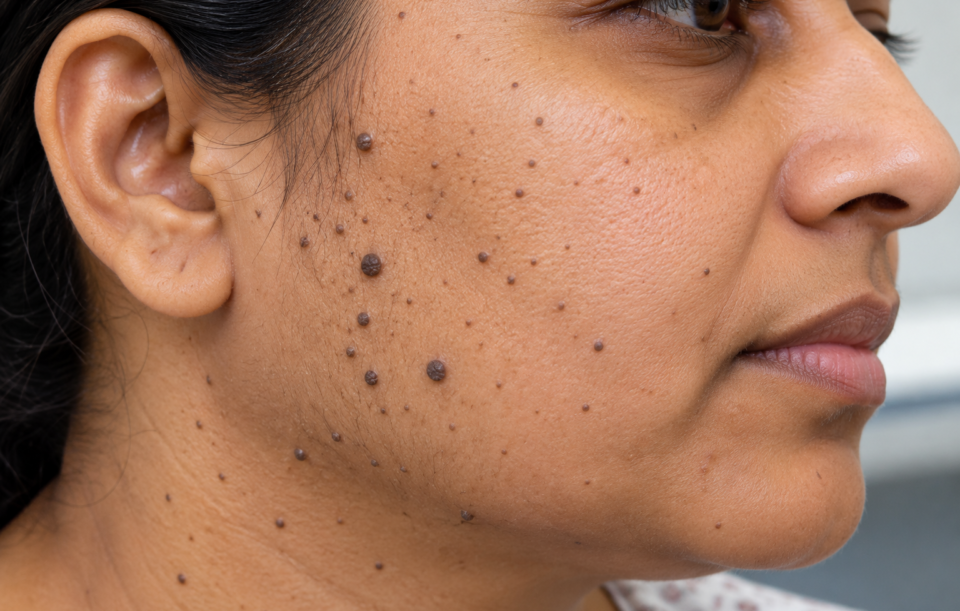
Small black raised spots on the cheeks, eyelids and neck of Indian adults are often dermatosis papulosa nigra (DPN), a harmless skin growth rather than a viral wart. Depending on the diagnosis, a dermatologist may remove them using radiofrequency cautery, electrocautery or a suitable laser. Small treated areas often heal over several days to around two weeks, depending on the method and skin response. Treated spots may not return, but new ones can develop with age.
What are these small black bumps, and are they warts?
Small, dark, slightly raised bumps on the cheeks, temples, eyelids or neck are commonly called black warts. However, this everyday term does not identify the exact growth. One common possibility is dermatosis papulosa nigra, or DPN.
DPN usually appears as multiple small, smooth, brown-to-black bumps. It is particularly common in people with darker skin tones and often becomes more noticeable with age. These growths are generally benign and are not caused by a viral infection.
Other conditions can look similar, including viral warts, skin tags, moles and seborrhoeic keratoses. The removal method depends on the type, size, depth and location of the growth. A dark spot on an eyelid or an unfamiliar lesion should not be treated simply because it resembles a harmless growth.
A dermatologist can examine the spots and decide whether treatment is appropriate. If a lesion is suspicious, diagnosis should come before cosmetic removal.
How can a dermatologist tell DPN from other growths?
The appearance and distribution of the bumps can provide clues, but visual inspection alone may not always establish the diagnosis.
| Growth | Typical appearance | Contagious? | Possible removal approach | Recurrence or new growths |
|---|---|---|---|---|
| Dermatosis papulosa nigra (DPN) | Multiple small, smooth, dark raised spots | No | Carefully selected cautery or laser-based methods | New DPN spots may appear with age |
| Viral wart | Rough or firm growth; appearance varies by site | Can spread through viral transmission | Treatment may include cryotherapy, cautery or other wart-specific options | Warts can persist or recur |
| Skin tag | Soft, flesh-coloured or darker growth, sometimes on a narrow stalk | No | Snip removal or cautery when appropriate | New skin tags can develop |
| Mole | Flat or raised pigmented spot with variable features | No | Depends on diagnosis; suspicious lesions may need biopsy or surgical removal | Some remain stable; others change and require assessment |
| Seborrhoeic keratosis | Waxy, rough or “stuck-on” appearing growth, sometimes dark | No | Cryotherapy, curettage or other suitable methods | Additional growths may develop |
This table is a general guide, not a self-diagnosis tool. Different conditions may overlap in appearance, and a growth that changes rapidly, bleeds, ulcerates or looks different from the others needs medical assessment.
How are small black bumps removed?
Treatment is selected according to the diagnosis, number of spots, size, skin tone, location and the person’s history of pigmentation or scarring. The aim is to remove the unwanted growth while limiting injury to the surrounding skin.
Radiofrequency cautery
Radiofrequency devices use controlled energy to remove or treat selected superficial growths. A dermatologist may choose this approach for suitable DPN spots. The area is cleaned, and local anaesthetic may be used depending on the treatment plan and sensitivity.
After treatment, tiny crusts can form. These should be allowed to fall away naturally rather than picked. The depth and settings must be appropriate because excessive injury can increase the risk of marks or scars.
Electrocautery
Electrocautery uses heat to destroy or remove selected tissue. It may be suitable for certain superficial benign growths. The clinician controls the treatment area and depth, taking extra care around delicate sites such as the eyelids.
Electrocautery is not automatically the best option for every dark bump. The diagnosis must be clear, and the treatment must be tailored to the lesion.
Laser treatment
Laser treatment may be considered for selected pigmented or raised lesions when the diagnosis and device are appropriate. The term laser wart treatment is often used broadly, but not every dark bump is a viral wart, and different lesions may require different treatment methods.
Laser choice and settings matter, especially in brown or darker skin. Heat or inflammation can trigger post-inflammatory hyperpigmentation, while excessive injury can cause hypopigmentation, scarring or textural changes. A consultation should cover the likely benefits, limitations, alternatives and risks before treatment.
Other methods
Some growths are better managed with snip removal, curettage, cryotherapy, or surgical removal. If a mole or another pigmented lesion looks suspicious, the clinician may recommend a biopsy or a method that allows tissue examination instead of cosmetic destruction.
Do not try to remove an undiagnosed dark spot at home with acids, cutting tools or other harsh products.
Which removal method suits which size or location?
There is no single method that is best for every patient. A small, superficial, confirmed DPN spot may be suitable for a carefully controlled procedure. A larger, thicker or uncertain lesion may require a different approach or further evaluation.
The eyelids need particular care because the skin is delicate and the eyes are nearby. Treatment around this area should only be performed by a qualified clinician with appropriate protection and technique.
Before treatment, discuss:
- Whether the diagnosis is certain
- Which method is recommended and why
- Whether local anaesthetic is needed
- The possibility of temporary redness or crusting
- The risk of lighter or darker marks
- The expected healing period
- Whether more than one session may be needed
- What to do if a spot changes after treatment
The number of spots that can safely be treated in one sitting depends on the area, the procedure, the patient’s skin response and the clinician’s plan. There is no universal number that applies to everyone.
What does healing look like in the first 10 days?
Healing varies with the treatment method, lesion depth, body site and individual skin response. A small treated spot may form a fine crust, with the surrounding skin temporarily pink, red or mildly tender.
| Time after treatment | Possible appearance | General care |
|---|---|---|
| Day 1 | Mild redness, sensitivity or tiny treated areas | Follow the clinic’s wound-care instructions; keep the area clean |
| Days 2-3 | Small crusts may become more visible | Do not scratch, rub or pick the treated spots |
| Days 4-7 | Crusts may begin to loosen naturally | Avoid friction and use only recommended products |
| Days 8-10 | Many small areas may be closing or healing, though some take longer | Continue gentle care and sun protection as advised |
| After 10 days | Residual pinkness or pigment changes may remain | Attend follow-up if healing is delayed or the area looks concerning |
These are approximate stages, not a guaranteed timetable. Some areas heal sooner, while deeper treatment or sensitive sites may take longer. Do not pull off crusts to speed up healing; doing so can increase the risk of scarring or pigmentation changes.
Contact the treating clinic if pain, swelling or redness is worsening, if there is pus, or if the area is not healing as expected. Follow any specific instructions given for eyelid or facial treatment.
Why do new spots keep appearing after removal?
Removing a DPN growth treats that individual spot. It does not prevent other DPN growths from appearing in nearby areas later.
DPN is associated with skin of colour and commonly becomes more noticeable with age. Family tendency may also play a role. Because new spots can develop over time, some people choose periodic touch-up treatment after a clinician confirms that the new growths are benign.
This is different from saying that every treated spot will return. A successfully removed growth may remain absent, while new growths form elsewhere. If a treated spot reappears, changes in appearance or behaves differently from the others, have it examined before considering repeat removal.
Will removal leave white marks or dark marks?
Pigment changes are an important consideration, particularly in brown skin. After inflammation or injury, some people develop post-inflammatory hyperpigmentation, which appears as a darker mark. Others may develop hypopigmentation, a lighter area where pigment has been reduced.
The risk depends on the lesion, treatment depth, device settings, aftercare and the person’s tendency to pigment or scar. No method can guarantee a mark-free result.
To reduce avoidable risk:
- Choose a clinician experienced in treating skin of colour.
- Confirm the diagnosis before removal.
- Follow wound-care instructions.
- Avoid picking crusts or applying unapproved acids and bleaching products.
- Protect healing skin from sun exposure as advised.
- Attend follow-up if pigment changes or delayed healing concern you.
Ask about realistic outcomes for your skin type before agreeing to treatment.
Is it safe to remove black bumps before a wedding?
Removal may be possible before an event, but timing matters. Freshly treated spots can show redness, crusting or temporary pigment changes before they settle. Healing time varies, and a quick procedure does not mean the skin will look fully settled the next day.
If you have an upcoming wedding or other important event, tell the dermatologist the date during the consultation. They can assess whether treatment should be done early enough for healing or whether it is safer to postpone. Avoid trying an unfamiliar home remedy or booking an aggressive treatment at the last minute.
Where can you get warts removal near varachha?
If you are considering warts removal near varachha, begin with a skin examination rather than assuming every dark raised spot is a wart. A clinician can distinguish likely DPN from viral warts, moles, skin tags and other growths, then discuss suitable removal options.
Bring a list of any products you have applied and mention previous scars, pigment changes, allergies or a tendency to develop raised scars. Ask about the expected healing period, aftercare, the risk of lighter or darker marks and whether a suspicious lesion needs further testing before removal.
When should a dark bump be checked before removal?
Arrange a medical assessment before cosmetic treatment if a spot:
- Is new and changing quickly
- Has irregular colour or borders
- Bleeds without an obvious injury
- Develops an ulcer or fails to heal
- Becomes persistently painful or itchy
- Looks distinctly different from your other spots
- Changes in size, shape or colour
These features do not automatically mean cancer, but they should not be ignored. A suspicious lesion may need examination and, when indicated, biopsy. Avoid laser or cautery treatment of an uncertain pigmented lesion before the diagnosis is established.
Frequently asked questions
DPN is not contagious and does not spread from person to person. Viral warts, however, are caused by viruses and can spread through direct contact or contaminated surfaces. Because different growths may look similar, have the spots assessed before choosing a treatment.
No. Cutting, tying with thread, scraping or applying acids and other unapproved remedies can cause bleeding, infection, burns, scarring and pigment changes. They may also delay diagnosis of a growth that needs medical attention. A clinician can identify the lesion and discuss safer options.
White marks are possible if treatment damages pigment-producing cells, and darker marks can also occur after inflammation. The risk depends on the lesion, method, treatment depth and skin response. Ask the clinician how they reduce pigment-change risk and what results are realistic for your skin tone.
The number depends on the size and location of the growths, the technique, the amount of skin treated and your individual healing risk. There is no fixed number suitable for everyone. The clinician should decide how many can be treated safely and whether staged sessions would be preferable.
Treatment may be possible, but crusting, redness and temporary pigment changes can remain during healing. Tell the clinician the event date before scheduling. They can advise whether there is enough time for recovery or whether treatment should be postponed to avoid a visible healing phase.
No. Skin tags are usually soft, flesh-coloured or darker growths that may hang from a narrow stalk, while DPN commonly appears as multiple small, smooth, dark bumps. They are different conditions, and the appropriate removal method depends on the diagnosis and location.
Small black bumps on the face and neck may be DPN, but viral warts, moles and other benign growths can look similar. A dermatologist can examine them and recommend treatment only after identifying the likely cause. Do not attempt home removal of an undiagnosed dark spot.
Treatment depends on what the bumps are. Confirmed DPN may be treated with carefully selected cautery or laser-based methods, while other growths may need different procedures. Seek an assessment first, especially for lesions that change, bleed or look different from the surrounding spots.
A treated DPN spot may remain absent after successful removal, but new spots can appear with age. This is why some people choose later touch-ups. A spot that seems to return or changes in appearance should be examined before repeat treatment.
Book a skin assessment
A proper diagnosis is the first step toward safe skin wart removal. The best treatment depends on whether the growth is DPN, a viral wart, a skin tag, a mole or another condition. Discuss the expected healing time, pigmentation risks and follow-up plan before proceeding.
For more information about available procedures, read about laser for wart and mole removal, explore cyst and mole removal, and learn about cheek mole removal options. If you are unsure what a growth is or which treatment may be suitable, book a skin check before attempting removal.


Category
Latest From Blog
Small Black Warts on Face and Neck: Removal and Recurrence
Can Facial Ageing Be Treated Without Surgery?
Red Veins On The Face: What Causes Them And Which Vascular Laser Fits