




Written by Dr. Ashutosh Shah, M.Ch., DNB (Plastic Surgery)
Director, Elegance Clinic, Surat
Dr. Ashutosh Shah is a Board-Certified Plastic, Cosmetic and Reconstructive Surgeon with more than 22 years of surgical experience and expertise in cosmetic and reconstructive procedures.
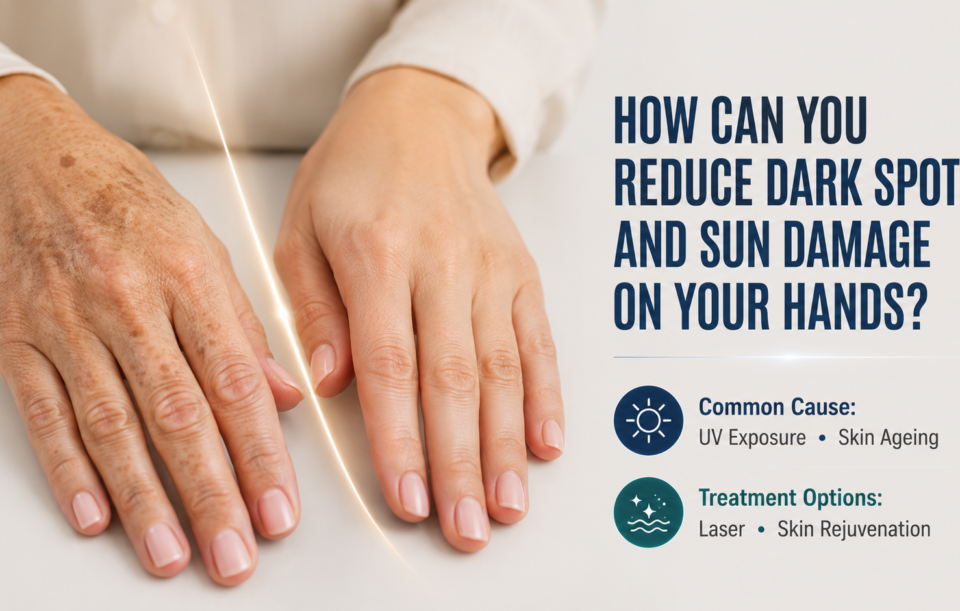
The backs of the hands are among the areas that receive repeated everyday sun exposure, yet they are often overlooked in skincare routines. Over time, ultraviolet exposure can contribute to flat brown spots, uneven pigmentation, fine lines, rough texture, and a thinner-looking appearance. These changes can make the hands appear older even when the face and other visible areas are receiving regular care.
Sun-damaged hands treatment should begin by identifying exactly what has changed. A flat brown spot may be a sunspot, but not every dark mark has the same cause. Some pigmentation can follow irritation or inflammation, while certain rough or changing lesions require medical assessment before cosmetic treatment is considered.
Once the skin has been properly assessed, treatment can focus on the patient’s main concern. Some people mainly want to reduce pigmentation. Others are more bothered by a combination of spots, fine lines, rough texture, and visible veins or thin skin. Depending on the condition, options may include topical skincare, chemical peels, pigment-focused laser or light procedures, or a combination approach.
An important part of treatment is preventing further ultraviolet exposure. Without ongoing sun protection, existing pigmentation may become darker and new spots can develop.
Key Takeaways
- Repeated sun exposure can cause pigmentation, roughness, wrinkles, and other visible changes on the hands.
- Dark spots should be assessed before cosmetic treatment because not every pigmented mark is a simple sunspot.
- Treatment depends on the type of pigmentation, skin condition, and overall appearance of the hands.
- Topical treatments may help selected pigmentation problems.
- Chemical peels and certain laser or light-based procedures may be considered for appropriate patients.
- Sun protection remains important after treatment to reduce the chance of new or recurring pigmentation.
- Individual skin type and healing response influence treatment selection and results.
What Causes Dark Spots on the Hands?
Dark spots develop when pigment production becomes uneven or increases in response to repeated environmental exposure or skin changes. On the hands, long-term ultraviolet exposure is a common contributor because the backs of the hands are frequently exposed during daily activities.
Sun-related pigmentation is often called a solar lentigo or sunspot. These marks are usually flat and range from light brown to darker brown.
Other causes of pigmentation can include:
- Previous skin irritation
- Inflammation or injury
- Certain medications
- Hormonal influences
- Natural skin ageing
- Other pigmentation disorders
The appearance, timing, and behaviour of the spot matter. A newly appearing or changing mark should not automatically be assumed to be caused by sunlight.
Solar lentigo: A flat area of increased pigmentation that commonly develops on skin receiving repeated sun exposure.
How Can You Tell If a Dark Spot Is Sun Damage?
A typical sunspot is generally flat, relatively uniform in colour, and located on an area that receives regular sunlight. However, appearance alone cannot always establish the cause.
A professional assessment becomes more important when a spot:
- Changes noticeably
- Becomes irregular
- Has several different colours
- Bleeds
- Develops a persistent crust
- Grows quickly
- Becomes painful
- Looks very different from surrounding spots
Some skin cancers can resemble benign pigmented spots, which is why suspicious lesions should be examined before cosmetic treatment.
This is particularly important before using strong peels or energy-based treatments on an unidentified lesion.
Can Sun-Damaged Hands Be Treated Without Surgery?
Yes. Many cosmetic signs of sun damage can be managed without traditional surgery. The appropriate treatment depends on whether the main concern is pigmentation, texture, fine lines, or a combination.
Topical skincare
Certain prescription or professionally recommended topical ingredients can gradually improve selected pigmentation concerns. Treatment needs to be chosen according to skin type and the cause of the pigmentation.
Using too many strong products at once can irritate the skin and sometimes make pigmentation more noticeable.
Chemical peels
Chemical peels can improve selected signs of ageing and pigmentation on the hands. The peel strength and ingredients should be chosen according to the patient’s skin and treatment goal.
Laser or light-based treatment
Pigment-targeting laser and light procedures may reduce certain sunspots and unevenly pigmented areas. They work by delivering controlled energy to the targeted pigment or affected skin.
These procedures are not suitable for every dark spot, and incorrect treatment can cause unwanted pigmentation or irritation.
Which Treatment Is Suitable for Different Hand Concerns?
There is no single treatment for every type of sun-damaged hand.
| Main Concern | Possible Approach | Main Goal |
|---|---|---|
| Flat brown sunspots | Pigment-focused treatment | Reduce visible pigmentation |
| Mild uneven tone | Topical care or peel | Improve colour uniformity |
| Rough texture | Skin-resurfacing approach | Smooth the surface |
| Fine lines | Rejuvenation treatment | Improve skin appearance |
| Multiple concerns | Combination plan | Address more than one change |
The treatment should be selected after examining the skin rather than based only on photographs or a single visible spot.
Can Sun Protection Prevent More Hand Damage?
Yes. Daily protection is one of the most important parts of managing sun-damaged hands. Continued ultraviolet exposure can contribute to further pigmentation and premature skin ageing and can also increase the chance that treated spots will return or new spots will develop.
Hand protection can include:
- Broad-spectrum sunscreen
- Reapplication during prolonged outdoor exposure
- Protective clothing or gloves for specific activities
- Reducing unnecessary direct sun exposure
Hands are easy to forget when applying sunscreen. The backs of the hands should be included as part of the normal sun-protection routine.
Why Is Hand Skin Different From Facial Skin?
The hands have their own ageing pattern. The skin may become thinner with age, while the tendons and veins underneath can become more noticeable. Sun exposure also accumulates over many years.
This means that treating pigmentation alone may not address every concern.
Someone may have clear-looking pigmentation but still notice:
- Fine lines
- Dry texture
- Reduced skin softness
- Prominent veins
- More visible tendons
- Loss of youthful fullness
A complete assessment helps identify which features actually bother the patient.
Can Treatment Remove Sun Damage Permanently?
Treatment can significantly improve the appearance of selected sunspots and other signs of photoaging, but it cannot erase the history of sun exposure or prevent future skin changes.
Pigmentation may return or new spots may develop if the skin continues to receive substantial ultraviolet exposure.
This is why the result should be viewed as improvement and maintenance, rather than a one-time permanent reset.
The skin continues to age naturally, so ongoing protection and appropriate skincare remain important.
What Can Happen After Treatment?
The recovery period depends on the chosen treatment.
After a mild topical or skincare approach, there may be little visible downtime.
After a chemical peel or light-based procedure, temporary redness, sensitivity, dryness, darkening, or peeling may occur depending on the technique and individual skin response. More intensive treatments generally require more recovery.
Laser or light treatment can also produce temporary swelling or pigment changes, and inappropriate treatment can increase the risk of scarring or unwanted pigmentation.
Patients should follow the specific aftercare plan provided by their treating professional.
Can Dark Spots Be Prevented From Coming Back?
Recurrence cannot always be prevented, but ongoing sun protection can reduce the chance of developing additional sun-related pigmentation.
It is also useful to identify behaviours that increase repeated exposure, such as outdoor work, frequent driving, sports, or long periods spent in direct sunlight.
A treatment plan is more successful when cosmetic treatment and prevention are considered together.
When Should You See a Specialist?
A consultation is useful when pigmentation is persistent, spreading, cosmetically bothersome, or accompanied by changes in the skin’s texture or appearance.
Professional assessment is especially important before cosmetic treatment when a spot is:
- New
- Changing
- Asymmetrical
- Multicoloured
- Bleeding
- Crusted
- Painful
- Rapidly growing
A specialist can determine whether the mark appears suitable for cosmetic treatment or needs further medical assessment first.
About Dr. Ashutosh Shah and Elegance Clinic
Dr. Ashutosh Shah, M.Ch., DNB (Plastic Surgery) is a Board-Certified Plastic, Cosmetic and Reconstructive Surgeon and Director of Elegance Clinic, Surat. He has more than 22 years of surgical experience in cosmetic and reconstructive procedures.
Elegance Clinic provides cosmetic surgery, plastic surgery, dermatology, hair restoration, laser treatments, and reconstructive procedures. Treatment planning is personalised according to skin condition, individual concerns, treatment suitability, and realistic expectations.
Conclusion
Dark spots on the hands are often linked to years of sun exposure, but not every pigmented area should automatically be treated as a sunspot. Proper identification comes first, particularly when a mark is new, changing, irregular, bleeding, or otherwise unusual.
Once the skin has been assessed, several approaches may be considered. Topical care can support gradual improvement in selected cases, while chemical peels and certain laser or light treatments may provide a more targeted approach to pigmentation and other signs of photoaging.
The best result usually comes from combining appropriate treatment with continued sun protection. Cosmetic treatment can reduce visible damage, but it cannot stop the skin from ageing or prevent future ultraviolet exposure from creating new changes.
If dark spots or sun-damaged skin on your hands are becoming noticeable, an individual assessment at Elegance Clinic, Surat, can help determine which treatment is appropriate for your skin and concerns.
Book a personalised consultation to discuss sun-damaged hands treatment with Dr. Ashutosh Shah.
Frequently Asked Questions
A: Yes. Depending on the skin changes, treatment may include topical care, chemical peels, or selected laser and light procedures.
A: Many sunspots can be significantly lightened, although new or recurring pigmentation can develop with continued sun exposure.
A: It may be appropriate for selected sunspots, but the lesion should be properly assessed before treatment.
A: Consistent sun protection can reduce further ultraviolet damage and help limit new pigmentation.
A: Yes. Continued sun exposure can contribute to recurrence or development of new spots.
A: No. Different skin conditions can look similar, so unusual or changing pigmentation should be assessed.
A: Seek assessment for a new, changing, bleeding, painful, crusted, or rapidly growing dark spot.


Category
Latest From Blog
Small Black Warts on Face and Neck: Removal and Recurrence
Can Facial Ageing Be Treated Without Surgery?
Red Veins On The Face: What Causes Them And Which Vascular Laser Fits