




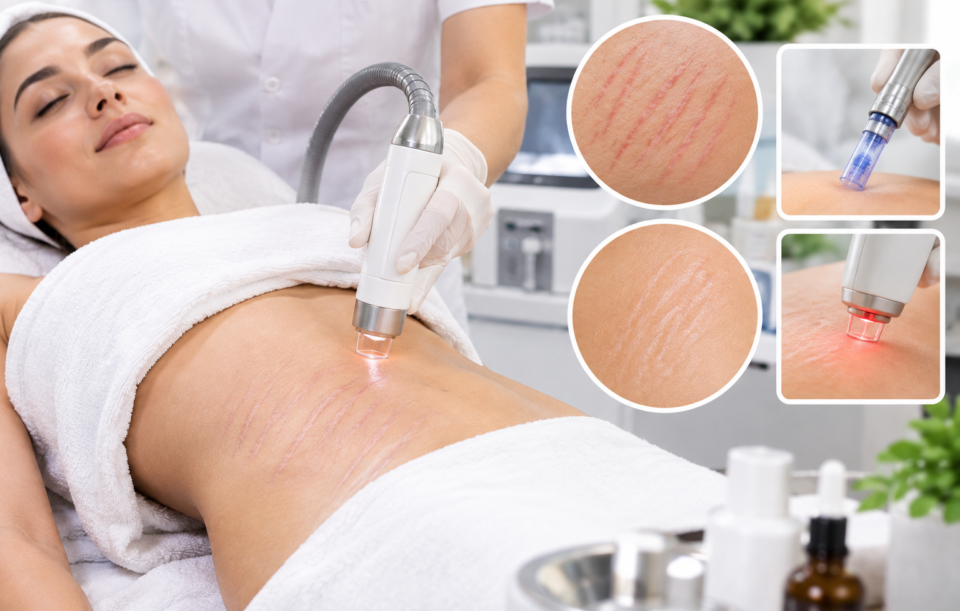
Stretch marks are common changes in the skin that can appear when the skin stretches or changes rapidly. They may develop during pregnancy, puberty, weight changes or other periods when the body changes shape. Although they are harmless, many people look for a stretch marks treatment because they want the marks to become less visible.
The most important point is to keep expectations realistic. Stretch marks can usually be improved, but treatment does not completely erase them. Newer red or purple marks generally respond better than older white marks because they still have more active blood vessels and have undergone less structural change.
What Are Stretch Marks?
Stretch marks develop when the deeper layers of the skin are stretched and the skin’s supporting structures change. At first, they may appear red, pink or purple. Over time, they can become lighter and develop a white or silvery appearance.
The stage of the stretch mark matters when deciding on treatment.
Red or Purple Stretch Marks
New red or purple stretch marks still have active blood vessels. Because of this, they can respond better to treatments aimed at improving colour and skin appearance.
Early assessment can therefore be useful if the marks have only recently appeared.
White Stretch Marks
Older white stretch marks have generally lost more of their original pigment and dermal structure. This makes them more difficult to improve.
Treatment may still make them look smoother or less noticeable, but the response is usually more limited than with newer marks.
Can Stretch Marks Be Removed Completely?
No treatment should be presented as a guaranteed way to erase stretch marks completely.
A realistic goal is visible softening of colour and texture, rather than complete disappearance.
The amount of improvement depends on factors such as:
- Whether the stretch marks are new or old
- Whether they are red, purple or white
- Their location on the body
- The condition and texture of the surrounding skin
- The treatment selected
- The number of sessions
- How the skin responds during the treatment period
Because every person’s skin responds differently, the expected result should be discussed during an individual assessment rather than promised in advance.
Laser Treatment for Stretch Marks
Laser treatment can be considered when the main concern is the colour or appearance of stretch marks.
Newer red or purple marks may respond more favourably because of their vascular component. Laser-based approaches can target aspects of colour and may help make the marks less noticeable.
However, laser treatment does not mean that the stretch mark disappears.
The objective is to improve its appearance and create a more even-looking skin surface.
For older white stretch marks, treatment can be more challenging because the underlying skin structure has already changed. The treatment approach therefore needs to be selected according to the age, colour, location and appearance of the marks.
Microneedling for Stretch Marks
Microneedling focuses more on skin texture and the appearance of the affected area.
The treatment creates controlled micro-injuries in the skin, which can stimulate the skin’s natural repair process. For stretch marks, this approach may be considered when texture is an important concern.
Microneedling does not remove the original stretch mark completely. Instead, the aim is gradual improvement in the appearance and texture of the treated area.
The number of sessions depends on the condition of the skin and the treatment plan recommended after assessment.
Colour and Texture May Need Different Approaches
One important part of stretch marks treatment is understanding that colour and texture are not exactly the same problem.
| Main concern | Treatment focus | Realistic goal |
|---|---|---|
| Red or purple colour | Treatments directed at colour and blood-vessel appearance | Make the marks less noticeable |
| Uneven texture | Treatments such as microneedling | Soften the appearance of the skin |
| Older white marks | Texture and overall skin appearance | Gradual visible improvement |
| Mixed colour and texture | Individualised treatment plan | Improve both appearance and texture |
This is why there is no single treatment that works in exactly the same way for every stretch mark.
How Many Sessions Are Needed?
There is no single session number that applies to everyone.
A treatment plan depends on:
- The age of the stretch marks
- Their colour
- Their texture
- The body area being treated
- The selected treatment
- How the skin responds
Stretch marks generally require a course of treatment rather than one session if the goal is gradual improvement.
Results should be assessed over the treatment period rather than immediately after one session.
What Improvement Is Realistic?
The most useful way to think about results is not whether the stretch marks will disappear, but how much less noticeable they may become.
A realistic result may include:
- Softer-looking texture
- Less noticeable colour
- More even-looking skin
- Reduced visual contrast between the stretch mark and surrounding skin
The result can vary significantly from one person to another.
For this reason, a clinic should avoid promising complete removal or presenting an exact improvement percentage unless that figure is supported by an appropriate assessment and evidence.
Do Creams Alone Help?
Creams and home skincare may have a role in maintaining the skin, but they should not be presented as a guaranteed way to remove established stretch marks.
Once stretch marks have developed, particularly older white marks, treatment may require procedures that specifically address colour or skin texture.
A consistent home routine can still be part of a broader treatment plan where appropriate.
Stretch Marks After Pregnancy
Pregnancy is one of the common situations in which stretch marks develop because the abdomen, breasts and other areas of the body undergo significant changes.
Post-pregnancy stretch marks may be red or purple initially and become lighter over time.
Treatment decisions should consider whether the marks are still new, their colour, their texture and the patient’s overall skin condition.
The goal remains improvement rather than complete removal.
When Is Body Contouring Surgery Considered?
Stretch marks themselves do not automatically mean that surgery is required.
However, in some cases, a person may also have significant loose or excess skin after pregnancy or major weight changes. In that situation, body contouring surgery may address excess skin and the areas containing some stretch marks.
Surgery should therefore be considered in the context of the overall body contouring concern rather than simply as a treatment for stretch marks.
An assessment can help determine whether a non-surgical treatment plan is appropriate or whether another approach needs to be discussed.
Stretch Marks Treatment: Expectation Table
| Stretch mark stage and site | Suitable treatment approach | Session plan | Realistic improvement | Maintenance |
|---|---|---|---|---|
| New red or purple marks | Colour-focused treatment such as laser, when appropriate | Treatment course based on assessment | Improvement in colour and visibility | Follow the recommended skin-care plan |
| Older white marks | Texture-focused treatment such as microneedling, when appropriate | Multiple sessions may be required | Gradual softening of texture and appearance | Individual maintenance plan |
| Marks with colour and texture concerns | Combination or individualised approach | Determined after assessment | Improvement in both appearance and texture | Ongoing skin care as advised |
| Post-pregnancy marks with excess loose skin | Assessment for non-surgical or body-contouring options | Depends on the overall concern | Improvement depends on the selected approach | Follow-up based on treatment |
What Should You Expect During a Consultation?
A proper consultation should begin with an assessment of the stretch marks rather than immediately selecting a procedure.
The clinician can assess:
- Whether the marks are new or old
- Whether they are red, purple or white
- Their texture
- Their location
- The surrounding skin
- Whether colour or texture is the main concern
- Whether a non-surgical treatment is appropriate
- Whether body contouring needs to be discussed because of excess loose skin
This assessment helps create a treatment plan based on the actual appearance of the skin.
Stretch marks treatment can improve the appearance of stretch marks, but it cannot promise to erase them completely.
New red or purple marks generally respond better because they still have active blood vessels. Older white marks are more difficult to treat because they have undergone greater changes in pigment and dermal structure.
Laser treatment may be considered when colour is an important concern, while microneedling can be used to address aspects of texture. A treatment course may require multiple sessions, and results should be judged over time.
The most realistic goal is visible softening of colour and texture, not complete disappearance. For people who also have substantial excess or loose skin, body contouring surgery may need to be discussed as a separate option.
A personalised assessment is therefore important before deciding which approach is appropriate.
Frequently Asked Questions
No. Treatment can improve their colour and texture, but complete removal should not be promised.
Generally, newer red or purple marks respond better than older white marks because they still have active blood vessels.
The number varies according to the age, colour, texture and location of the stretch marks and the treatment selected.
Creams may support skin care, but established stretch marks usually require a more targeted treatment approach for visible improvement.
Treatment can improve their appearance and texture, but older white marks are generally more difficult to improve than newer red or purple marks.
If stretch marks occur alongside significant loose or excess skin, body contouring surgery may be discussed as part of the overall treatment assessment.


Category
Latest From Blog
Small Black Warts on Face and Neck: Removal and Recurrence
Can Facial Ageing Be Treated Without Surgery?
Red Veins On The Face: What Causes Them And Which Vascular Laser Fits