



Written by Dr. Ashutosh Shah, M.Ch., DNB (Plastic Surgery)
Director, Elegance Clinic, Surat
Dr. Ashutosh Shah is a Board-Certified Plastic, Cosmetic & Reconstructive Surgeon with more than 22 years of surgical experience, including expertise in facial aesthetics and cosmetic procedures.
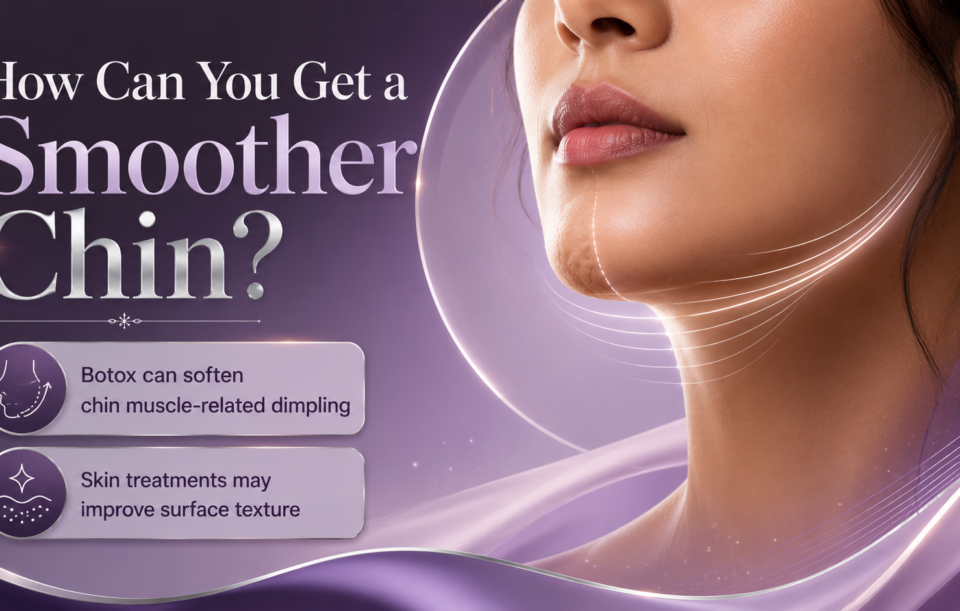
A smooth chin treatment depends on what is causing the chin to look dimpled, wrinkled, uneven, or textured. For some people, repeated contraction of the chin muscle creates a dimpled or “pebbled” appearance. In these cases, Botox for chin concerns may help by temporarily relaxing the muscle and reducing visible dimpling. The American Society of Plastic Surgeons specifically lists botulinum toxin as an option for improving chin skin dimpling.
However, not every uneven chin is caused by muscle activity. Fine lines, skin laxity, volume loss, acne scarring, pigmentation, or changes in the underlying chin structure may require a different approach. Depending on the cause, options can include botulinum toxin, dermal fillers, laser or resurfacing treatments, skin-tightening procedures, or surgical correction.
Understanding the cause is therefore the first step in choosing an appropriate treatment. This guide explains the common reasons for an uneven or wrinkled chin, how dimpled chin treatment works, when Botox may help, what results to expect, possible risks, recovery, and other treatment options.
Key Takeaways
- A smooth chin treatment should be selected according to the cause of the dimpling, wrinkles, or uneven texture.
- Botox may improve a dimpled or “pebbled” chin caused by excessive muscle contraction.
- Botox works by temporarily reducing nerve signals to the treated muscle.
- Deep wrinkles or volume loss may require treatments such as dermal fillers or skin-resurfacing procedures.
- Botox results are temporary and commonly last around three to four months.
- A consultation with a qualified medical professional helps determine the most appropriate treatment.
What Causes a Dimpled or Wrinkled Chin?
A dimpled or wrinkled chin can result from repeated muscle contraction, skin ageing, sun exposure, reduced skin elasticity, volume changes, or the natural shape of the chin. When the mentalis muscle contracts strongly, it can create a characteristic pebbled or dimpled appearance. Other causes may require treatments aimed at the skin or underlying volume rather than the muscle.
The appearance may become more noticeable when talking, smiling, or moving the lower lip.
Mentalis muscle: A small muscle in the chin that helps control movement of the lower lip and chin area. Strong or repeated contraction can contribute to chin dimpling.
Common concerns include:
- Dimpled or pebbled chin
- Fine horizontal or vertical lines
- Chin wrinkles
- Uneven skin texture
- Loss of firmness
- Mild skin laxity
- Changes associated with ageing
- Acne scars or other surface irregularities
The distinction matters because Botox is primarily useful for muscle-related lines and dimpling, while treatments such as fillers or resurfacing may be more appropriate for structural or skin-quality concerns.
How Does Botox Smooth the Chin?
Botox can smooth a dimpled chin by temporarily reducing the activity of the muscles responsible for repeated contraction. When the targeted muscle contracts less strongly, the overlying skin may appear smoother. This approach is particularly relevant to a “pebbled” or orange-peel-like chin caused by muscle activity.
Botulinum toxin works by blocking nerve signals to the injected muscle. The muscle then contracts less strongly for a temporary period.
The treatment does not physically remove excess skin or permanently change the chin’s structure.
Dynamic wrinkle: A line or wrinkle that becomes more visible when an underlying facial muscle contracts.
This is why a medical assessment is important before choosing Botox for chin concerns. A practitioner needs to determine whether muscle activity is actually responsible for the appearance.
Who Is a Good Candidate for Dimpled Chin Treatment?
A good candidate for Botox treatment generally has visible chin dimpling or dynamic lines associated with muscle activity and realistic expectations about the degree and duration of improvement. The treatment may be less effective when the primary problem is significant skin laxity, deep static wrinkles, major volume loss, or structural chin changes.
During consultation, the practitioner may assess:
- The chin at rest
- Chin movement during facial expressions
- Muscle strength
- Skin quality
- Degree of dimpling
- Depth of wrinkles
- Facial proportions
- Previous cosmetic treatments
- Desired outcome
People with very deep wrinkles that remain visible even when the face is relaxed may need a combination of approaches rather than Botox alone. Cleveland Clinic notes that deeper wrinkles present at rest may sometimes benefit from filler in addition to neuromodulator treatment.
If you are concerned about a dimpled or uneven chin, a personalised assessment can help identify whether muscle relaxation, skin treatment, volume correction, or another approach is appropriate.
What Are the Benefits of Botox for Chin?
Botox can provide a simple, minimally invasive option for patients whose chin appearance is primarily related to muscle contraction. It does not require incisions and generally involves little or no downtime.
Potential benefits include:
- Reduced chin dimpling
- Smoother-looking chin skin
- Softer appearance of dynamic chin lines
- No surgical incision
- Short treatment session
- Minimal downtime
- Temporary and adjustable results
The American Society of Plastic Surgeons identifies improvement of chin skin dimpling as one of the cosmetic uses of botulinum toxin.
The result, however, depends on the patient’s anatomy, muscle strength, skin condition, and the amount of treatment required.
What Results Can You Expect From a Smooth Chin Treatment?
Results from Botox usually develop gradually rather than appearing immediately. Some patients notice an improvement within several days, with the effect becoming clearer over approximately one to two weeks. ASPS reports that results may become noticeable within a few days and can take up to a week to become fully apparent, while Cleveland Clinic notes that full results may take 10 to 14 days.
The goal is generally a natural-looking reduction in dimpling and wrinkles, not complete immobilisation of the chin.
Results can vary depending on:
- Muscle strength
- Amount of dimpling
- Skin elasticity
- Treatment technique
- Individual response to botulinum toxin
A qualified practitioner should avoid excessive treatment because the chin plays an important role in lower facial movement and expression.
What Other Treatments Can Help Create a Smoother Chin?
Botox is not the only option for improving chin appearance. The most appropriate treatment depends on whether the concern comes from muscle activity, skin quality, volume loss, or structural changes.
Dermal Fillers
Dermal fillers may be considered when volume loss contributes to deeper lines or changes in facial contour. Fillers work differently from Botox because they add volume rather than relaxing a muscle.
Laser or Skin Resurfacing
Laser resurfacing and other skin-resurfacing procedures may help improve certain fine lines, uneven texture, pigmentation, and skin-quality concerns. The appropriate laser depends on skin type and the specific condition being treated.
Skin Tightening
Non-surgical skin-tightening treatments may be considered when mild laxity is the main concern. They are generally aimed at improving skin firmness rather than relaxing facial muscles.
Combination Treatment
Some patients may benefit from more than one treatment when several factors contribute to the appearance of the chin. For example, muscle-related dimpling and skin-quality changes may require different approaches.
Cleveland Clinic notes that wrinkle treatments can include botulinum toxin, fillers, laser resurfacing, and surgical procedures depending on the type and depth of the wrinkles.
How Is Botox Chin Treatment Performed?
A chin Botox treatment generally involves consultation, assessment, precise injection, and follow-up. The treatment is customised rather than using the same injection pattern or amount for every patient.
Step 1: Consultation
Your practitioner discusses your concerns, medical history, previous cosmetic treatments, medications, allergies, and desired result.
Step 2: Facial Assessment
The chin is examined both at rest and during movement. The practitioner evaluates muscle activity and skin quality.
Step 3: Treatment Planning
The injection points and amount of botulinum toxin are selected according to your anatomy and treatment goals.
Step 4: Injection
Small amounts of botulinum toxin are injected into carefully selected areas using a fine needle.
Step 5: Follow-Up
The response is assessed after the treatment has had time to take effect. Further treatment should only be considered when clinically appropriate.
How Long Do Smooth Chin Treatment Results Last?
Botox results are temporary. For many patients, the improvement lasts approximately three to four months, although individual results can vary. As the effect gradually wears off, normal muscle activity returns and the original chin dimpling or lines may become visible again.
Some patients choose repeat treatment to maintain the improvement. The timing should be determined by the treating professional rather than following a fixed schedule for everyone.
What Are the Risks of Botox for the Chin?
Botox is generally considered a well-established minimally invasive cosmetic treatment, but it is not completely risk-free. Temporary bruising, tenderness, swelling, headache, or unwanted muscle weakness can occur. When treatment is performed around the lower face, excessive or misplaced toxin can potentially affect nearby muscles and facial movement.
Potential side effects include:
- Bruising
- Redness
- Mild swelling
- Injection-site discomfort
- Temporary muscle weakness
- Facial asymmetry
- Unwanted changes in facial movement
Rare but more serious effects can occur with botulinum toxin and require prompt medical attention. Cleveland Clinic advises seeking medical care for concerning symptoms such as difficulty swallowing, breathing problems, or significant vision changes after treatment.
Choosing an appropriately qualified practitioner with knowledge of facial anatomy is therefore an important part of treatment safety. ASPS also recommends considering the qualifications and experience of the practitioner when choosing botulinum toxin treatment.
Is Botox Better Than Other Smooth Chin Treatments?
There is no single treatment that is best for every chin concern. Botox may be particularly useful when muscle contraction causes dimpling, while fillers may be more suitable for certain volume-related concerns and resurfacing treatments may better address skin texture.
The decision should consider the underlying cause rather than simply the treatment’s popularity.
| Chin Concern | Possible Treatment Approach |
|---|---|
| Muscle-related dimpling | Botox |
| Dynamic chin lines | Botox |
| Volume loss | Dermal filler |
| Fine surface lines | Resurfacing or skin treatments |
| Mild skin laxity | Skin-tightening treatments |
| Multiple concerns | Individualised combination treatment |
A consultation is important because similar-looking chin concerns can have very different causes.
What Should You Ask Before Chin Botox Treatment?
Before treatment, patients should understand what is causing the chin concern and what Botox can realistically achieve. Useful questions include:
- Is my chin dimpling caused by muscle activity?
- Would Botox improve my specific concern?
- What degree of improvement is realistic?
- How long might the result last?
- What side effects should I expect?
- Could treatment affect my smile or lower facial movement?
- Would another treatment be more appropriate?
ASPS recommends discussing your goals, medical history, medications, allergies, expected outcomes, and potential risks during the consultation.
About Dr. Ashutosh Shah and Elegance Clinic
Dr. Ashutosh Shah, M.Ch., DNB (Plastic Surgery)
Director, Elegance Clinic, Surat
Dr. Ashutosh Shah is a Board-Certified Plastic, Cosmetic & Reconstructive Surgeon with more than 22 years of surgical experience. He completed M.Ch. Plastic Surgery from The M.S. University of Baroda and has advanced training in microvascular surgery at Ganga Hospital, Coimbatore, and cosmetic surgery at Apollo Hospital, Chennai.
Elegance Clinic was established in Surat in 2014 and provides cosmetic and plastic surgery, dermatology, laser treatments, hair restoration, and reconstructive care. Treatment planning focuses on individual facial anatomy, patient safety, and natural-looking outcomes.
A smooth chin treatment should be selected according to the reason behind the dimpling, wrinkles, uneven texture, or loss of firmness. When strong muscle activity is responsible for a dimpled or pebbled appearance, Botox can temporarily relax the muscle and create a smoother-looking chin.
However, Botox is not suitable for every type of chin concern. Deeper wrinkles, volume loss, skin laxity, and surface irregularities may require fillers, skin resurfacing, skin-tightening treatments, or a combination approach.
The most important step is to identify the underlying cause before choosing treatment. An assessment by a qualified medical professional can help determine whether Botox for chin, another non-surgical procedure, or a different approach is appropriate for your facial anatomy and goals.
If you are considering chin treatment in Surat, book a personalised consultation with Dr. Ashutosh Shah at Elegance Clinic to discuss your concerns and treatment options.
Frequently Asked Questions
A: Botox may be effective when chin dimpling is caused by muscle activity. Other causes may require fillers, resurfacing, or skin-tightening treatments.
A: Yes. Botox can reduce muscle contraction and may improve the appearance of a pebbled or dimpled chin.
A: Results commonly last around three to four months, although individual results vary.
A: Botox is generally considered safe when appropriately administered, but temporary bruising, swelling, asymmetry, and muscle weakness can occur.
A: No. Botox temporarily reduces muscle activity, so its effects gradually wear off.
Category
Latest From Blog
Small Black Warts on Face and Neck: Removal and Recurrence
Can Facial Ageing Be Treated Without Surgery?
Red Veins On The Face: What Causes Them And Which Vascular Laser Fits