




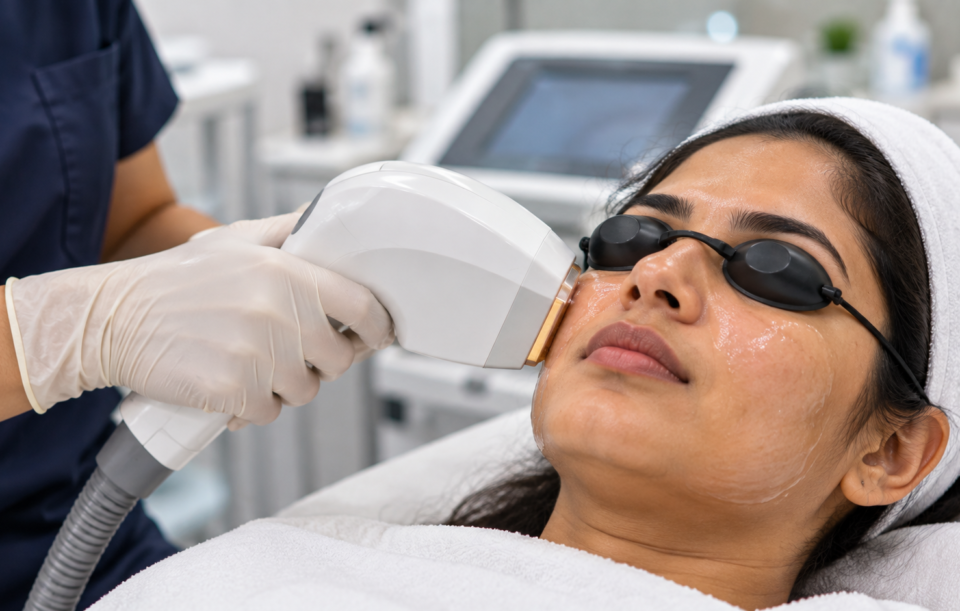
A photo facial is a skin treatment that uses intense pulsed light (IPL) to target selected types of sun spots, freckles, visible redness and small surface blood vessels. However, it is not suitable for every skin tone or pigmentation problem. Your skin colour, recent sun exposure, medical history and medicines should be reviewed before treatment.
What Is a Photo Facial, and How Is IPL Different From Laser?
A photo facial using IPL delivers controlled pulses of broad-spectrum light to selected targets in the skin. Depending on the settings and the concern being treated, the light may target pigment or blood vessels.
IPL and laser are not the same. IPL uses a range of wavelengths, while a laser generally delivers a more specific wavelength. A dermatologist chooses the device and settings according to the concern, skin type and risk of side effects.
A photo facial may help with:
- Certain sun spots and freckles
- Some forms of superficial brown pigmentation
- Diffuse facial redness in suitable patients
- Selected small visible blood vessels
However, IPL is not a universal pigmentation fix. Deep pigmentation, melasma and post-acne marks may need a different approach. An assessment is important before deciding which treatment is appropriate.
For an overview of the service, see photo facial treatment.
Which Skin Concerns Can a Photo Facial Treat Well?
IPL tends to work best when the target is clearly identified and lies within a suitable treatment depth. Results depend on the cause of the colour change, the device, settings and individual skin response.
Sun spots and freckles: Selected superficial brown spots may become darker temporarily before gradually fading. Not every brown mark is a sun spot, so suspicious or changing lesions should be examined by a qualified clinician rather than treated cosmetically.
Facial redness: IPL may reduce some forms of diffuse redness and visible superficial vessels. Persistent redness can have several causes, including rosacea, and may require a different treatment plan.
Acne marks: Brown marks left after acne are not always suitable for IPL, particularly in darker skin tones where irritation can lead to further pigmentation. A clinician may consider topical treatments or other procedures instead.
Melasma: Melasma can recur and may worsen after heat, inflammation or light-based procedures. IPL is not usually the first choice for melasma, and treatment should only be considered after specialist assessment.
Who Should Not Book a Photo Facial?
Do not book IPL without a proper medical and skin assessment if any of the following apply.
- Recent isotretinoin use: Tell your clinician if you currently take isotretinoin or have taken it recently. Do not assume every patient must wait exactly six months; the appropriate timing depends on the treatment, clinical circumstances and current medical guidance.
- Recent tan or sunburn: Recently tanned or sunburned skin can have a higher risk of burns and unwanted pigment changes. Postpone treatment until the skin has returned to its usual colour and your clinician confirms it is safe.
- Melasma or unexplained pigmentation: Heat and inflammation may aggravate melasma. First establish the diagnosis and discuss alternatives.
- Pregnancy: Cosmetic IPL is generally postponed during pregnancy because safety evidence is limited and the procedure is elective.
- Photosensitising medicines: Some medicines can increase sensitivity to light. Give your clinician a complete list of prescription medicines, over-the-counter products and supplements. Do not stop prescribed medication on your own.
- Darker skin tones: Fitzpatrick skin types IV–VI may have a higher risk of burns and post-inflammatory hyperpigmentation with some IPL devices and settings. This does not mean every person with brown skin is automatically unsuitable, but device choice, experience and careful assessment are especially important.
- Active skin infection or irritation: Active infection, open wounds or significant irritation in the treatment area may require postponement.
The safest decision depends on your individual circumstances, not simply on a checklist. Ask the treating clinician to explain the expected benefit, possible complications and alternatives before proceeding.
Is a Photo Facial Suitable for Indian Skin?
Indian skin tones vary widely. Some people have relatively low pigment-related risk, while others have more melanin and a greater chance of developing dark patches after inflammation or heat exposure.
For that reason, IPL should not be selected only because it is advertised for pigmentation. A clinician should assess your skin tone, the type of pigment, any recent tanning and your medical history. Depending on the case, a test spot or a different treatment may be appropriate.
Do not use a home IPL device on facial pigmentation without checking its instructions and suitability for your skin. If a spot is changing, bleeding, irregular or newly appearing, seek medical assessment before any cosmetic treatment.
Photo Facial Suitability Table
| Concern | Skin or concern details | Is IPL suitable? | Possible alternative or next step |
|---|---|---|---|
| Sun spots | Confirmed superficial sun-related spots | May be suitable after assessment | Topical treatment or another pigment-targeting procedure |
| Freckles | Selected superficial freckles | May help in carefully selected cases | Sun protection and pigment-specific treatment |
| Redness | Some forms of diffuse redness or small vessels | May be suitable | Vascular laser assessment; evaluate causes such as rosacea |
| Melasma | Recurring, patchy facial pigmentation | Usually not the first choice | Medical assessment, sun protection and prescribed topical treatment |
| Acne marks | Brown marks after inflammation | Depends on skin tone and diagnosis | Topicals, peels or other clinician-selected options |
These are general guidelines, not a diagnosis. The safest option depends on the type of lesion, skin tone, medical history and available device.
For visible red veins or vascular lesions, see laser treatment for vascular lesions. For selected pigment concerns, learn more about laser treatment for pigmentation.
How Many Photo Facial Sessions Are Needed, and How Far Apart?
The number of sessions depends on the concern being treated, the device settings and how your skin responds. Some people need a series of treatments rather than a single visit. A clinician may recommend several sessions spaced weeks apart, often around three to four weeks, but the schedule should be individualised.
Do not judge the result immediately after the procedure. Some treated spots can temporarily look darker before they fade. Redness and mild swelling may also occur for a short time.
Before treatment, ask your clinician:
- How many sessions are likely to be needed?
- What improvement is realistic for my specific concern?
- What is the estimated photo facial cost, including any recommended follow-up sessions?
- What side effects are more likely with my skin tone?
- What alternatives are available if IPL is unsuitable?
A clinic should explain the expected treatment plan and costs before you agree to proceed.
What Should You Expect in the First 48 Hours?
Immediately after IPL, the skin may feel warm, look mildly red or develop slight swelling. Some treated pigmented spots may become darker temporarily. These effects should be discussed with your clinician before treatment.
For the first 48 hours, follow the clinic’s specific instructions. General precautions include:
- Use a cool compress if recommended; do not apply ice directly to the skin.
- Use a gentle cleanser and moisturiser that your clinician considers suitable.
- Avoid scrubbing, exfoliating acids, retinoids and other irritating products until your skin has settled and your clinician says they can be restarted.
- Avoid excessive heat, very hot showers and strenuous activities if they worsen redness.
- Use broad-spectrum sunscreen and minimise direct sun exposure.
- Do not pick, scratch or peel darkened spots.
Contact your treating clinic promptly if you develop severe or worsening pain, blisters, marked swelling, crusting or unexpected dark or pale patches. Seek urgent medical care for severe symptoms or signs of a significant burn.
Can You Go in the Sun After a Photo Facial?
Sun protection matters both before and after treatment. Recent tanning can increase the risk of complications, while UV exposure after treatment may worsen pigmentation or interfere with recovery.
Avoid intentional tanning and follow your clinician’s advice on when it is safe to resume normal outdoor activities. Use broad-spectrum sunscreen, reapply it as directed, and use shade, a hat and protective clothing when outdoors.
If you spend substantial time outside, tell your clinician before booking. Your exposure may affect when treatment should take place and how your skin should be protected afterward.
Photo Facial in Adajan Surat: What to Discuss Before Treatment
Before booking a photo facial in adajan surat, ask for an assessment of your skin tone, the exact type of pigmentation or redness, recent sun exposure and any medicines you take. Ask whether IPL is the right option or whether a different treatment would offer a better balance of benefit and risk.
You should also understand the likely number of sessions, expected downtime, aftercare requirements and total cost before starting. A responsible treatment plan should include alternatives if IPL is not suitable for your skin.
For clinic details or to arrange an assessment, visit the clinic contact page.
Frequently Asked Questions
Is a photo facial safe for brown Indian skin?
It can be suitable for some people, but safety depends on skin tone, the type of pigmentation, the device and its settings. Darker skin may have a higher risk of burns or post-inflammatory pigmentation. Get an individual assessment before treatment rather than relying on a general claim that IPL is safe for everyone.
Can a photo facial treat melasma?
IPL is not usually the first choice for melasma because heat and inflammation can worsen pigmentation in some people, and melasma often recurs. A clinician should confirm the diagnosis and discuss sun protection, medical treatments and other suitable options before considering a light-based procedure.
Is there downtime after a photo facial?
Downtime is often limited, but mild redness, warmth or swelling can occur. Treated spots may darken temporarily. Follow your clinic’s aftercare instructions, protect your skin from sunlight and avoid irritating products until your skin settles. Blistering, severe pain or worsening symptoms need prompt medical advice.
How many photo facial sessions do I need?
The number depends on your skin concern, skin tone, device and response. A clinician may recommend a course of sessions spaced several weeks apart, but there is no single schedule for everyone. Ask for a personalised plan and realistic expectations before paying for a package.
Can I go in the sun after a photo facial?
Avoid tanning and protect the treated area from direct sunlight. Use broad-spectrum sunscreen and protective clothing, and follow your clinician’s instructions about outdoor activities. Sun exposure can increase the risk of unwanted pigmentation, especially while the skin is recovering.
Photo facial in Adajan Surat: Photo facial or laser toning for pigmentation?
IPL may help selected sun spots and some redness, while laser toning may be considered for certain pigment concerns. Neither is right for every type of pigmentation, and melasma needs particular care. A clinician should identify the cause of the marks and assess your skin tone before recommending either option.
Who should perform a photo facial in Adajan?
A photo facial should be performed by a trained professional using correct settings. Skin assessment and safe technique decide the result. At Elegance Clinic in Adajan, this treatment is guided by Dr. Ashutosh Shah for safe, tailored care.
If you are considering a photo facial in Adajan, the best next step is a personal assessment. Book a consultation with Dr. Ashutosh Shah at Elegance Clinic in Adajan or Vesu, Surat. Call +91 8320500350 or +91 9624107602, email info@eleganceclinic.in, or book online via the contact page.
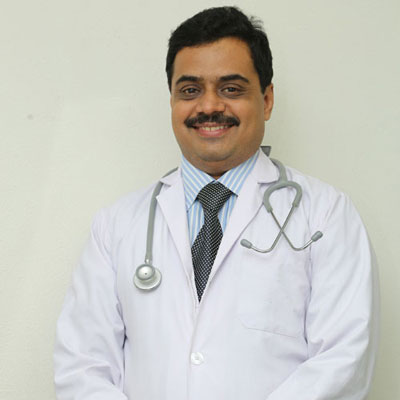 Dr. Ashutosh Shah is a board certified Plastic, Reconstructive and Cosmetic Surgeon with more than 22 years of surgical experience. He is the founder and director of Elegance Clinic, with advanced centres in Adajan and Vesu, Surat. He is known for safe, natural looking and personalized results using modern techniques and an ethical, patient first approach.

Category
Latest From Blog
Small Black Warts on Face and Neck: Removal and Recurrence
Can Facial Ageing Be Treated Without Surgery?
Red Veins On The Face: What Causes Them And Which Vascular Laser Fits