




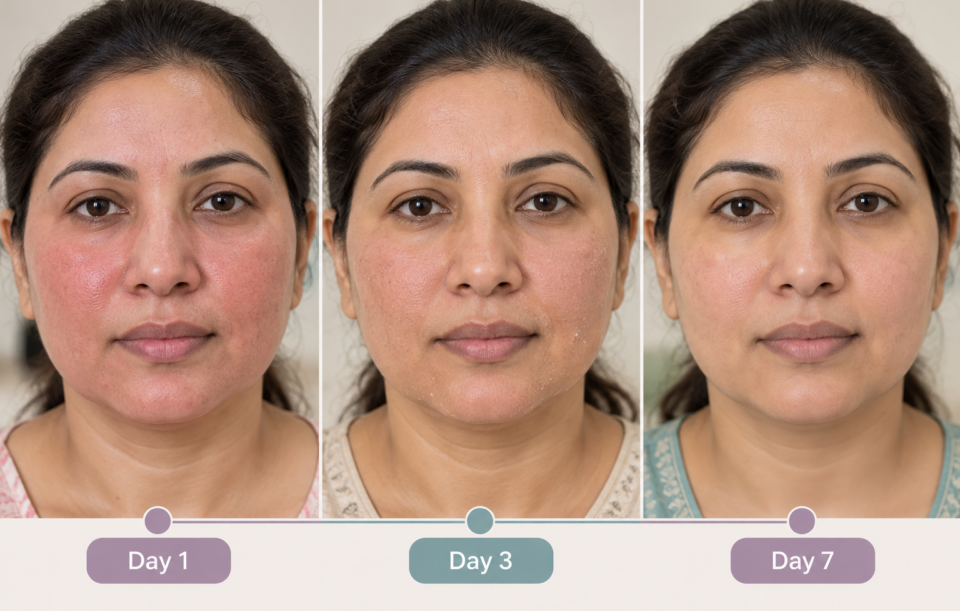
How long is the downtime after laser face rejuvenation?
Downtime after laser face rejuvenation depends on the laser type, treatment intensity and individual skin response. Q-switched toning may cause little visible downtime, while non-ablative fractional lasers can cause redness and mild swelling for around 1–3 days. Erbium and fractional CO2 resurfacing may require several days to a week or longer for the skin surface to heal, depending on treatment depth.
Which lasers are used for face rejuvenation, and how do they differ?
Laser face rejuvenation is not one single procedure. Different laser systems target pigmentation, uneven texture, fine lines, sun damage or signs of ageing. Some treatments heat selected structures while leaving most of the skin surface intact. Others deliberately remove microscopic areas of skin to stimulate repair and collagen remodelling.
The four broad treatment categories are:
- Q-switched toning: Uses short pulses of laser energy to target selected pigment. Downtime is often minimal, but temporary redness, sensitivity or pigment changes can occur.
- Non-ablative 1550 nm fractional laser: Delivers heat into fractional zones of the skin without intentionally removing the entire treated surface. Redness, swelling and a rough or sandpaper-like texture may follow.
- Erbium laser resurfacing: Depending on the device and settings, erbium lasers can remove superficial skin layers or provide fractional resurfacing. Recovery varies substantially with the depth and extent of treatment.
- Fractional CO2 laser: Creates microscopic columns of controlled thermal injury. It can address selected texture changes, scars and wrinkles, but redness, swelling, pinpoint crusting and peeling can make recovery more noticeable.
The names alone do not determine the outcome. Wavelength, energy, density, number of passes, treatment depth and the condition being treated all influence downtime.
Laser face rejuvenation downtime: comparison table
The following table provides general planning ranges, not guaranteed recovery times. Your clinician may recommend a different timeline based on the actual device, settings and skin examination.
| Laser type | What it may treat | Day 1 | Day 3 | Day 7 | Return to work | Makeup allowed from |
|---|---|---|---|---|---|---|
| Q-switched toning | Selected pigmentation and uneven tone | Mild redness or warmth may occur | Often settling; sensitivity can remain | Usually settled if uncomplicated | Often the same day or next day if comfortable | Once redness has settled and the skin is intact, according to aftercare advice |
| Non-ablative 1550 nm fractional | Selected texture concerns, fine lines and some scars | Redness, warmth and mild swelling | Redness or roughness may remain | Often substantially improved; some changes may persist | Commonly around 1–3 days, depending on visibility and treatment intensity | Often after the surface is intact and irritation has settled, commonly within a few days |
| Erbium resurfacing | Selected wrinkles, texture irregularities and sun damage | Redness, swelling and possible pinpoint bleeding or surface injury, depending on treatment | Crusting, redness or peeling may continue | Healing may be well advanced after a superficial treatment; deeper treatment can take longer | Several days to a week or more, depending on depth | Only when the skin has re-epithelialised and the treating clinician approves |
| Fractional CO2 | Selected scars, wrinkles and more pronounced texture changes | Redness, swelling and pinpoint bleeding or fluid may occur | Redness, crusting and peeling may be prominent | Many superficial treatment areas are healing, but redness and sensitivity can remain | Often about 5–7 days or longer; visible redness may persist beyond this | Only after the treated surface has healed and the clinician confirms it is safe |
Important: A return-to-work estimate is not the same as complete healing. Some people can work while redness is visible; others may prefer additional time away from public-facing duties. Deeper resurfacing can require more recovery than the broad ranges shown here.
What does each day of recovery look like?
Day 1: Redness, warmth and sensitivity
Immediately after treatment, the skin may feel warm, tight or mildly swollen. The appearance depends on the procedure: toning may leave little visible change, while fractional resurfacing can cause more obvious redness and pinpoint marks.
Follow the clinic’s instructions for cleansing, moisturising and cooling the skin. Avoid rubbing, scrubbing, picking or applying unapproved active skincare products. Do not apply ice directly to treated skin.
After an ablative procedure, use only the wound-care products recommended by the treating clinician. Do not assume that the aftercare for a low-downtime toning session is suitable for fractional CO2 resurfacing.
Day 2: Swelling, redness or rough texture
Redness and mild swelling may continue. After fractional treatments, the skin can feel rough or develop tiny dark dots as microscopic treatment zones heal. Following ablative resurfacing, pinpoint crusting, fluid and peeling may be part of the healing process.
Keep the skin clean and protected as instructed. Avoid picking crusts or trying to speed up peeling. If discomfort is increasing rather than improving, contact the treating clinic.
Day 3: Early healing or continued peeling
After low-downtime treatments, redness may have substantially improved by this point. Non-ablative fractional treatments can still cause roughness, dryness or mild swelling.
Following erbium or fractional CO2 resurfacing, the skin may remain red, crusted or sensitive. Do not use the calendar alone to decide whether the skin is ready for makeup or active skincare.
Seek medical advice if you develop worsening pain, spreading redness, increasing swelling, pus, fever or a cluster of new blisters.
Days 4–5: Surface recovery continues
With less intensive treatments, many people notice that the skin looks and feels closer to normal. Following stronger resurfacing, peeling or crusting may still be present.
Let the skin shed naturally. Avoid exfoliating acids, retinoids, scrubs and other potentially irritating products until your clinician says they can be restarted. Protecting the healing skin is more important than trying to achieve an exact recovery date.
Days 6–7: Check whether the skin has healed
By the end of the first week, many people have recovered from the most visible early effects of some fractional treatments. However, this is not a universal deadline. Redness, sensitivity or pigment changes can last longer, particularly after more intensive resurfacing.
Before returning to makeup, strong skincare products or other cosmetic procedures, confirm that the surface is fully healed. Continue sun protection and follow-up care even if the skin looks normal.
Can I go to work the day after a laser facial?
Many people can return to work the same day or the following day after a low-downtime treatment, provided they feel comfortable and the skin response is mild. Non-ablative fractional treatments may require a few days away from work if redness, swelling or rough texture is noticeable.
After erbium or fractional CO2 resurfacing, you may need more time off, especially if the treatment is deeper or your job involves heat, dust, heavy sweating or prolonged outdoor exposure.
Plan around the actual treatment rather than the general term “laser facial.” Before booking, ask the clinician which device and settings are proposed, how visible the recovery may be and whether your usual work environment could interfere with aftercare.
When can I apply makeup after fractional laser?
Makeup should not be applied over skin that is still open, weeping, crusted or incompletely healed. After a low-downtime treatment, makeup may be possible once irritation has settled and the skin remains intact, subject to the clinician’s advice.
Following ablative erbium or fractional CO2 resurfacing, wait until the treated surface has healed and the clinician confirms that makeup is appropriate. Applying products too early may irritate the skin or introduce infection.
When makeup is approved, use clean applicators and products that do not sting or cause irritation. Stop if the skin becomes increasingly uncomfortable.
Is peeling after laser normal?
Mild flaking, roughness or peeling can occur after some laser treatments, particularly fractional resurfacing. After ablative treatments, crusting and surface shedding may be expected as the skin heals.
Do not pull off peeling skin or pick at crusts. Doing so can delay healing and increase the risk of scarring or post-inflammatory pigmentation.
Peeling accompanied by worsening pain, spreading redness, pus, fever or unusual blistering needs prompt clinical assessment. If the reaction seems more severe than the aftercare instructions describe, contact the treating clinic rather than waiting for it to settle.
How long does redness last after CO2 laser?
Redness after fractional CO2 laser treatment may last beyond the first week. The duration depends on treatment depth, density, skin characteristics and healing response. More intensive resurfacing can produce prolonged redness even after the skin surface has closed.
Temporary redness is different from a complication, but worsening pain, increasing warmth, spreading redness, discharge or fever should not be dismissed as routine recovery.
Follow the planned review schedule and do not restart irritating skincare or undergo another resurfacing procedure until the skin has recovered and the clinician approves.
Can I travel after laser rejuvenation?
Travel may be possible after a low-downtime treatment if you feel well and can follow the aftercare instructions. More intensive resurfacing may make travel inconvenient because you may need wound care, scheduled review or prompt access to medical advice if a problem develops.
Before travelling, ask when the first follow-up is required, how to care for the skin during the journey and what symptoms should prompt urgent contact. Avoid planning a procedure immediately before an important event or a trip where sun exposure and aftercare may be difficult to manage.
What raises the risk of darkening after laser on Indian skin?
Post-inflammatory hyperpigmentation is a concern in skin that is more prone to producing visible pigment after inflammation. It can occur after laser treatment, especially when the skin is irritated, the treatment is too aggressive for the individual or sun exposure is not adequately controlled.
Risk assessment is particularly important for people with Fitzpatrick skin types IV–V, although skin type alone cannot predict every person’s response.
A safer plan may include:
- Assessing the skin type, pigmentation history and tendency to develop dark marks.
- Reviewing current skincare, medicines and recent sun exposure.
- Choosing a suitable device and conservative settings when appropriate.
- Considering a test spot when clinically indicated.
- Using pigment-control treatment before the procedure only when prescribed and appropriate.
- Avoiding tanning and following strict sun protection for at least four weeks, or longer if advised.
- Attending follow-up if redness or pigmentation persists or worsens.
Lower treatment density or energy may be appropriate in some cases, but settings should be selected by a trained clinician rather than copied from another patient. Pretreatment pigment-control products are not suitable for everyone and should not be started without advice.
How to choose the right laser for your schedule
If you have a work commitment, wedding, public event or trip coming up, tell the clinician before choosing a treatment. A lower-downtime option may be more practical when there is little time for recovery, while more intensive resurfacing may be considered when the clinical goal and recovery period justify it.
Discuss these points before booking:
- The exact laser type and device being used.
- The skin concern being treated and the expected benefit.
- The likely appearance on days 1, 3 and 7.
- When you can return to work, exercise and makeup.
- How long to avoid direct sun exposure.
- Which skincare products to stop and when to restart them.
- The risk of pigmentation, infection or scarring.
- Whether multiple sessions may be needed.
For laser skin resurfacing near nanpura, ask for a treatment plan that explains the proposed laser, expected downtime and pigment precautions before committing to a session.
Common myths about laser face rejuvenation
Myth 1: Every laser facial has no downtime.
Reality: Downtime ranges from minimal after some toning treatments to a week or longer after more intensive resurfacing.
Myth 2: More redness means better results.
Reality: Redness is a treatment response, not a reliable measure of effectiveness. Excessive inflammation can increase complications.
Myth 3: You can peel the skin to make it heal faster.
Reality: Picking or peeling the skin can delay recovery and increase the risk of scarring or pigmentation.
Myth 4: Makeup can cover any post-laser reaction.
Reality: Makeup should not be used to cover open or incompletely healed skin. The surface must be ready for cosmetic products.
Myth 5: One laser is best for every skin type.
Reality: The appropriate treatment depends on the concern, skin characteristics, medical history and the clinician’s assessment.
Frequently asked questions
Downtime may be minimal after Q-switched toning, around 1–3 days after some non-ablative fractional treatments, and approximately 5–7 days or longer after fractional CO2 resurfacing. Actual healing depends on treatment settings, skin type and individual response.
You may need about 5–7 days or longer before returning comfortably to work after fractional CO2 treatment, depending on its intensity and how visible the redness, crusting and peeling are. Confirm the expected recovery with your clinician before scheduling the procedure.
Some non-ablative fractional lasers may offer a balance between treating selected fine lines and limiting surface injury. The best option depends on the depth of the lines, skin type, treatment goals and tolerance for downtime. Not every concern can be treated effectively with the lowest-downtime option.
A history of dark marks does not automatically rule out resurfacing, but it makes careful assessment important. For laser skin resurfacing near nanpura, discuss previous pigmentation, skin type, sun exposure and suitable settings with the clinician before treatment.
Mild warmth, stinging or tenderness can occur after laser treatment. The level and duration vary by procedure. Severe or worsening pain, especially with increasing redness, swelling, discharge, fever or blistering, should be assessed promptly rather than assumed to be normal healing.
The number of sessions depends on the laser, the severity of the concern and the response to treatment. Some plans involve a series of lower-intensity sessions, while selected resurfacing treatments may be performed less frequently. Your clinician should explain the likely number of sessions and the expected interval.
Book a laser assessment
The right laser treatment should match your skin concern, skin type and available recovery time. Before treatment, ask about the device, expected healing milestones, pigment precautions and follow-up plan.
Read more about laser facial skin rejuvenation, laser skin resurfacing, advanced laser facial treatments and laser treatment for fine lines and wrinkles to understand the available treatment categories.


Category
Latest From Blog
Small Black Warts on Face and Neck: Removal and Recurrence
Can Facial Ageing Be Treated Without Surgery?
Red Veins On The Face: What Causes Them And Which Vascular Laser Fits