




Written by Dr. Ashutosh Shah, M.Ch., DNB (Plastic Surgery)
Director, Elegance Clinic, Surat
Dr. Ashutosh Shah is a leading Plastic, Cosmetic & Reconstructive Surgeon in Surat with over 22 years of experience. As the Director of Elegance Clinic, he specializes in cosmetic surgery, hair transplantation, facial aesthetics, and reconstructive procedures. With advanced qualifications including M.Ch. Plastic Surgery and DNB Plastic Surgery, Dr. Shah combines surgical expertise with an artistic approach to deliver safe and natural-looking results
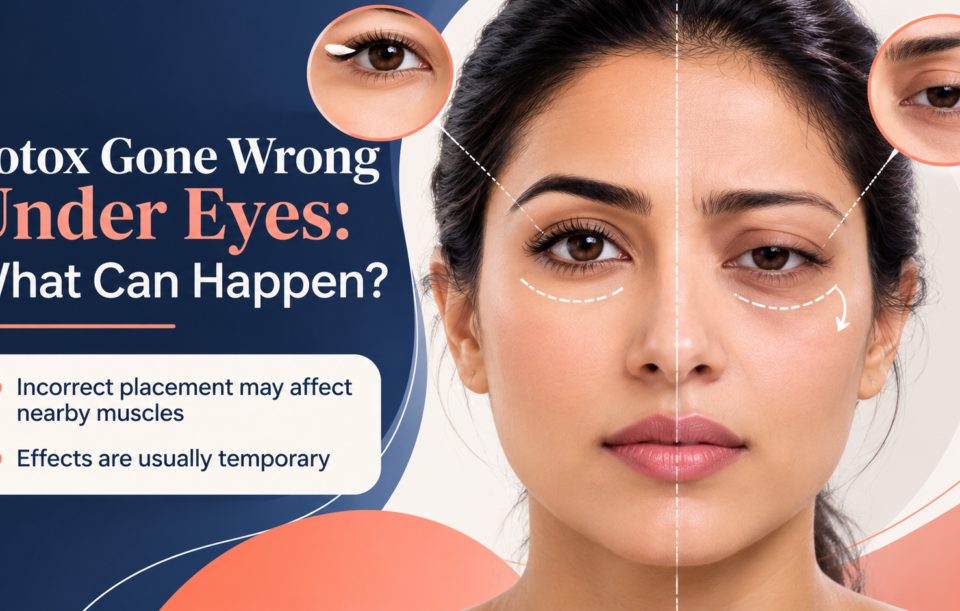
Botox is commonly used to soften facial wrinkles, but the under-eye area requires particularly careful treatment because the muscles and tissues around the eyes are delicate and closely connected. If Botox produces an unwanted effect under the eyes, symptoms may include unevenness, excessive smoothness, puffiness, dryness, changes in the lower eyelid position, or difficulty with normal facial movement.
In most cases, unwanted Botox effects are temporary and gradually improve as the effect of the treatment wears off. However, the correct approach depends on what has gone wrong, how much product was used, where it was injected, and whether the symptoms are cosmetic or functional.
People searching for Botox gone wrong under eyes should understand that not every unusual appearance means a serious complication. Some effects may be part of the normal early response to treatment, while others require assessment by a qualified medical professional.
Key Takeaways
- The under-eye area requires careful Botox placement because it contains delicate muscles and structures.
- Botox under eyes side effects can include swelling, bruising, asymmetry, dryness, or changes in eyelid movement.
- Botox cannot simply be dissolved like a dermal filler.
- Most unwanted effects improve gradually as the Botox effect decreases.
- Further injections should generally not be performed without proper assessment.
- New vision problems, severe eye symptoms, or significant eyelid changes require prompt medical evaluation.
What Can Go Wrong With Botox Under the Eyes?
Botox works by temporarily reducing muscle activity. When injected too close to muscles that control the eyelids or lower facial expression, unwanted effects can occur.
Possible under eye Botox problems include:
- Uneven movement
- Lower eyelid changes
- Temporary weakness of nearby muscles
- Increased appearance of puffiness
- Dry or irritated eyes
- Difficulty with certain facial expressions
- Changes in the appearance of the eye area
- Bruising or swelling
- Asymmetry
The exact effect depends on the injection location, dose, individual anatomy, and how the patient’s muscles respond.
Why Can Botox Cause Problems Under the Eyes?
Botox is not simply a skin treatment. It changes the activity of targeted muscles.
The muscles surrounding the eye contribute to blinking, eyelid closure, facial expression, and support of the lower eyelid. If Botox affects muscles beyond the intended treatment area, temporary functional or cosmetic changes may develop.
The under-eye region also has relatively thin skin and complex anatomy. Small differences in injection placement or dose can therefore produce noticeable changes.
Botox Under Eye Complications: Unwanted cosmetic or functional effects that may occur when botulinum toxin affects muscles or tissues beyond the intended treatment area.
What Are the Common Botox Under Eyes Side Effects?
Some side effects are mild and temporary, while others may require professional assessment.
Bruising and Swelling
Small amounts of bruising, redness, or swelling can occur after injections. These effects generally settle as the injection sites heal.
Asymmetry
One side of the face may respond differently from the other. Existing facial asymmetry can also become more noticeable after muscle-relaxing treatment.
Dry Eyes
If Botox affects muscles involved in normal eyelid function, some patients may experience increased eye dryness or irritation.
Changes in Lower Eyelid Appearance
In some cases, reducing activity around the eyes can alter the appearance or movement of the lower eyelid.
Excessive Smoothness
Relaxing the muscles around the eyes may sometimes create an appearance that feels different from what the patient expected.
The severity and duration vary from person to person.
Can Botox Cause Eyelid Droop?
Yes, Botox eyelid droop, also called ptosis, is a recognised potential complication of botulinum toxin treatment around the upper face.
Eyelid drooping can occur if the toxin affects muscles responsible for maintaining eyelid elevation. Although it is generally temporary, the symptom can be concerning for patients.
It is important to distinguish eyelid ptosis from brow ptosis or changes in lower eyelid position because they have different causes and may require different management.
If significant eyelid drooping develops after Botox, professional assessment can help determine the cause and appropriate supportive treatment.
Can Botox Under the Eyes Be Reversed?
Unlike dermal fillers made from hyaluronic acid, Botox cannot simply be dissolved with an injection.
Once Botox has been administered, the body gradually metabolises its effect and normal muscle activity returns over time.
Management therefore usually focuses on:
- Identifying the affected muscle
- Monitoring the symptoms
- Treating specific symptoms when appropriate
- Protecting the eyes if dryness occurs
- Avoiding unnecessary additional Botox
- Allowing the treatment effect to gradually decrease
A clinician may recommend supportive measures depending on the specific complication.
How Long Does Botox Gone Wrong Under Eyes Last?
The duration varies depending on the dose, injection location, individual metabolism, muscle activity, and type of unwanted effect.
Many unwanted Botox effects improve gradually as muscle activity returns. Some symptoms may improve earlier than others.
Patients should avoid assuming that a result that looks unusual immediately after treatment is permanent. Botox effects develop and change over time.
If symptoms are persistent, worsening, or affecting normal eye function, an examination is appropriate rather than simply waiting without medical advice.
What Should You Do If Botox Looks Wrong Under Your Eyes?
The first step is to remain calm and avoid trying to correct the problem yourself.
1. Contact Your Injector
Inform the medical professional who performed the treatment about the changes you are experiencing.
2. Have the Area Assessed
A clinician can determine whether the problem is related to muscle weakness, swelling, bruising, asymmetry, eyelid position, or another issue.
3. Avoid Additional Botox
Do not receive additional injections simply to compensate for an unwanted result without a proper assessment.
4. Follow Eye-Care Instructions
If dryness or irritation is present, follow appropriate medical advice for protecting the eye surface.
5. Allow Time for Recovery
Many Botox-related problems improve as the temporary effect gradually wears off.
Can Under Eye Botox Cause Dry Eyes?
Yes. Changes in the muscles around the eye can sometimes affect blinking or eyelid function, which may contribute to dryness or irritation.
Symptoms can include:
- Dryness
- Burning
- Grittiness
- Increased sensitivity
- Watery eyes
- Eye discomfort
Persistent eye dryness should not simply be ignored. If the eye does not close normally or symptoms become significant, professional eye evaluation may be necessary.
Can Botox Affect Your Smile or Facial Expression?
Although Botox is intended to affect specific muscles, the surrounding facial muscles work together.
If nearby muscles are affected, patients may notice changes in facial expression or symmetry.
This is one reason why experienced injectors carefully assess the entire face rather than treating wrinkles in isolation.
The goal of aesthetic Botox should be a balanced result rather than complete elimination of movement.
What Are Serious Botox Under Eye Complications?
Most cosmetic Botox side effects are temporary, but certain symptoms should receive prompt medical attention.
Seek urgent medical evaluation if you experience:
- Significant vision changes
- Double vision
- Severe eye pain
- Inability to close the eye properly
- Severe or rapidly worsening swelling
- Significant weakness
- Difficulty breathing or swallowing
- Severe allergic-type symptoms
These symptoms should not be assumed to be a normal cosmetic reaction.
How Is Botox Recovery Under the Eyes Managed?
Recovery depends on the specific problem.
For mild bruising or swelling, the area may settle naturally. For muscle-related changes, the main management is often observation and supportive care while the temporary Botox effect decreases.
If the eye itself is affected, protecting the eye surface becomes particularly important.
Your doctor may recommend appropriate eye care depending on the symptoms.
Can Botox Be Used Safely Under the Eyes?
Botox can be used around the eyes in selected patients, but the treatment requires careful anatomical knowledge and conservative dosing.
The under-eye region is not suitable for indiscriminate injection. The treatment plan should consider:
- Skin thickness
- Muscle activity
- Lower eyelid support
- Existing eye dryness
- Facial anatomy
- Previous procedures
- Desired cosmetic result
A consultation is particularly important for patients with pre-existing eyelid problems, dry eyes, facial asymmetry, or previous complications.
Who Should Avoid Under-Eye Botox?
Not everyone is an appropriate candidate for Botox around the eyes.
A clinician may recommend against treatment or modify the treatment plan if a patient has certain eye or neuromuscular conditions, significant eyelid weakness, uncontrolled eye-surface problems, or unrealistic expectations.
Previous Botox complications should also be discussed before another treatment.
Can You Get Botox Again After a Bad Result?
Possibly, but the decision should be made only after the previous treatment has been assessed and its effects have adequately settled.
A second treatment should not automatically repeat the same injection pattern.
The clinician should determine:
- What caused the previous problem
- Which muscles were affected
- Whether the dose was excessive
- Whether injection placement contributed
- Whether the patient’s anatomy increased the risk
- What result the patient actually wants
Future treatment may require a different technique, lower dose, different injection sites, or avoidance of the area altogether.
How Can You Reduce the Risk of Botox Gone Wrong Under Eyes?
Choosing an appropriately qualified and experienced medical professional is one of the most important factors.
Before treatment:
- Discuss your goals clearly. Explain whether you want wrinkle reduction, a softer appearance, or another specific change.
- Share your medical history. Tell the doctor about eye conditions, previous Botox, fillers, surgery, and medications.
- Allow a full facial assessment. The doctor should evaluate the surrounding muscles and eyelid anatomy.
- Ask about the treatment plan. Understand which areas will be treated and why.
- Avoid excessive treatment. More Botox does not necessarily mean better results.
- Follow aftercare instructions. Proper follow-up can help identify problems early.
When Should You See a Doctor After Under-Eye Botox?
A consultation is appropriate if you are concerned about an unexpected result, particularly when symptoms affect your eyes or facial function.
You should seek prompt medical attention for significant vision changes, severe eye symptoms, inability to close the eye, or other serious symptoms.
For cosmetic concerns such as asymmetry, puffiness, or altered facial movement, an experienced injector or plastic surgeon can assess whether the changes are likely to improve naturally and whether any supportive treatment is appropriate.
Botox gone wrong under the eyes can be distressing, but many unwanted effects are temporary and improve as the treatment gradually wears off. The correct response depends on the specific problem, whether it involves muscle movement, eyelid position, dryness, swelling, or another issue.
Because the under-eye region contains delicate muscles and structures, correction should not be attempted through additional injections without careful assessment. If you experience an unexpected result, contacting a qualified medical professional is the safest way to determine what happened and what can reasonably be done during recovery.
For a personalised assessment of an unwanted Botox result, consult Dr. Ashutosh Shah at Elegance Clinic, Surat.
About Dr. Ashutosh Shah
Dr. Ashutosh Shah, M.Ch., DNB (Plastic Surgery)
Director, Elegance Clinic, Surat
Dr. Ashutosh Shah is a leading Board-Certified Plastic, Cosmetic & Reconstructive Surgeon with more than 22 years of surgical experience. He specialises in aesthetic surgery, facial aesthetics, Botox, dermal fillers, hair restoration, and reconstructive procedures.
He completed M.Ch. in Plastic Surgery from The M.S. University of Baroda and DNB in Plastic Surgery, with additional training in microvascular surgery at Ganga Hospital, Coimbatore, and cosmetic surgery at Apollo Hospital, Chennai.
About Elegance Clinic
Elegance Clinic was established in Surat in 2014 and provides cosmetic surgery, dermatology, laser treatments, hair restoration, and reconstructive procedures. The clinic has centres at Adajan and Vesu, Surat, with treatment planning focused on patient safety and natural-looking outcomes.
Worried About an Unwanted Botox Result Under Your Eyes?
Get a personalised assessment with Dr. Ashutosh Shah, M.Ch., DNB (Plastic Surgery) at Elegance Clinic, Surat. Understand the cause, recovery options, and next steps for your specific concern.
Book a Private Consultation at Elegance Clinic Today.
Concerned About an Unwanted Botox Result Under Your Eyes?
Get a personalised assessment from Dr. Ashutosh Shah, M.Ch., DNB (Plastic Surgery) at Elegance Clinic, Surat. Understand your treatment options, recovery, and next steps.
Explore Our Botox & Facial Aesthetic Services
Frequently Asked Questions
A: Yes. Unwanted effects can occur when Botox affects muscles beyond the intended treatment area. Most cosmetic effects are temporary, but some symptoms require professional assessment.
A: Yes. Botox can occasionally cause temporary eyelid or brow drooping if nearby muscles are affected.
A: It can. Changes in eyelid movement or blinking may contribute to dryness or irritation in some patients.
A: Botox cannot be dissolved like hyaluronic acid filler. Its effects gradually decrease as the body metabolises the toxin.
A: Duration varies depending on the dose, injection site, individual response, and type of complication. Many effects improve gradually as Botox wears off.

Category
Latest From Blog
What Are the Risks of an Eyebrow Lift?
Is Botox Safe for Forehead Lines?
How Can You Treat Horizontal Neck Lines?