




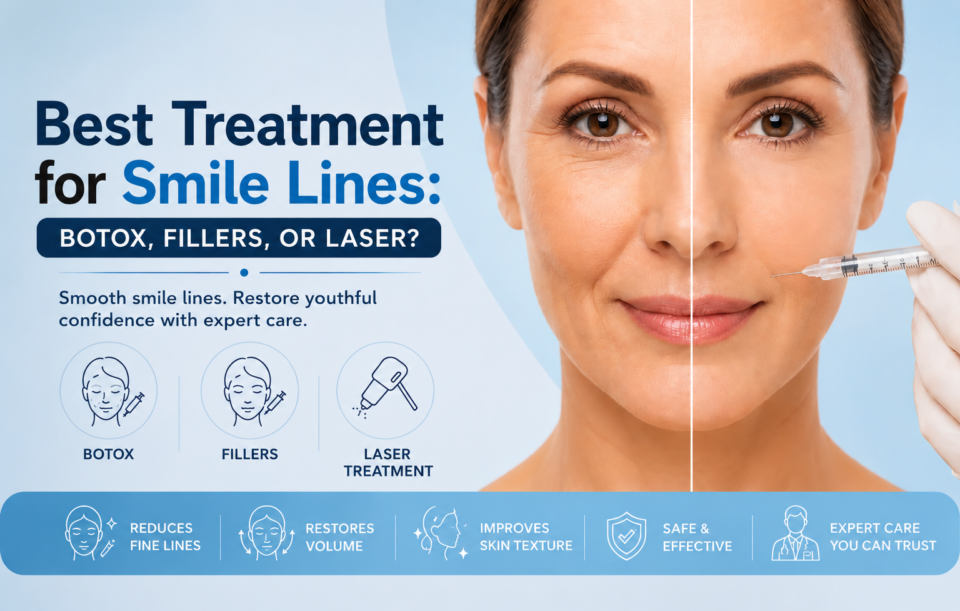
Smile lines are one of the first signs of facial aging, but they don’t have to define your appearance. Thanks to advances in aesthetic medicine, treatments such as Botox, dermal fillers, laser resurfacing, and skin tightening procedures can effectively reduce smile lines and restore a smoother, younger-looking face.
The best treatment depends on what is causing your smile lines. Some people develop them due to repeated facial expressions, while others experience them because of collagen loss, facial volume depletion, or skin laxity. Choosing the right treatment requires a proper facial assessment by an experienced aesthetic doctor.
In this comprehensive guide, Dr. Ashutosh Shah from Elegance Clinic explains the causes of smile lines, compares Botox, fillers, and laser treatments, and helps you understand which option may be best for your skin and aesthetic goals.
Key Takeaways
- Smile lines are commonly known as nasolabial folds and marionette lines.
- The best treatment depends on whether the lines are caused by muscle movement, volume loss, or skin laxity.
- Dermal fillers are generally the most effective treatment for moderate to deep smile lines caused by volume loss.
- Botox works best for fine expression-related wrinkles but is not usually the primary treatment for deep nasolabial folds.
- Laser resurfacing, microneedling, and skin tightening treatments improve collagen production and skin texture.
- A personalized treatment plan provides the most natural-looking and long-lasting results.
What Are Smile Lines?
Smile Lines: Smile lines are natural facial creases that appear around the mouth and nose due to repeated facial expressions, aging, collagen loss, and reduced skin elasticity.
Smile lines usually become visible on either side of the mouth whenever you smile or laugh. Over time, these lines may remain visible even when your face is at rest.
There are two common types of smile lines:
Nasolabial Folds
These are the lines running from the sides of the nose to the corners of the mouth. As facial volume decreases with age, these folds become deeper and more noticeable.
Marionette Lines
Marionette lines begin at the corners of the mouth and extend downward toward the chin. They can create a tired, sad, or aged appearance.
Although smile lines are a completely natural part of aging, many people choose aesthetic treatments to soften them while maintaining natural facial expressions.
Why Do Smile Lines Develop?
Smile lines are caused by several factors working together rather than a single reason.
1. Natural Aging
As we age, the skin produces less collagen and elastin. These proteins are responsible for keeping the skin firm, elastic, and youthful. Reduced collagen causes the skin to lose support, making facial folds more prominent.
2. Facial Volume Loss
The cheeks gradually lose fat and structural support with age. As the cheeks flatten, the skin begins to fold inward, creating deeper smile lines.
This is one of the main reasons why dermal fillers are often recommended for moderate to severe smile lines.
3. Repeated Facial Expressions
Every smile, laugh, or facial movement causes the muscles around the mouth to contract. Over many years, repeated movement creates permanent expression lines.
Dynamic wrinkles caused by muscle movement often respond well to Botox.
4. Skin Laxity
As skin loses elasticity, it begins to sag. This skin laxity makes smile lines appear deeper, even if facial volume is still adequate.
5. Sun Damage
Ultraviolet (UV) rays accelerate collagen breakdown, leading to premature skin aging and earlier formation of smile lines.
6. Lifestyle Factors
Smoking, poor hydration, stress, inadequate sleep, and unhealthy eating habits can all speed up the aging process and contribute to deeper facial lines.
7. Genetics
Some individuals naturally develop smile lines earlier due to inherited facial anatomy and skin characteristics.
Can Smile Lines Be Removed?
Yes—but the best treatment depends on their cause.
There is no single solution that works for everyone. Fine expression lines respond differently than deep folds caused by facial volume loss or sagging skin.
A qualified aesthetic doctor evaluates several factors before recommending treatment, including:
- Skin quality
- Facial volume
- Muscle activity
- Degree of skin laxity
- Age
- Overall facial balance
This personalized approach helps achieve natural-looking results rather than an overfilled or frozen appearance.
Botox for Smile Lines
Quick Answer: Botox can help improve fine smile lines caused by repeated muscle movement. However, it is not usually the primary treatment for deep nasolabial folds caused by facial volume loss.
Botox (Botulinum Toxin Type A) works by temporarily relaxing specific facial muscles that create dynamic wrinkles. When these muscles relax, the overlying skin appears smoother, reducing the appearance of fine expression lines.
For smile lines, Botox is often recommended only in carefully selected cases. Patients with mild wrinkles around the mouth may benefit from Botox, while deeper smile lines usually require dermal fillers or combination treatments.
Botox Is Best For
- Fine smile lines
- Early expression wrinkles
- Mild dynamic wrinkles around the mouth
- Patients seeking a quick, non-surgical treatment
Benefits of Botox
- Quick 10–15 minute procedure
- No surgery
- Minimal downtime
- Natural-looking results when performed correctly
- Can be combined with dermal fillers for comprehensive facial rejuvenation
Dermal Fillers for Smile Lines
Quick Answer: Dermal fillers are considered the most effective non-surgical treatment for moderate to deep smile lines caused by facial volume loss. They restore lost volume beneath the skin, instantly softening nasolabial folds while maintaining natural facial expressions.
Unlike Botox, which relaxes muscles, dermal fillers replace the facial volume that naturally decreases with age.
Most smile line treatments use hyaluronic acid (HA) fillers, a naturally occurring substance in the skin that attracts water and helps maintain hydration and fullness.
Dermal Fillers: Injectable gels, usually made of hyaluronic acid, that restore lost facial volume, smooth wrinkles, and improve facial contours.
How Do Dermal Fillers Work?
As aging causes fat pads in the cheeks to shrink, the skin begins to fold inward, creating deeper smile lines. Dermal fillers lift and support these tissues, reducing the appearance of folds while preserving natural facial movement.
The treatment usually takes 20–30 minutes, and patients can return to their normal routine shortly after the procedure.
Dermal Fillers Are Best For
- Moderate smile lines
- Deep nasolabial folds
- Early facial volume loss
- Mild facial sagging
- Patients seeking immediate improvement
Benefits of Dermal Fillers
- Immediate visible results
- Natural-looking facial rejuvenation
- Restores youthful facial volume
- Quick outpatient procedure
- Minimal downtime
- Customizable treatment for every face
How Long Do Fillers Last?
The longevity of dermal fillers depends on the product used, facial movement, and individual metabolism.
Most patients enjoy results for approximately 6–18 months before maintenance treatment is recommended.
Skin Tightening Treatments
Quick Answer: Skin tightening treatments improve smile lines caused by loose skin rather than volume loss. They stimulate natural collagen production, gradually making the skin firmer and more youthful.
Not every patient with smile lines requires fillers. Some patients have good facial volume but experience mild skin laxity that contributes to visible folds.
For these patients, collagen-stimulating treatments may provide excellent results.
Common skin tightening treatments include:
- Radiofrequency (RF)
- Ultrasound-based skin tightening
These procedures work beneath the skin without surgery, encouraging collagen remodeling over several months.
Skin Tightening Is Best For
- Mild skin laxity
- Early signs of facial aging
- Patients wanting gradual, natural improvement
- Individuals not yet requiring dermal fillers
Benefits
- Stimulates natural collagen
- Improves skin firmness
- No surgery
- Minimal downtime
- Gradual, natural-looking results
Because collagen production takes time, improvements usually appear over several weeks and continue for several months.
Microneedling and Laser Resurfacing
Quick Answer: Laser resurfacing and microneedling improve skin texture, stimulate collagen production, and reduce fine smile lines. They work best for early aging changes rather than deep folds caused by volume loss.
These treatments improve the quality of the skin itself instead of replacing lost facial volume.
Microneedling
Microneedling creates tiny controlled micro-injuries in the skin, stimulating the body’s natural healing response and collagen production.
Patients often notice smoother skin texture, improved elasticity, and softer fine lines after several sessions.
Microneedling is particularly helpful for:
- Fine smile lines
- Mild wrinkles
- Enlarged pores
- Acne scars
- Uneven skin texture
Laser Resurfacing
Laser treatments remove damaged outer layers of skin while stimulating deeper collagen production.
Depending on the laser used, treatment can improve:
- Fine lines
- Pigmentation
- Sun damage
- Skin texture
- Overall skin quality
Laser resurfacing generally requires multiple sessions for optimal improvement.
Botox vs Fillers vs Laser: Which Is Better?
There isn’t one treatment that is universally “best.” The right choice depends on the underlying cause of your smile lines.
| Treatment | Best For | Results | Duration | Downtime |
|---|---|---|---|---|
| Botox | Fine expression lines | Gradual | 3–5 months | Minimal |
| Dermal Fillers | Moderate to deep smile lines | Immediate | 6–18 months | Minimal |
| Laser Resurfacing | Fine lines & skin texture | Gradual | Long-lasting collagen improvement | Mild |
| RF Skin Tightening | Mild skin laxity | Gradual | Varies | Minimal |
Which Treatment Is Best?
The answer depends on why your smile lines developed.
Fine Smile Lines
Patients with early smile lines caused by repeated facial expressions usually benefit from:
- Botox
- Microneedling
- Laser resurfacing
These treatments soften dynamic wrinkles while improving overall skin quality.
Moderate to Deep Smile Lines
When facial aging causes volume loss, dermal fillers are generally the most effective treatment.
Fillers restore structural support beneath the skin, immediately reducing the appearance of deeper folds.
Smile Lines with Sagging Cheeks
Patients experiencing facial sagging often achieve the best results through a combination approach.
Treatment may include:
- Dermal fillers
- Radiofrequency skin tightening
- Ultrasound skin tightening
Combining treatments restores facial support while improving skin firmness, resulting in balanced and natural-looking rejuvenation.
Combination Treatments Often Deliver the Best Results
Rather than relying on a single treatment, many patients benefit from a personalized treatment plan that combines different procedures.
Examples include:
- Botox + Dermal Fillers
- Fillers + RF Skin Tightening
- Fillers + Laser Resurfacing
- Microneedling + PRP + Skin Tightening
A combination approach addresses multiple causes of aging simultaneously, leading to more comprehensive and longer-lasting improvements.
How Dr. Ashutosh Shah Selects the Right Treatment
At Elegance Clinic, every smile line treatment begins with a detailed facial assessment.
Rather than treating only the visible wrinkle, Dr. Ashutosh Shah evaluates the entire face to identify the root cause of aging.
During your consultation, several factors are assessed, including:
- Facial anatomy
- Skin quality
- Degree of collagen loss
- Facial volume
- Muscle activity
- Skin laxity
- Age-related changes
- Your aesthetic goals
Based on this assessment, a personalized treatment plan is created to provide natural-looking facial rejuvenation while preserving your unique facial expressions.
Every patient ages differently, which is why customized treatment plans consistently produce better outcomes than a one-size-fits-all approach.
What Happens During Smile Line Treatment?
One of the biggest advantages of non-surgical smile line treatments is that they are quick, minimally invasive, and require little to no downtime.
At Elegance Clinic, every treatment begins with a detailed facial analysis by Dr. Ashutosh Shah. Rather than focusing only on the visible lines, Dr. Shah evaluates your facial anatomy, skin quality, volume loss, muscle activity, and overall facial balance to recommend the most suitable treatment plan.
Step-by-Step: Smile Line Treatment Process
Step 1: Consultation and Facial Assessment
Your consultation includes a discussion about your concerns, medical history, aesthetic goals, and a detailed facial examination.
Step 2: Personalized Treatment Plan
Based on your facial assessment, Dr. Ashutosh Shah determines whether Botox, dermal fillers, laser resurfacing, skin tightening, or a combination of treatments will provide the best outcome.
Step 3: Treatment Procedure
Depending on the selected procedure, treatment typically takes between 15–45 minutes.
- Botox injections usually take around 10–15 minutes.
- Dermal fillers take 20–30 minutes.
- Laser resurfacing or RF skin tightening may take 30–45 minutes.
Step 4: Recovery and Follow-Up
Most patients can return to their normal daily activities immediately after treatment, although minor redness or swelling may occur for a short period.
Recovery After Smile Line Treatment
Recovery varies depending on the treatment performed.
Botox Recovery
- Minimal downtime
- Small injection marks usually disappear within a few hours
- Results begin appearing in 3–7 days
- Full effect develops within approximately 2 weeks
Dermal Fillers Recovery
- Mild swelling or bruising may occur
- Results are visible immediately
- Final appearance settles within 1–2 weeks
Laser Resurfacing Recovery
- Mild redness
- Temporary peeling depending on laser type
- Skin gradually becomes smoother over several weeks as collagen production increases
Skin Tightening Recovery
- Little to no downtime
- Gradual improvement over 2–3 months
- Continued collagen production after treatment
Are Smile Line Treatments Safe?
When performed by a qualified and experienced aesthetic doctor, Botox, dermal fillers, and laser treatments are considered safe and effective.
Possible temporary side effects include:
- Mild redness
- Swelling
- Bruising
- Tenderness
- Temporary sensitivity
These effects usually resolve within a few days.
Choosing an experienced injector helps minimize risks and achieve natural-looking results.
How Long Do Results Last?
| Treatment | Average Duration |
|---|---|
| Botox | 3–5 months |
| Dermal Fillers | 6–18 months |
| Laser Resurfacing | Long-term collagen improvement |
| RF Skin Tightening | Several months with maintenance |
Maintenance sessions help preserve your results over time.
Smile lines are a natural part of aging, but modern aesthetic treatments can significantly reduce their appearance without surgery. The most effective treatment depends on whether your smile lines are caused by muscle movement, volume loss, or skin laxity.
Fine expression lines often improve with Botox, while dermal fillers remain the gold standard for moderate to deep smile lines caused by volume loss. Patients with mild skin laxity or uneven skin texture may benefit from laser resurfacing, microneedling, or radiofrequency skin tightening. In many cases, a customized combination of treatments delivers the most natural and long-lasting results.
At Elegance Clinic, Dr. Ashutosh Shah creates personalized treatment plans designed to enhance your appearance while preserving your natural facial expressions. If you’re considering treatment for smile lines, schedule a consultation to determine the option best suited to your skin, facial anatomy, and aesthetic goals.
How Dr. Ashutosh Shah Selects the Right Treatment
At Elegance Clinic, every smile line treatment begins with a detailed facial assessment.
Rather than treating only the visible wrinkle, Dr. Ashutosh Shah evaluates the entire face to identify the root cause of aging.
During your consultation, several factors are assessed, including:
- Facial anatomy
- Skin quality
- Degree of collagen loss
- Facial volume
- Muscle activity
- Skin laxity
- Age-related changes
- Your aesthetic goals
Based on this assessment, a personalized treatment plan is created to provide natural-looking facial rejuvenation while preserving your unique facial expressions.
Every patient ages differently, which is why customized treatment plans consistently produce better outcomes than a one-size-fits-all approach.
Still unsure which treatment is right for your smile lines?
Contact Elegance Cosmetic & Skin Clinic today to schedule a personalized consultation with our aesthetic experts. We’ll assess your skin concerns and recommend the most suitable treatment to help you achieve natural-looking, youthful results.
It depends on the cause. Botox works for fine lines, while dermal fillers are best for deeper smile lines caused by volume loss.
Not always. Botox relaxes muscles, while fillers restore lost volume. Many patients benefit more from fillers or a combination of both.
No. Laser improves skin texture and collagen production, but maintenance treatments may be needed.
Most treatments involve minimal discomfort. Numbing cream may be used for added comfort.
Botox: 3–7 days
Fillers: Immediate
Laser: Within a few weeks
RF Skin Tightening: 2–3 months
While aging can’t be prevented, sunscreen, good skincare, hydration, and a healthy lifestyle can help delay deeper smile lines.

Category
Latest From Blog
What Are the Risks of an Eyebrow Lift?
Is Botox Safe for Forehead Lines?
How Can You Treat Horizontal Neck Lines?