




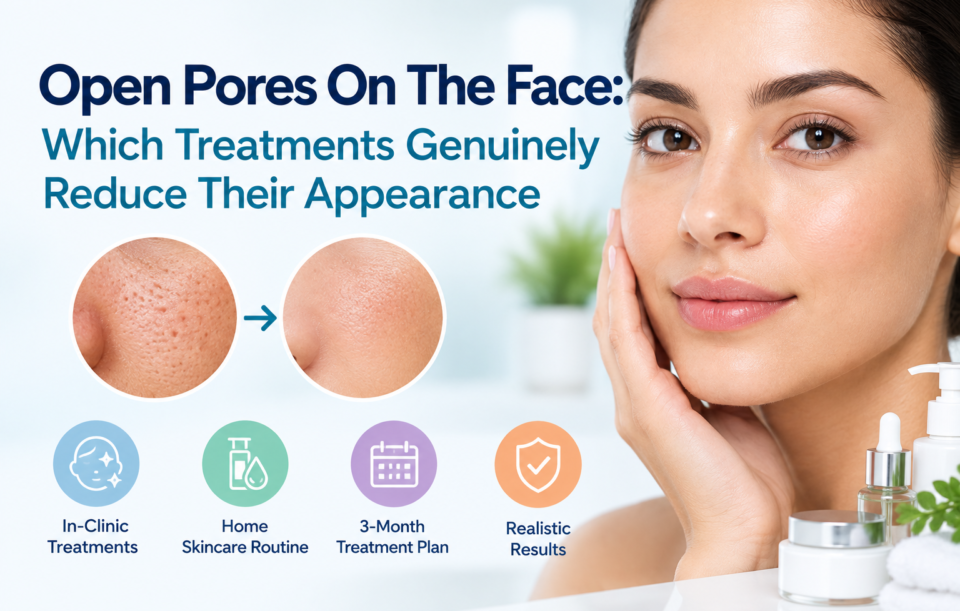
If you are looking for open pores treatment on face, the first thing to understand is that pores cannot simply be closed permanently. Their visible size is influenced by genetics, oil production, skin ageing, sun exposure, loss of firmness and acne history. Treatment can make pores look smaller and less noticeable, but the aim is improvement rather than permanent closure.
A realistic approach combines the right in-clinic treatment with a consistent home routine. The best option depends on why your pores look enlarged, whether you have oily or acne-prone skin, and whether sun damage or reduced skin firmness is contributing.
A three-month pore size treatment plan can be useful because visible improvement generally requires more than one treatment or skincare step. Research on enlarged facial pores also suggests that multiple sessions and combination approaches can improve pore appearance, although the evidence varies between treatments.
What Actually Makes Pores Look Larger: Oil, Sun Damage, Loss of Firmness or Acne History?
Several factors can make facial pores more noticeable.
Oil and sebum
When the skin produces more oil, pores can appear larger because the follicular openings become more visible. Oily skin does not automatically mean that someone will have permanently large pores, but excess sebum can make them look more prominent.
Sun damage
Repeated ultraviolet exposure contributes to collagen damage and loss of skin firmness. As the surrounding skin becomes less firm, pores may appear more noticeable. Daily broad-spectrum sunscreen is therefore part of a sensible pore-care routine. The American Academy of Dermatology recommends broad-spectrum, water-resistant SPF 30 or higher for sun protection.
Loss of firmness
Age-related changes in collagen and elastin can alter the appearance of pores. Improving overall skin quality may make the openings appear less prominent even though the pore itself has not disappeared.
Acne history
Acne and clogged pores can make facial pores more visible. Treating active acne and controlling congestion can therefore improve the overall appearance of the skin.
This is particularly relevant when someone has large pores on nose and cheeks. The nose may look oily and congested while the cheeks may show a combination of previous acne, sun exposure and reduced firmness.
Which In-Clinic Treatments Improve Pore Appearance and By How Much?
There is no single treatment that works equally well for every type of enlarged pore.
A dermatologist may consider treatments such as:
- Chemical peels
- Laser-based treatments
- Microneedling or energy-based microneedling
- Treatments aimed at improving skin texture and firmness
- Combination treatment when more than one factor is present
A review of facial-pore treatments found that topical medications, chemical peels and lasers have all been studied, and that combination approaches can improve pore size and number.
Chemical peels
Chemical peels remove controlled layers of the outer skin and can help improve texture and congestion. They may be useful when visible pores are associated with oily or acne-prone skin.
However, a peel should not be presented as a permanent pore-closing treatment. Results depend on the type of peel, skin condition and treatment plan.
Laser for open pores
Laser for open pores can be considered when texture, collagen support and pore visibility are important concerns.
Clinical research has shown improvement in enlarged facial pores with different laser technologies. One randomized split-face study found that both a 1064-nm picosecond laser with a microlens array and a 1565-nm non-ablative fractional laser reduced pore numbers after a series of treatments.
The right laser depends on skin type, the cause of the pore visibility and the clinician’s assessment. Laser treatment can also cause temporary redness or other side effects, so treatment parameters should be selected for the individual rather than treating every patient with the same settings.
Microneedling and skin texture
Microneedling can be considered when enlarged pores occur alongside uneven texture or acne-related changes.
Evidence for microneedling is particularly established in acne-scar treatment, while pore-specific treatment evidence is less extensive. This is why the treatment should be selected according to the actual skin problem rather than assuming that every visible pore requires microneedling.
What Role Do Home Actives Play Between Sessions?
In-clinic treatment is only one part of a useful open pores treatment on face plan.
A consistent home routine can help control factors that make pores more noticeable.
Gentle cleansing
A gentle, non-comedogenic cleanser can help remove excess oil without unnecessary irritation. Scrubbing aggressively can irritate the skin and make pores appear more noticeable.
Salicylic acid
For oily or acne-prone skin, salicylic acid can help unclog pores. The American Academy of Dermatology notes that salicylic acid can help clear clogged pores.
Retinoids
Retinoids can be useful for some people with oily skin, acne or reduced skin firmness. The AAD notes that retinol or retinyl palmitate may make pores less noticeable.
Retinoid products can irritate sensitive skin, so frequency and product selection should be adjusted according to individual tolerance. Retinoids should not be used during pregnancy unless specifically advised by a healthcare professional.
Sunscreen
Sun protection is particularly important when the goal is to maintain skin firmness and prevent further photoageing.
A daily broad-spectrum SPF 30 or higher can help reduce ongoing UV-related damage.
Moisturiser
A suitable non-comedogenic moisturiser can support the skin barrier, particularly if exfoliating products or retinoids are being used.
Why Can Pores Never Be Closed Permanently, and What Maintenance Holds the Result?
The question can pores be closed permanently has a straightforward answer: not in the literal sense.
Pores are normal openings associated with hair follicles and sebaceous glands. Their size is influenced partly by genetics and cannot simply be eliminated. Treatments can reduce their appearance, but they do not permanently seal the openings.
This is why maintenance matters.
If oil production increases again, acne returns, sun exposure continues or skin firmness changes with age, pores can become noticeable again.
A realistic goal is therefore:
less visible pores + smoother texture + better oil control + consistent maintenance
rather than:
permanently closed pores.
Avoid aggressive squeezing or extraction at home. Cleveland Clinic notes that excessive squeezing can injure the skin and contribute to scarring.
How Is a Three-Month Plan Structured?
A three-month approach should be based on the cause of the enlarged-pore appearance rather than using the same treatment for everyone.
Three-Month Pore Size Treatment Plan
| Pore cause | Recommended in-clinic option | Home routine | Realistic improvement over three months | Maintenance needed |
|---|---|---|---|---|
| Excess oil | Peel or dermatologist-selected treatment | Gentle cleanser, suitable salicylic acid routine, moisturiser and sunscreen | Less congestion and less noticeable pores | Ongoing oil control |
| Sun damage | Laser or skin-rejuvenation treatment where appropriate | Daily SPF 30+ and appropriate skincare | Improved texture and reduced visibility | Daily sun protection |
| Loss of firmness | Laser or collagen-stimulating treatment selected after assessment | Retinoid where appropriate, moisturiser and sunscreen | Smoother-looking skin and improved pore appearance | Continued skincare and periodic review |
| Acne history | Acne treatment plus selected peel, laser or microneedling where appropriate | Acne-control routine and sunscreen | Reduced congestion and improved texture | Acne maintenance |
| Mixed causes | Combination treatment plan | Combination home routine suited to skin type | More comprehensive improvement | Long-term maintenance |
The table describes realistic treatment directions rather than guaranteed percentages. Studies of enlarged facial pores use different treatment technologies, numbers of sessions and outcome measures, making a single percentage improvement inappropriate for every patient.
Month 1: Control the causes
The first month should focus on identifying what is making the pores look larger.
That can mean controlling oil, treating active acne, starting appropriate home skincare and beginning a selected in-clinic treatment.
The goal is to establish a consistent routine rather than immediately using multiple aggressive procedures.
Month 2: Build on the first treatment
Depending on the treatment selected, a second session may be considered.
The skin should be reviewed before repeating a procedure. If irritation, pigmentation or other unwanted effects occur, the treatment plan may need to be adjusted.
Month 3: Review the visible change
At three months, compare the skin under consistent lighting and conditions.
Look for:
- Reduced pore visibility
- Improved texture
- Better oil control
- Fewer clogged pores
- Improvement in acne-related texture
- Better overall skin firmness
A maintenance plan can then be selected according to the result.
How Should You Choose Between Treatments?
The best pore size treatment plan is not necessarily the treatment with the most impressive advertising claim.
Ask:
- What is making my pores look larger?
- Is excess oil contributing?
- Do I have active acne or acne-related texture?
- Is sun damage contributing?
- Has my skin lost firmness?
- Which treatment is suitable for my skin type?
- How many sessions are expected?
- What downtime or side effects should I expect?
- What home routine should I follow between sessions?
- What maintenance will be required?
A consultation should therefore assess the entire skin pattern rather than treating the pore opening in isolation.
For broader skin-smoothing options, see Best treatment for smooth skin.
For PRP-based facial treatment information, see PRP facial treatment.
For laser-based facial treatment in Surat, see Advanced laser facial in Surat.
If acne marks are contributing to uneven texture, see Pimples na nishan treatment guide.
FAQs
No. Pores cannot be permanently sealed, but their appearance can be reduced with appropriate skincare and in-clinic treatments.
There is no single fastest treatment for everyone. The choice depends on whether oil, acne, sun damage, reduced firmness or a combination is responsible.
They can improve pore appearance and skin texture, particularly when congestion or uneven surface texture contributes to the problem.
They can become noticeable again because genetics, oil production, ageing and environmental exposure continue. Maintenance helps preserve improvement.
No. Oil can make pores more noticeable, but visible pore size is influenced by several factors, including genetics, ageing, sun exposure and acne history.
It depends on the treatment and the individual. Some clinical studies of enlarged pores have used multiple sessions, so a series rather than one treatment may be recommended.
Final Takeaway
The most accurate way to think about open pores treatment on face is not as a way to permanently close pores. The goal is to make them less visible by addressing the factors around them.
Oil control, acne treatment, sun protection and appropriate home skincare can form the foundation. Chemical peels, laser treatments and other in-clinic procedures may then be added according to the cause and skin type.
A structured three-month plan allows the skin to be assessed, treated and reviewed rather than promising an instant or permanent result.


Category
Latest From Blog
Small Black Warts on Face and Neck: Removal and Recurrence
Can Facial Ageing Be Treated Without Surgery?
Red Veins On The Face: What Causes Them And Which Vascular Laser Fits