


Dr. Ashutosh Shah, M.Ch., DNB (Plastic Surgery)
Board-Certified Plastic, Reconstructive & Cosmetic Surgeon
Founder & Director, Elegance Clinic
22+ Years of Surgical Experience
Article Updated: August 2026
An eyebrow lift can make the eye area appear more open, refreshed and defined by improving the position or shape of the brows. However, like any aesthetic treatment, it is not completely risk-free.
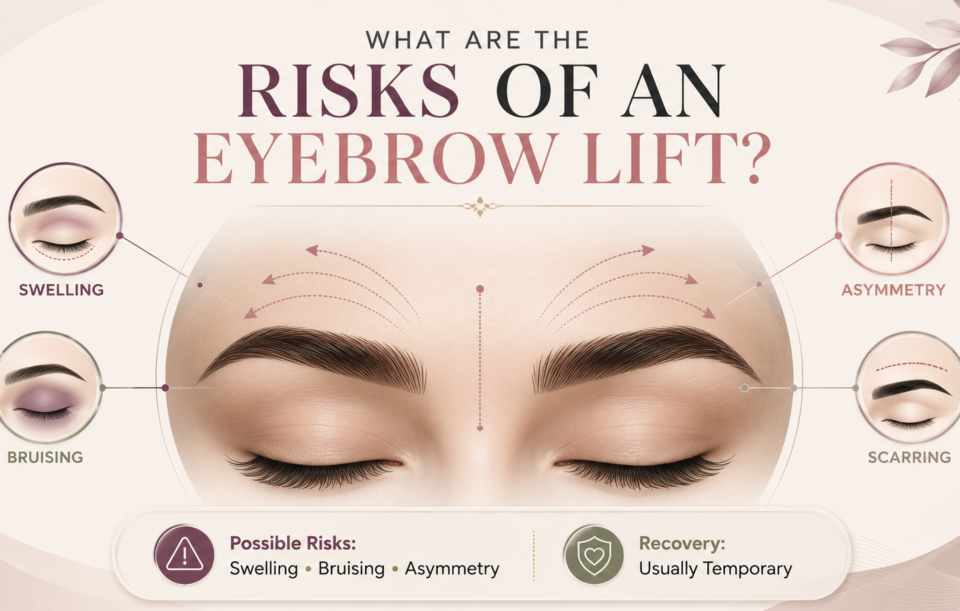
The risks of an eyebrow lift depend largely on how the lift is performed. Non-surgical techniques may involve threads or injectable treatments, and possible concerns can include swelling, bruising, asymmetry, temporary discomfort, infection, unwanted brow position and treatment-specific complications.
At Elegance Clinic, eyebrow lifting is approached as an individual aesthetic treatment rather than assuming the same technique will suit every face.
Key Takeaways
- Eyebrow lifting is generally an elective cosmetic treatment.
- Temporary swelling and bruising can occur.
- Uneven eyebrow position is possible.
- Thread-based techniques have their own specific risks.
- Injectable treatments can produce unwanted muscle effects if they spread beyond the intended area.
- Excessive lifting may create an unnatural expression.
- Existing facial asymmetry should be assessed before treatment.
- Choosing the technique according to facial anatomy is important for safety and natural-looking results.
Is Eyebrow Lifting Safe?
Eyebrow lifting can be performed safely in appropriately selected patients when the technique is chosen carefully and performed by a qualified professional.
However, safe does not mean risk-free.
The eyebrow and forehead region contains muscles, nerves, blood vessels and delicate surrounding structures. Small changes in brow position can also noticeably affect facial expression.
A proper assessment is therefore important before deciding on treatment.
Elegance Clinic offers eyebrow lifting treatment using non-surgical approaches intended to lift and shape the eyebrow area.
What Are the Common Side Effects?
Some effects may occur temporarily after treatment and are not necessarily complications.
These can include:
- mild swelling,
- bruising,
- tenderness,
- redness,
- temporary tightness,
- and mild discomfort.
The exact effects depend on whether threads, injectable treatment or another technique has been used.
Most importantly, patients should receive clear instructions about what is expected during recovery and which symptoms require medical review.
Can an Eyebrow Lift Make the Brows Uneven?
Yes.
Human faces naturally have some degree of asymmetry, and one eyebrow may already sit slightly higher than the other before treatment.
After eyebrow lifting, asymmetry may temporarily appear more noticeable because of swelling.
Persistent asymmetry can also occur if:
- one side responds differently,
- the lifting effect differs between sides,
- facial muscle activity is unequal,
- or the treatment produces excessive correction on one side.
This is why photographs and facial assessment before treatment are useful.
Can the Eyebrows Look Too High?
Yes. Overcorrection can produce an eyebrow position that looks unnaturally elevated.
The eyebrows have an important role in facial expression. Raising them too much can create a surprised, tense or artificial appearance.
The objective should therefore not simply be to achieve the maximum possible lift.
A more balanced goal is to improve brow position while maintaining harmony with the forehead, eyelids and overall facial structure.
What Are the Risks of a Thread Eyebrow Lift?
Thread-based eyebrow lifting uses specialised threads placed beneath the skin to provide a lifting effect.
Possible complications can include:
- bruising,
- swelling,
- infection,
- tenderness,
- visible or palpable threads,
- skin irregularities,
- puckering,
- asymmetry,
- thread migration or extrusion,
- and an unsatisfactory lifting effect.
Some irregularities can improve as swelling settles, while persistent problems may require further assessment.
What If Injectable Treatment Is Used?
Certain injectable treatments can influence the muscles responsible for eyebrow position.
When appropriately planned, relaxing selected muscles may create a subtle lifting effect.
However, unwanted effects can occur.
These may include:
- eyebrow asymmetry,
- excessive arching,
- heaviness,
- unwanted forehead changes,
- or eyelid/brow drooping if nearby muscles are affected.
The result also depends on the patient’s natural muscle activity and anatomy.
Injectables cannot reproduce every effect achievable with other brow-lifting methods.
Can an Eyebrow Lift Cause Drooping?
Depending on the treatment used, temporary brow or eyelid heaviness can occur.
For example, injectable treatment placed inappropriately or spreading into nearby muscles may interfere with the muscles that help maintain eyebrow or eyelid position.
A patient who already has low brows, heavy upper eyelids or significant skin laxity may also require a different treatment plan.
This is why the cause of the “tired” appearance should be identified before simply trying to lift the eyebrow.
Can It Affect Facial Expression?
Yes, particularly when treatment is excessive.
Eyebrows contribute significantly to expressions such as surprise, concern and happiness.
An overly elevated, unusually shaped or asymmetric brow may make the face look different from what the patient expected.
A natural-looking eyebrow lift should therefore consider:
brow position + brow shape + forehead movement + eyelid anatomy + facial proportions.
Is Infection Possible?
Any procedure that breaks the skin carries some infection risk.
The risk varies according to the technique.
Signs that should be medically assessed include:
- increasing redness,
- increasing warmth,
- worsening swelling,
- significant pain,
- discharge,
- or fever.
Patients should follow the aftercare instructions provided by their treating professional.
Who Needs Extra Assessment Before Treatment?
Eyebrow lifting should not automatically be performed simply because someone feels their eyebrows look low.
Extra assessment may be particularly important when there is:
- significant upper-eyelid skin excess,
- marked brow asymmetry,
- previous facial surgery,
- previous threads or injectables,
- active skin infection,
- unusual eyelid position,
- or a medical condition affecting facial muscles.
Sometimes the eyebrow itself is not the main reason the upper face appears heavy.
Can Eyebrow Lifting Fix Heavy Upper Eyelids?
Not always.
Low eyebrow position can contribute to heaviness around the eyes, but excess upper-eyelid skin can create a similar appearance.
These are different anatomical problems.
A brow-focused treatment may therefore produce disappointing results when eyelid skin is actually the main concern.
An experienced aesthetic assessment should identify which structure is contributing most to the appearance before recommending treatment.
How Can the Risk of an Unnatural Result Be Reduced?
Good treatment begins before the procedure.
Important steps include:
- assessing natural brow height,
- comparing both sides of the face,
- examining forehead muscle activity,
- evaluating upper-eyelid skin,
- discussing previous aesthetic treatments,
- choosing an appropriate lifting technique,
- and agreeing on realistic goals.
More lifting is not necessarily better.
The aim should be improvement that fits naturally with the rest of the face.
How Long Do Results Last?
The duration depends on the technique used.
Non-surgical eyebrow lifting is generally not permanent. Injectable effects gradually reduce as muscle activity returns, while thread-based results can also change over time as tissues age and the lifting effect decreases.
Patients should understand the expected duration of their particular treatment before proceeding.
Can a Bad Eyebrow Lift Be Corrected?
Sometimes, but the solution depends on what caused the problem.
Early asymmetry may simply be related to swelling and may improve as healing progresses.
Other problems may require:
- observation,
- treatment adjustment,
- management of a thread-related problem,
- or another corrective approach.
Patients should avoid trying to correct an early result themselves.
The treating clinician should first determine whether the appearance represents normal recovery or an actual complication.
Choosing Treatment Based on Your Face
Dr. Ashutosh Shah is a board-certified Plastic, Reconstructive & Cosmetic Surgeon with extensive experience in surgical and non-surgical aesthetic procedures.
The treatment philosophy described about Elegance Clinic focuses on individual assessment, realistic expectations and selecting aesthetic procedures according to the patient’s anatomy rather than using the same approach for everyone.
An eyebrow lift can provide a subtle improvement for appropriately selected patients, but the safest treatment begins by understanding why the eyebrow area looks low or heavy in the first place.
If you are considering eyebrow lifting and are unsure whether threads, injectables or another approach is suitable for your facial structure, contact Elegance Clinic for an individual assessment.
FAQs
It can be safe for suitable patients, but every technique has potential risks.
Yes. Temporary or persistent unevenness can occur.
Yes. Overcorrection may create an unnatural expression.
Certain techniques can temporarily affect brow or eyelid position.
Non-surgical eyebrow lifting is generally temporary.
Category
Latest From Blog
Small Black Warts on Face and Neck: Removal and Recurrence
Can Facial Ageing Be Treated Without Surgery?
Red Veins On The Face: What Causes Them And Which Vascular Laser Fits