




Medically Reviewed By: Dr. Ashutosh Shah, M.Ch., DNB (Plastic Surgery)
Specialty: Plastic, Reconstructive & Cosmetic Surgery
Experience: 22+ Years
Position: Founder & Director, Elegance Clinic, Surat
Last Updated: August 2026
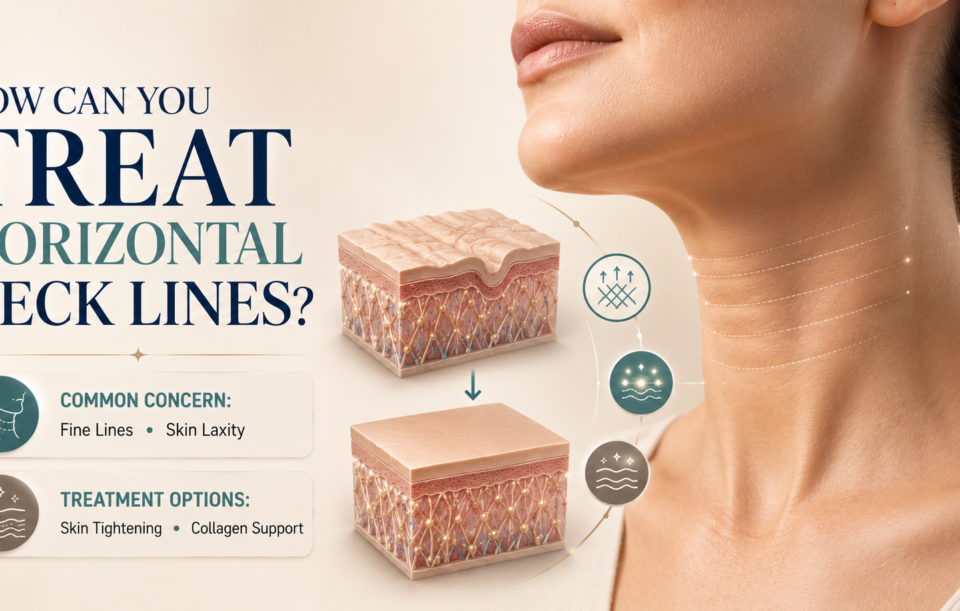
Horizontal lines across the neck are sometimes called necklace lines or neck creases. Some people notice them early in life, while others find that they become deeper and more visible as the skin ages.
The right horizontal neck lines treatment depends on what is creating the crease. A superficial line related mainly to skin quality may require a different approach from a deeper, established fold or prominent muscular neck bands.
At Elegance Clinic in Surat, horizontal neck lines can be assessed as part of an individual facial and neck rejuvenation plan.
Key Takeaways
- Horizontal neck lines are creases running across the front or sides of the neck.
- They can occur even in younger adults.
- Genetics, repeated neck movement, skin ageing and sun exposure may contribute.
- Fine and deep neck lines should not automatically be treated in the same way.
- Botox may help selected movement-related concerns but does not physically fill a deep crease.
- Dermal fillers may be considered for selected established horizontal lines.
- Skin boosters and resurfacing treatments may help improve skin quality in suitable patients.
- Combination treatment may be more appropriate when several ageing changes are present.
- Horizontal neck lines are different from vertical platysmal neck bands.
- Results and treatment duration vary, so maintenance may be required.
What Are Horizontal Neck Lines?
Horizontal neck lines are creases that run from side to side across the neck and may become increasingly noticeable as skin movement and ageing affect the area.
They are often described as necklace lines because of the way they wrap horizontally around the neck.
Elegance Clinic includes Horizontal Neck Lines as a specific concern within its Botox and dermal filler treatments. The clinic also treats other neck-related ageing concerns, including neck lines and platysmal bands.
Not every horizontal neck crease is necessarily an ageing problem. Natural skin folding and individual anatomy can produce visible lines even in relatively young people.
Why Do Horizontal Neck Lines Develop?
Usually, there is not one single cause.
The neck moves repeatedly throughout the day. We look down, turn our head, bend our neck and change posture continuously.
At the same time, ageing gradually changes the structural properties of the skin.
Factors that may contribute include:
- natural skin folding,
- repeated neck movement,
- genetics,
- loss of collagen and elasticity,
- sun exposure,
- skin dehydration,
- changes in underlying soft tissue,
- and general skin ageing.
The contribution of each factor varies from person to person.
Can Young People Have Horizontal Neck Lines?
Yes.
Horizontal neck creases are not exclusive to older adults.
Some people naturally develop visible neck folds because of anatomy, genetics and repeated movement.
This means having neck lines in your twenties or thirties does not necessarily indicate premature ageing.
However, the lines can gradually become more established as skin elasticity changes.
Do Phones Cause Neck Lines?
Looking down frequently can repeatedly fold the neck skin, which may make existing creases more noticeable.
This has led to terms such as “tech neck.”
However, it would be too simplistic to say that smartphones alone cause horizontal neck lines.
Genetics, anatomy, skin quality, age and cumulative movement also matter.
Reducing prolonged periods of extreme neck flexion may be sensible, but posture correction alone is unlikely to erase a deeply established crease.
Are Horizontal Neck Lines the Same as Neck Bands?
No.
This is an important distinction.
Horizontal neck lines run across the neck.
Platysmal bands usually appear as more vertical cords extending down the neck and are related to the platysma muscle.
Elegance Clinic lists platysmal neck band treatment separately within its Botox and filler services because the anatomy and treatment strategy differ.
A consultation should therefore identify what type of neck concern is actually present before treatment is selected.
Which Treatment Is Best for Horizontal Neck Lines?
There is no single best treatment for every patient.
Treatment depends on:
- depth of the lines,
- skin quality,
- movement,
- age,
- surrounding neck laxity,
- muscle activity,
- previous treatment,
- and the desired degree of improvement.
A patient with very fine lines may primarily need skin-quality improvement.
A patient with deeper necklace lines may need a different or combined approach.
Horizontal Neck Lines: Matching the Treatment to the Problem
| Neck Concern | Treatment That May Be Considered |
|---|---|
| Fine superficial lines | Skincare or selected skin-rejuvenation treatments |
| Poor hydration and skin quality | Skin boosters may be considered |
| Selected movement-related lines | Carefully planned Botox may sometimes help |
| Established horizontal creases | Dermal filler may be considered in selected patients |
| Texture and superficial ageing | Resurfacing or collagen-stimulating treatments may help |
| Multiple ageing changes | Combination treatment may be appropriate |
| Vertical platysmal bands | Requires separate assessment and treatment |
This is a general guide rather than a prescription. The appropriate treatment can only be selected after examining the neck.
Can Botox Treat Horizontal Neck Lines?
Botox works by temporarily reducing activity in selected muscles.
It can therefore be useful for certain wrinkles that are strongly influenced by muscle movement.
However, horizontal neck lines are not all purely muscular wrinkles.
A deep static crease that remains visible when the neck is relaxed may not disappear simply because nearby muscle activity is reduced.
This is why Botox should not automatically be used for every horizontal neck line.
Elegance Clinic’s Botox and filler service includes a range of wrinkle treatments, with treatment selection based on the specific aesthetic concern.
Can Dermal Fillers Help Horizontal Neck Lines?
Dermal fillers may be considered for selected established horizontal neck creases.
Unlike Botox, which affects muscle activity, fillers add material beneath or within selected tissue planes to improve contour or support.
For an appropriate horizontal crease, carefully placed filler may help soften the depression.
However, the neck requires conservative treatment.
The skin is relatively thin, and overfilling can create an unnatural appearance or visible irregularities.
The type of filler, amount, injection depth and anatomical location all matter.
Can Fillers Completely Remove Neck Lines?
Not necessarily.
The realistic goal is usually to soften the appearance of the crease, not guarantee perfectly smooth skin.
Results depend on:
- line depth,
- skin thickness,
- elasticity,
- movement,
- product selection,
- and individual tissue response.
Some deeply established lines may remain visible even after appropriate treatment.
Natural improvement is generally a more realistic target than complete elimination.
Can Skin Boosters Help Neck Lines?
Skin boosters are designed primarily to improve hydration and skin quality rather than fill a deep fold in the same way as a conventional volumising filler.
Elegance Clinic offers skin booster treatments using hyaluronic-acid-based products and specifically includes the neck among areas where treatment may be used to improve skin firmness, elasticity and hydration.
For patients whose horizontal lines are accompanied by thin, dry or ageing skin, improving overall skin quality may form one part of the treatment plan.
Skin boosters should not, however, be presented as a guaranteed way to erase a deep neck crease.
Can Laser Treatment Improve Horizontal Neck Wrinkles?
Selected laser or resurfacing treatments may improve aspects of skin texture and stimulate remodelling.
They may be more relevant when horizontal lines occur alongside:
- fine wrinkles,
- sun damage,
- uneven texture,
- or reduced skin quality.
A laser does not mechanically fill a deep crease.
For this reason, deeper lines may require a different or combination approach.
The patient’s skin type also needs to be considered when selecting energy-based treatments.
Can Microneedling Help Neck Lines?
Microneedling creates controlled micro-injuries intended to stimulate the skin’s repair response.
It may be considered for improving skin texture and fine lines in appropriate patients.
However, a deep horizontal crease is structurally different from superficial textural ageing.
Microneedling alone should therefore not be expected to eliminate every neck line.
Is Combination Treatment Better?
Sometimes.
Horizontal neck lines may involve several components simultaneously:
Movement + Skin Quality + Volume/Structural Creasing
Trying to solve all three with one treatment may produce limited improvement.
For example, an individual plan might focus on skin quality first and then reassess whether an established crease requires additional treatment.
The goal is not to perform as many procedures as possible.
It is to identify which component is actually contributing to the visible line.
Can a Liquid Facelift Treat Neck Lines?
Elegance Clinic also offers liquid facelift treatment using strategically selected injectable treatments for different ageing concerns.
A liquid facelift is not a universal solution for horizontal neck lines, but injectable treatment may form part of a broader rejuvenation plan when facial and neck ageing occur together.
Treatment should still be tailored to individual anatomy rather than applying the same injection pattern to everyone.
Can Skincare Remove Horizontal Neck Lines?
Skincare can support healthy skin but has limitations.
Useful measures may include:
- daily broad-spectrum sunscreen,
- appropriate moisturisation,
- selected retinoid-based products when medically suitable,
- antioxidant skincare,
- and avoiding unnecessary irritation.
These measures can support skin quality and help reduce further photoageing.
However, creams cannot physically reconstruct a deeply established neck crease.
Why Is Sunscreen Important for the Neck?
The neck is often exposed to sunlight but receives less skincare attention than the face.
Ultraviolet exposure contributes to collagen and elastin changes over time.
Daily sun protection therefore matters for both the face and neck.
Sunscreen will not erase an existing horizontal line, but reducing cumulative UV damage can form an important part of long-term skin maintenance.
Can Neck Exercises Remove Horizontal Lines?
There is limited reason to expect exercises to erase structural skin creases.
Neck exercises may have other purposes, but repeatedly stretching or contracting muscles does not necessarily restore lost collagen or fill a static crease.
Aggressive exercises promoted online as instant wrinkle removal should therefore be approached cautiously.
How Do Doctors Decide Which Treatment You Need?
Assessment should examine more than the line itself.
The doctor may consider:
- whether the line appears at rest,
- whether movement makes it deeper,
- skin thickness,
- elasticity,
- surrounding laxity,
- vertical neck bands,
- facial ageing,
- previous fillers or Botox,
- and your expectations.
This helps distinguish a primarily dynamic problem from a static structural crease or broader skin-quality issue.
What Happens During Injectable Treatment?
The process depends on the treatment selected.
The neck is first examined and the areas requiring treatment are identified.
If an injectable treatment is appropriate, the skin is cleaned and the product is administered according to the planned technique.
Temporary redness, swelling or bruising can occur around injection sites.
Patients should follow the specific aftercare instructions provided by their treating clinician.
Are There Risks With Botox and Fillers?
Yes.
Botox and dermal fillers are medical treatments and should not be treated as risk-free beauty procedures.
Potential Botox-related effects can include:
- bruising,
- temporary discomfort,
- asymmetry,
- unwanted muscle weakness,
- and effects on nearby muscles.
Filler-related risks can include:
- swelling,
- bruising,
- tenderness,
- lumps or irregularity,
- infection,
- asymmetry,
- and rare but serious vascular complications.
The exact risk profile depends on the product, location and technique.
How Quickly Will Neck Lines Improve?
This depends on the treatment.
Different treatments have different timelines.
Some filler-related contour changes may be visible relatively early, although swelling can temporarily affect appearance.
Botulinum toxin does not act immediately and develops its effect over time.
Collagen-remodelling and skin-quality treatments generally require a more gradual response.
Patients should therefore be cautious about promises of instant permanent neck-line removal.
Are Results Permanent?
Most nonsurgical horizontal neck line treatments are not permanent.
Skin continues to age, and the neck continues to move.
The duration of improvement depends on:
- treatment used,
- product,
- metabolism,
- skin condition,
- lifestyle,
- and individual response.
Maintenance treatment may be considered, but it should be based on reassessment rather than an automatic fixed schedule.
How Can You Prevent Horizontal Neck Lines From Becoming Deeper?
You cannot completely stop normal skin ageing, but some habits may help protect neck skin.
Use sunscreen consistently on the neck.
Maintain appropriate skincare and moisturisation.
Avoid smoking.
Try to reduce unnecessary prolonged neck folding when practical.
Most importantly, do not over-treat very early lines simply because they are visible.
Natural neck creases are normal.
When Should You Consider Professional Treatment?
Professional assessment may be useful when horizontal lines remain clearly visible at rest and bother you despite reasonable skincare.
Consultation is also useful when you are unsure whether you have horizontal lines, skin laxity or platysmal bands.
Different problems can look similar in photographs but require different treatment strategies.
Horizontal Neck Lines Treatment at Elegance Clinic, Surat
At Elegance Clinic, horizontal neck lines are included among the concerns addressed within Botox and filler services. The clinic also provides skin boosters and other aesthetic treatments that may be considered according to skin quality and individual anatomy.
Dr. Ashutosh Shah is a Plastic, Reconstructive and Cosmetic Surgeon with M.Ch. and DNB qualifications and more than 22 years of surgical experience.
Patients considering neck rejuvenation can first learn about Dr. Ashutosh Shah and Elegance Clinic and discuss whether injectables, skin-quality treatment or another approach is suitable.
Your Neck Lines Need the Right Treatment, Not Simply More Treatment
A horizontal neck crease can look simple, but its cause may involve skin quality, movement, anatomy and ageing in different proportions.
That is why the treatment that works for one person may not be appropriate for another.
If your neck lines are becoming more noticeable, a personalised assessment can help determine whether they need treatment at all and, if so, which conservative option offers a realistic improvement.
Patients in Surat can contact Elegance Clinic for an individual neck-line and skin rejuvenation consultation.
Frequently Asked Questions
Horizontal neck lines can be influenced by natural skin folds, genetics, repeated neck movement, ageing, loss of skin elasticity and cumulative sun exposure.
Botox may help selected movement-related concerns, but it does not physically fill a deep static crease. Suitability depends on the anatomy and cause of the line.
Dermal fillers may help soften selected established horizontal creases. Because neck skin is thin, conservative product selection and injection technique are important.
Yes. Horizontal neck creases can occur in younger adults because of anatomy, genetics and repeated movement and are not always a sign of premature ageing.
Skin boosters may improve hydration, elasticity and overall skin quality in selected patients, but they should not be expected to completely erase deep structural creases.
Established lines can remain visible at rest, although aesthetic treatments may soften their appearance. Nonsurgical treatment results are generally not permanent.


Category
Latest From Blog
Small Black Warts on Face and Neck: Removal and Recurrence
Can Facial Ageing Be Treated Without Surgery?
Red Veins On The Face: What Causes Them And Which Vascular Laser Fits