
Facial Ageing & Expression-Line Guidance by Dr. Ashutosh Shah
Written By: Dr. Ashutosh Shah, M.Ch., DNB (Plastic Surgery)
Specialty: Plastic, Cosmetic & Reconstructive Surgery
Experience: 22+ Years
Position: Founder & Director, Elegance Clinic, Surat
Dr. Ashutosh Shah is a board-certified Plastic, Cosmetic and Reconstructive Surgeon with more than 22 years of surgical experience. His approach to facial aesthetics considers muscle movement, skin quality, facial proportions and the underlying reason for a line or wrinkle before selecting treatment.
Last Updated: August 2026
Introduction
Fine lines around the nose can become more noticeable when smiling, squinting or making facial expressions. Some people notice small diagonal wrinkles along the sides or upper part of the nose, often called bunny lines. Others develop lines that remain visible even when their face is relaxed.
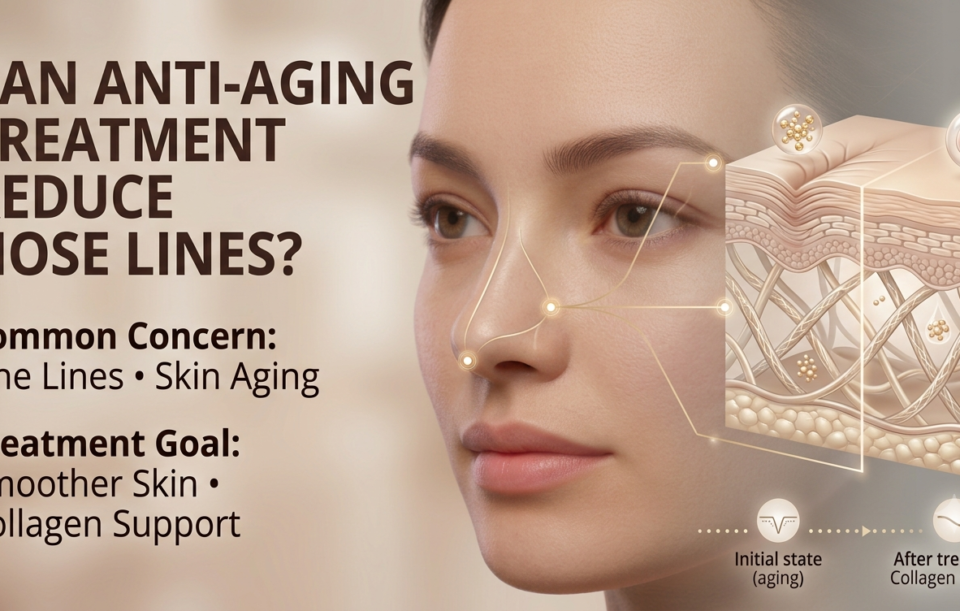
So, can anti-aging treatment reduce nose lines?
Yes, selected treatments may soften nose lines, but the right option depends on why the lines are present. Lines caused mainly by repeated muscle contraction may respond differently from deeper static wrinkles associated with skin ageing, sun exposure and reduced skin elasticity.
At Elegance Clinic, facial rejuvenation treatments include Botox, fillers, laser procedures and other aesthetic options, with treatment selected according to the patient’s individual concern.
Key Takeaways
- Nose lines can be dynamic or static.
- “Bunny lines” commonly appear along the sides of the nose during facial expression.
- Repeated muscle movement can make dynamic lines more noticeable.
- Ageing and sun-related skin changes may make lines remain visible at rest.
- Botox may help selected muscle-related nose lines.
- Botox does not improve every type of wrinkle.
- Skin-resurfacing treatments may be more relevant when skin texture contributes to the concern.
- Fillers and Botox perform different functions and are not interchangeable.
- Natural treatment should soften unwanted lines without unnecessarily affecting facial expression.
What Are Nose Lines?
Nose lines are wrinkles or creases that appear on or around the nose, particularly along its sides and upper portion. Some become visible only during facial expression, while others remain noticeable at rest.
Lines appearing when the nose and surrounding facial muscles contract are commonly referred to as bunny lines.
They may become more obvious when smiling, laughing, squinting or scrunching the nose.
Not every crease around the nose is the same. The first step in treatment is therefore identifying whether the concern is mainly related to muscle movement, skin quality, volume or another structural feature.
What Types of Nose Lines Can Develop?
| Type of Nose Line | Why It May Develop | Possible Treatment Direction |
|---|---|---|
| Bunny lines | Repeated muscle contraction | Botox may be considered in selected patients |
| Dynamic nose wrinkles | Facial movement | Muscle-based treatment may help |
| Lines visible at rest | Skin ageing and repeated folding | Skin rejuvenation or combination treatment |
| Fine surface lines | Changes in skin texture and elasticity | Resurfacing or skin-quality treatments |
| Deeper creases near the nose | Multiple factors including ageing and facial structure | Individual facial assessment |
| Lines after previous Botox | Compensatory muscle movement may contribute in some cases | Reassessment of facial muscle balance |
This table gives general treatment directions only. A facial assessment is needed to determine which approach is appropriate.
Why Do Lines Develop on the Nose?
Several factors can contribute.
Repeated facial expression is one of the main reasons dynamic lines develop. Every time certain muscles contract, the overlying skin folds.
Young skin generally returns to its resting position easily.
With time, changes in collagen, elasticity and skin quality can make repeated creases more noticeable.
Sun exposure and general skin ageing may also contribute to fine lines becoming visible even when the face is relaxed.
This transition from movement-related lines to lines visible at rest is one reason treatment needs can change with age.
What Are Bunny Lines?
Bunny lines are small diagonal or horizontal wrinkles that commonly appear along the sides of the upper nose during facial expression.
They are often most visible when a person scrunches the nose.
Some people naturally have stronger movement in this region and develop noticeable bunny lines relatively early.
Others may become more aware of them after treating neighbouring facial areas because movement elsewhere becomes visually more prominent.
Bunny lines are not medically harmful. Treatment is cosmetic and should only be considered if their appearance bothers the patient.
Can Botox Reduce Nose Lines?
Yes, Botox may help selected dynamic nose lines caused predominantly by muscle activity.
Botox works by temporarily reducing signals that cause targeted muscles to contract.
When excessive muscle movement is responsible for a visible line, reducing that movement can soften the crease.
Elegance Clinic’s Botox and filler treatment service describes Botox as a treatment used to smooth selected facial wrinkles while aiming to maintain natural facial balance.
The goal should not be to eliminate every movement around the nose. Conservative treatment aims to reduce unwanted lines while preserving normal expression.
Does Botox Permanently Remove Bunny Lines?
No.
Botox provides a temporary reduction in muscle activity.
Its effect gradually wears off as nerve-muscle signalling returns.
If the patient wants to maintain the effect, repeat treatment may eventually be considered.
This also means Botox does not permanently alter the skin or facial muscles.
If deeper static lines are already present, reducing muscle activity alone may not completely remove them.
Can Nose Lines Become Visible Even Without Smiling?
Yes.
This is an important difference between dynamic and static wrinkles.
Dynamic lines appear mainly when muscles contract.
Static lines remain visible when the face is relaxed.
Repeated folding over many years, combined with changes in collagen and skin elasticity, can gradually make a previously dynamic line remain visible at rest.
When this happens, treatment may need to consider both muscle activity and skin quality rather than relying on Botox alone.
Can Anti-Aging Skin Treatments Improve Static Nose Lines?
Potentially, depending on the type and depth of the lines.
Skin treatments can target concerns such as texture, fine wrinkles, pigmentation and overall skin quality.
For example, Elegance Clinic provides laser-based skin rejuvenation treatments for selected concerns involving texture, pigmentation and skin appearance.
The appropriate treatment depends on skin type, line depth and the surrounding facial anatomy.
A superficial fine line and a deep structural fold should not automatically receive the same treatment.
Can Fillers Treat Nose Lines?
Fillers and Botox work differently.
Botox reduces selected muscle activity.
Dermal fillers add volume or structural support.
Therefore, filler should not automatically be used simply because a wrinkle exists.
For muscle-driven bunny lines, reducing the relevant movement may make more sense than adding volume.
For other facial folds or structural concerns, filler may sometimes be considered after assessment.
Treatment around the nose also requires particular caution because the region has important blood vessels. Injectable treatment should therefore be performed only by an appropriately qualified medical professional with detailed anatomical knowledge.
Can Nose Lines Get Worse With Age?
They can become more noticeable.
Ageing affects collagen, elasticity, hydration and other properties of the skin.
As the skin becomes less able to recover completely after repeated folding, expression lines may become increasingly visible at rest.
This does not mean everyone develops prominent nose wrinkles.
Genetics, facial movement, skin type, sun exposure and lifestyle can all influence how facial ageing appears.
Can Sun Exposure Make Nose Lines More Visible?
Long-term ultraviolet exposure contributes to premature skin ageing.
Sun-related damage can affect collagen and skin elasticity, making fine lines and texture changes more noticeable.
The nose also receives substantial sun exposure because of its central, projecting position on the face.
Daily sun protection is therefore relevant not only for pigmentation but also for maintaining overall skin quality.
Sunscreen cannot erase an established wrinkle, but protecting the skin from repeated UV exposure can form part of a sensible long-term anti-aging routine.
Can Skincare Remove Bunny Lines?
Skincare can support hydration, texture and overall skin health, but topical products cannot directly relax an overactive facial muscle in the same way as botulinum toxin.
This is why understanding the cause matters.
If the line appears only when the nose moves, treating skin texture alone may produce limited improvement.
If the concern involves fine static lines and sun-related skin changes, skincare may have a more meaningful supporting role.
Treatment should match the mechanism behind the wrinkle.
Can Treating Other Facial Areas Affect Nose Lines?
Sometimes patients notice nose movement more after treating another facial area.
Facial muscles function as an interconnected system.
When movement is reduced in one region, untreated movement elsewhere can occasionally become more visually noticeable.
That does not mean Botox always “causes” new wrinkles.
It may simply change which facial movements attract attention.
A complete facial movement assessment can help avoid treating one small area without considering how neighbouring muscles interact.
Can Too Much Botox Around the Nose Look Unnatural?
Yes.
The objective of Botox is not to remove all facial movement.
Over-treatment or inappropriate placement may alter expression or affect neighbouring muscle function.
This is particularly important around the central face, where multiple small muscles contribute to expressions involving the nose and upper lip.
Precise dosing and placement matter.
Elegance Clinic’s published Botox guidance emphasises targeted treatment and preservation of natural facial expression rather than creating an excessively frozen appearance.
How Quickly Can Botox Improve Nose Lines?
Botox does not generally create its full effect immediately.
Changes begin gradually as the targeted muscle activity decreases.
Elegance Clinic’s Botox service notes that results generally begin appearing within a few days.
The exact response varies according to the treatment area, dose, individual muscle activity and other factors.
Patients should therefore avoid judging the final result immediately after treatment.
How Do You Know Which Anti-Aging Treatment You Need?
Start by observing when the lines appear.
If they are visible mainly when you smile or scrunch your nose, muscle movement may be the dominant factor.
If they remain visible when your face is completely relaxed, skin ageing or established creasing may also be contributing.
If texture, pigmentation and fine lines occur together, skin rejuvenation may need consideration.
A personalised facial assessment can help distinguish between these causes and avoid using a treatment simply because it is popular.
Should Nose Lines Be Completely Removed?
Not necessarily.
Normal faces develop lines during expression.
Trying to eliminate every crease can produce an unnatural result.
The aim of cosmetic treatment should usually be softening lines that bother the patient while maintaining natural facial movement.
The appropriate degree of correction therefore varies between individuals.
For some patients, subtle improvement is preferable to a completely smooth but less expressive appearance.
What Can Help Prevent Nose Lines From Becoming More Noticeable?
Ageing cannot be stopped, but some habits can support healthier-looking skin.
Regular sun protection is particularly important.
A suitable skincare routine, avoiding smoking, maintaining general health and addressing concerns before aggressively treating them can also be helpful.
Repeated Botox is not mandatory simply because someone develops expression lines.
Preventive treatment should be individualised rather than automatically recommended according to age.
When Should You Consider Professional Assessment?
An aesthetic consultation may be useful if nose lines have become noticeable enough to bother you or if you are unsure whether Botox, skin treatment or another approach is appropriate.
Assessment becomes particularly important when you have previously received injectable treatment and feel that your facial movement has changed.
The clinician can examine the lines both at rest and during expression.
That simple distinction can provide valuable information about whether the concern is primarily muscular, skin-related or a combination of both.
Conclusion
Anti-aging treatment can reduce selected nose lines, but the correct treatment depends on why those lines have developed.
Dynamic bunny lines caused mainly by repeated muscle movement may respond to carefully planned Botox.
Lines that remain visible at rest may involve skin ageing and could require a broader skin-rejuvenation approach.
Fillers serve a different purpose and should not automatically be used for every wrinkle around the nose.
The goal should not be an expressionless face. A well-planned treatment aims to soften unwanted lines while maintaining natural movement, facial balance and individual character.
A Personalised Approach to Nose Lines at Elegance Clinic
At Elegance Clinic, facial rejuvenation includes nonsurgical options for wrinkles, volume changes, skin quality and other signs of facial ageing. Rather than treating every line identically, patients can explore Botox and facial injectable options according to whether muscle activity, volume or another factor is contributing to the concern.
Dr. Ashutosh Shah, M.Ch., DNB (Plastic Surgery) is the Founder and Director of Elegance Clinic in Surat. He has more than 22 years of surgical experience, and his published clinic articles describe an approach centred on individual anatomy, facial movement and natural-looking aesthetic outcomes.
Patients considering facial rejuvenation can also learn more about Elegance Clinic’s facial aesthetic treatments, which include both surgical and nonsurgical approaches tailored to individual facial concerns.
Treat the Cause of the Line, Not Just the Line Itself
If lines beside your nose are becoming more visible during smiling or remain present even when your face is relaxed, identifying whether they are dynamic, static or a combination of both can guide treatment. You can contact Elegance Clinic through its consultation options for an individual facial assessment.
Frequently Asked Questions
Bunny lines are wrinkles that commonly appear along the sides of the upper nose when a person smiles, squints or scrunches the nose.
Botox may soften dynamic nose lines caused by muscle activity. It may not completely remove deeper wrinkles that remain visible at rest.
No. Botox temporarily reduces selected muscle activity, and its effects gradually wear off.
Potentially, but deeper static wrinkles may require treatment aimed at skin quality or a combination approach rather than Botox alone.
Bunny lines are often related to muscle movement, so filler is not automatically the appropriate treatment. The cause should be assessed first.
Category
Latest From Blog
Small Black Warts on Face and Neck: Removal and Recurrence
Can Facial Ageing Be Treated Without Surgery?
Red Veins On The Face: What Causes Them And Which Vascular Laser Fits