




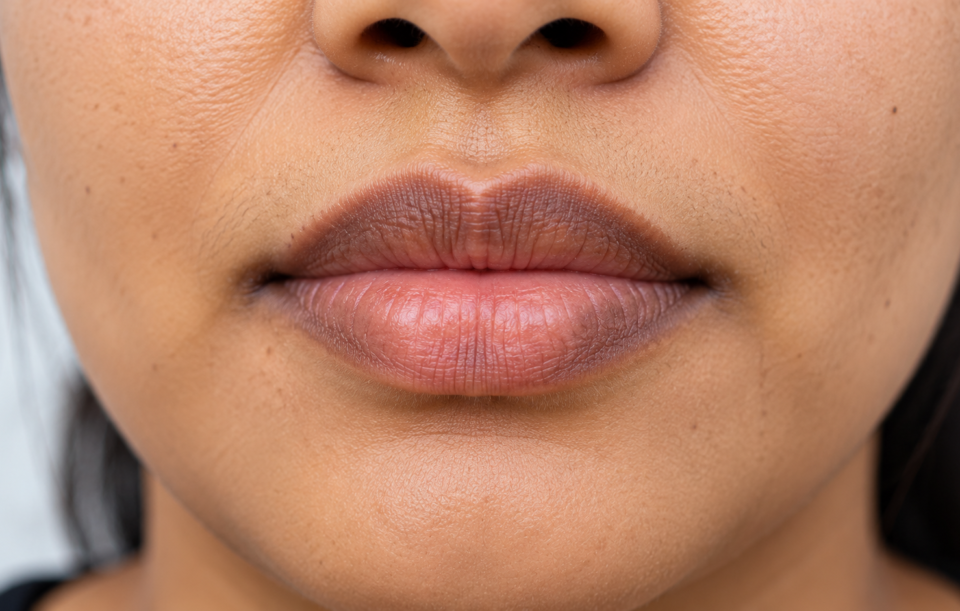
Lip lightening laser treatment uses targeted light energy to reduce selected types of excess lip pigmentation. It may help darkening caused by sun exposure, smoking or certain benign pigment spots, but results depend on the cause. Several sessions may be needed. Allergy, medicine-related pigmentation and medical conditions should be assessed before laser treatment.
What Causes Dark Lips, and Which Causes Does Laser Help?
Dark lips can develop because of natural pigmentation, sun exposure, smoking, irritation, medicines or an underlying medical condition. Although these causes may look similar, they do not respond to the same treatment. Identifying the cause is the first step towards choosing an appropriate dark lips solution.
Sun exposure and excess pigmentation
Repeated ultraviolet exposure may contribute to increased pigmentation on the lips. A dermatologist may consider a pigment-targeting laser when the darkening is suitable for treatment and there are no signs of another condition that needs investigation.
Sun protection remains important before and after treatment. Laser sessions cannot prevent new pigmentation if the lips continue to receive unprotected sun exposure.
Smoking-related lip pigmentation
Smoking can contribute to brown or darker lip pigmentation over time. Laser treatment may improve selected cases, but results are variable. Continuing to smoke can contribute to recurrence and may affect healing.
Stopping smoking is an important part of managing the cause. A clinician should discuss realistic expectations rather than promise permanent lightening from a fixed number of sessions.
Lip balm or lipstick allergy
Lipsticks, lip balms, fragrances, flavourings and preservatives may cause contact cheilitis, an inflammatory reaction affecting the lips. Symptoms can include itching, redness, dryness, scaling, cracking and swelling. In some people, inflammation leaves brown pigmentation after the irritation settles.
When an allergy is suspected, the priority is to identify and avoid the trigger. A dermatologist may recommend patch testing. Laser should not be used to bypass an unresolved allergic reaction or active inflammation.
Medicine-related pigmentation
Certain medicines can contribute to pigmentation changes. If the darkening began after starting a medicine, tell your clinician and the prescriber. Do not stop prescribed treatment or change a dose without medical advice.
Whether laser is appropriate depends on the likely cause, the appearance of the pigmentation and whether the medicine can be changed safely.
Hormonal and other medical causes
Hormonal changes and some medical conditions can affect pigmentation. Unexplained or widespread darkening, particularly when accompanied by other symptoms, should be assessed before cosmetic treatment is considered.
A clinician may recommend further examination or investigations depending on the history. Laser is not a substitute for diagnosing an underlying condition.
Natural lip colour and benign pigment spots
Natural lip colour varies between individuals. Some people also develop isolated, flat brown spots. A clinician should distinguish benign pigmentation from a lesion that needs further assessment.
Laser may be considered for selected benign spots or excess pigment, but it cannot guarantee uniformly pink lips. Any new, changing, irregular or unexplained dark spot should be assessed before cosmetic treatment.
Lip Pigmentation Cause Table: Can Laser Help?
| Possible cause | Common clues | Can laser help? | What to do first |
|---|---|---|---|
| Sun exposure | Darkening on exposed lip areas | May help selected cases | Assessment and regular sun protection |
| Smoking | Gradual brown or diffuse pigmentation | May help, but recurrence is possible | Discuss smoking cessation |
| Lip balm or lipstick allergy | Itching, dryness, scaling or irritation after product use | Not the first step | Avoid suspected triggers and seek assessment |
| Medicine reaction | Pigmentation after starting a medicine | Depends on the cause | Review medicines with the prescriber |
| Hormonal changes | Pigmentation alongside other changes | Not automatically appropriate | Medical assessment where indicated |
| Other medical pigmentation | Unexplained, widespread or changing colour | Only after diagnosis | Investigate the suspected cause |
| Natural pigmentation or benign spots | Stable natural colour or individual flat spots | May help selected cases | Confirm the diagnosis first |
These clues are not a diagnosis. More than one cause can be present, and similar-looking pigmentation may require different approaches.
How Does a Lip Lightening Laser Session Work?
The procedure depends on the diagnosis, the device available and the clinician’s assessment. Q-switched and picosecond lasers may be considered for selected pigment concerns, but neither is appropriate for every type of lip darkening.
1. Consultation and examination
The clinician asks when the pigmentation began, whether it is changing, what lip products you use, which medicines you take and whether you have a history of allergies, cold sores or previous cosmetic treatments. A suspicious lesion may need further assessment before any laser procedure.
2. Selecting the treatment
The clinician considers the type and distribution of pigment, natural skin colour, potential side effects and suitable alternatives. A test spot may be appropriate in some cases. Ask why a particular laser is being recommended and what improvement is realistic.
3. Preparing the lips
The treatment area is prepared according to the clinic’s protocol. Appropriate eye protection is essential. Any cooling or anaesthetic method should be selected by the treating professional.
4. Applying the laser
The device delivers short pulses of light to the selected area. You may feel brief snapping, tingling or heat. Treatment time varies according to the area and the device used.
5. Aftercare and review
Temporary redness, tenderness or swelling may occur. You should receive instructions on protecting the lips, avoiding irritating products and arranging follow-up. Report unexpected or worsening symptoms rather than attempting home treatment.
How Many Sessions Are Needed, and How Long Do Results Last?
There is no universal session count. Depending on the cause, a clinician may discuss approximately 3–6 sessions as a planning estimate, but some people need fewer or more, and others may not be suitable for laser at all.
The number of sessions depends on:
- The cause, depth and distribution of the pigment.
- Your natural lip and skin colour.
- The laser type and settings.
- Your response to the first treatment.
- Whether the original trigger continues.
Sessions are usually planned with intervals to allow the lips to recover and the clinician to assess the response. Do not assume that more sessions will always produce a better result.
What should you expect from lip lightening before and after treatment?
Before-and-after photographs may help you understand the range of outcomes, but they cannot predict your individual result. Lighting, camera settings, natural lip colour, treatment type and the time between photographs can affect the apparent difference.
Ask to see appropriate examples and discuss the possibility of incomplete improvement, recurrence or lighter and darker patches. The goal should be a medically appropriate, realistic improvement rather than a guaranteed colour.
Results may last longer when the cause is controlled. Sun exposure, smoking and repeated inflammation can contribute to pigmentation returning. Maintenance and follow-up recommendations should be personalised.
Who Should Not Have Lip Lightening Laser?
Laser treatment should be postponed or reconsidered when the lips have active inflammation, infection, significant cracking or unexplained swelling. A new or changing dark spot should be examined before cosmetic treatment.
Additional factors to discuss include:
- A suspected lip product allergy that has not been assessed.
- A history of cold sores or previous treatment-related complications.
- Medicines or medical conditions that may affect healing.
- Recent irritation, injury or another procedure on the lips.
- A history of unusual pigmentation after skin treatments.
People with darker skin tones may be more susceptible to post-inflammatory pigmentation changes after certain procedures. A qualified clinician should explain individual risks, select suitable settings and discuss alternatives.
Seek prompt medical assessment for a dark spot that is changing, irregular, has multiple colours, bleeds or forms a persistent sore.
What Aftercare Protects the Result?
Aftercare helps reduce irritation and supports healing, but it cannot guarantee a specific lip colour or prevent all recurrence.
- Use sun protection: Choose a suitable lip sunscreen and reapply according to its instructions, especially during outdoor activities.
- Keep the lips gentle: Follow the clinician’s instructions for cleansing and moisturising.
- Avoid picking or scrubbing: Do not peel crusts or exfoliate the treated area while it heals.
- Avoid unapproved lightening products: Strong acids, bleaching agents and irritating home remedies may worsen inflammation.
- Resume cosmetics at the right time: Ask when lipstick and other lip products can safely be used again.
- Attend follow-up: Allow the clinician to assess healing before deciding on additional sessions.
Worsening pain, blisters, marked swelling, pus or unexpected colour changes should be reported to the treating clinician.
Dark Lips Laser Near Mota Varachha: What Should You Check First?
Before booking a procedure, choose a qualified medical professional who will assess the cause of pigmentation instead of recommending a package based on colour alone.
Ask which device is proposed and why it suits your condition. Discuss expected improvement, the likely session schedule, the total estimated cost, side effects, aftercare and the possibility of recurrence. Ask whether a test spot is appropriate.
Check that the clinician explains alternatives and does not promise permanent pink lips. If the history suggests allergy, medicine-related pigmentation or another medical cause, that concern should be assessed first.
Lip Pigmentation Treatment Cost, Side Effects and Alternatives
The cost of lip pigmentation treatment depends on the device, the clinician’s assessment, the extent of pigmentation and the number of sessions recommended. Ask for the price per session, the estimated total course cost and whether follow-up appointments are included. There is no single price that applies to everyone.
Possible side effects of lip lightening include temporary redness, swelling, tenderness, crusting and blistering. Changes in pigmentation can also occur: the treated area may become darker or lighter, and scarring is less common but possible. Risks depend on the device, settings, technique and individual skin characteristics.
Depending on the diagnosis, alternatives may include:
- Trigger avoidance: Important when a lip product or irritation is contributing to the problem.
- Sun protection: Helps reduce ongoing sun-related pigmentation.
- Clinician-directed topical care: Selected products may be appropriate for certain causes, but the lips are sensitive and facial lightening products are not automatically safe for them.
- Permanent makeup or lip blush: Can alter the appearance of lip colour but does not remove the underlying pigment. It has separate risks, including allergy, infection and unwanted colour changes.
For further information, read about lip lightening treatment, permanent makeup for dark lip correction and laser for pigmentation. If the texture or surrounding lip area is also a concern, explore smooth lip area treatment. These services address different concerns, so a consultation can help determine which option, if any, is appropriate.
Frequently Asked Questions
You may feel brief snapping, tingling or heat during treatment. Discomfort varies according to the laser, settings and individual sensitivity. Ask the clinician about appropriate comfort measures and aftercare. Severe or increasing pain should be reported.
Not necessarily. The aim is to reduce selected excess pigmentation, not to create an identical pink shade for everyone. Natural lip colour, the cause of darkening and the response to treatment all influence the result.
Yes. Pigmentation can return if the original trigger remains, including smoking, sun exposure or recurrent irritation. Some people also have a natural tendency towards lip pigmentation. Sun protection, avoiding identified triggers and attending follow-up may help maintain improvement.
Suitability depends on your individual health, the cause of pigmentation and the proposed treatment. Smoking can contribute to darker lips and may affect healing. Tell your clinician about smoking and discuss the risks and benefits before deciding whether to proceed.
Laser targets selected pigment, while lip blush uses cosmetic pigment to change the appearance of the lips. They serve different purposes and have different risks. Neither guarantees a uniform pink result. Medical assessment should come first if pigmentation is new, changing or associated with irritation.
Wait until your clinician confirms that the lips have healed sufficiently and that lipstick is safe to resume. Fragranced or irritating products applied too early may aggravate the treated area. Follow the specific aftercare instructions provided for your procedure.
Lip lightening laser treatment may improve selected types of excess lip pigmentation, but results vary and recurrence is possible. Identifying the cause is the first step: allergy, inflammation, medication-related changes and unexplained lesions may require assessment before cosmetic treatment.
Choose a qualified clinician who explains the likely benefits, limitations, risks and alternatives. A personalised treatment plan is more appropriate than a promise of pink lips in a fixed number of sessions.


Category
Latest From Blog
Laser Treatment for Bardoli Patients: A Multi-Session Plan
Lip Lightening Laser: Which Dark Lips Respond To Treatment
What Is Laser Bleach? What It Can and Cannot Change