




Dr. Ashutosh Shah, M.Ch., DNB (Plastic Surgery) has more than 22 years of surgical and aesthetic experience. As a Board-Certified Plastic, Reconstructive & Cosmetic Surgeon and Founder and Director of Elegance Clinic, his approach to facial rejuvenation focuses on identifying why a line has developed before choosing a treatment.
This is especially important around the lips, where skin quality, facial movement and volume can all contribute to visible lines.
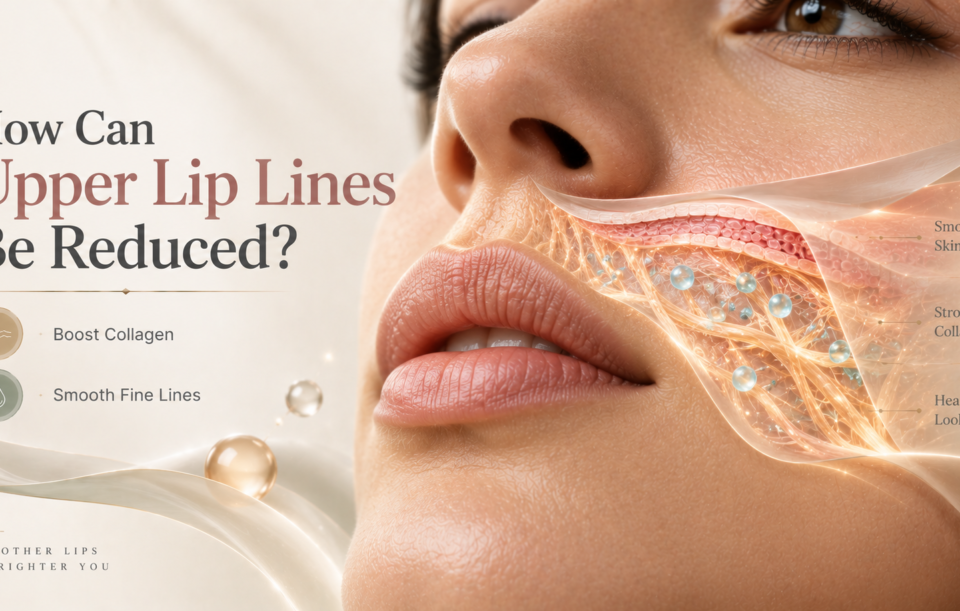
Upper lip lines are the fine vertical creases that develop between the nose and upper lip. They are sometimes called lip lines, smoker’s lines or perioral lines, although they can occur even in people who have never smoked.
These lines may initially appear only when speaking, smiling or pursing the lips. With ageing, repeated movement, sun exposure and changes in collagen and skin elasticity, they can become visible even when the mouth is relaxed.
So, how can upper lip lines be reduced?
There is no single treatment that works for every type of lip line. Depending on the cause and depth, options may include Botox, carefully selected fillers, skin resurfacing treatments or a combination approach.
The most important step is determining whether the lines are mainly caused by muscle movement, skin ageing, volume changes or several factors together.
Key Takeaways
- Upper lip lines can develop from repeated movement, ageing, sun exposure and loss of skin support.
- Botox may help selected movement-related lines by reducing excessive muscle activity.
- Filler may be considered when structural support or deeper creases are contributing to the problem.
- Skin-focused treatments may help improve texture and fine lines.
- Botox and filler perform different jobs and should not be treated as interchangeable.
- Over-treatment around the mouth can affect natural expression and lip movement.
- Deep lines may need a combination treatment rather than one procedure.
- The aim should be softer lines while maintaining a natural-looking mouth.
Why Do Upper Lip Lines Develop?
The skin around the mouth is constantly moving.
Talking, smiling, drinking through a straw, kissing and pursing the lips repeatedly activate the muscles surrounding the mouth. Over many years, repeated folding of the skin can contribute to visible lines.
Ageing can make these lines more noticeable because the skin gradually changes in:
- Collagen support
- Elasticity
- Thickness
- Hydration
- Ability to recover after movement
Sun exposure can further contribute to changes in skin texture and elasticity.
Smoking is another known contributor because it combines repeated lip pursing with factors that can negatively affect skin quality. However, calling every upper lip line a “smoker’s line” is inaccurate because non-smokers commonly develop them too.
Are Your Lip Lines Dynamic or Static?
This distinction can help guide treatment.
Dynamic upper lip lines
Dynamic lines mainly appear when the lips move.
For example, they may become visible when you:
- Purse your lips
- Speak
- Drink through a straw
- Make certain facial expressions
Muscle activity is an important contributor to these lines.
Static upper lip lines
Static lines remain visible even when your mouth is relaxed.
These may involve more established skin creasing, collagen changes, sun damage or loss of structural support.
Many people have a combination of both types.
This is why simply choosing “Botox for lip lines” without examining the mouth may not address the complete problem.
Can Botox Reduce Upper Lip Lines?
Botox may help selected dynamic upper lip lines.
Botulinum toxin works by temporarily reducing activity in targeted muscles. When carefully placed around the mouth, it may reduce the repetitive muscular folding that contributes to certain fine lines.
However, the mouth is a highly functional area.
The muscles around it are involved in:
- Speaking
- Drinking
- Eating
- Lip expression
- Lip closure
For this reason, treatment needs to be conservative and accurately placed.
Using more Botox does not automatically create smoother or better results.
Excessive weakening around the mouth may interfere with normal lip function or expression. The goal is usually to soften excessive movement while preserving natural function.
Can Botox Remove Deep Lip Lines?
Botox alone may not completely correct established lines that remain visible at rest.
If a line has become deeply etched into the skin, reducing muscle activity addresses only one part of the problem.
The remaining crease may be related to:
- Skin ageing
- Reduced collagen
- Surface texture
- Volume changes
- Long-term repeated folding
This is where a treatment plan may need to address both movement and skin structure.
Patients considering wrinkle-relaxing treatment can explore Botox and facial aesthetic treatment options at Elegance Clinic as part of a professional assessment.
Can Filler Help Upper Lip Lines?
Filler can have a different role.
While Botox targets muscle activity, dermal filler adds volume or structural support.
In selected patients, very carefully placed filler may help soften deeper creases or support tissue around the lips.
This does not mean the lips themselves need to become noticeably larger.
Lip-line treatment and lip augmentation are not necessarily the same goal.
A patient may want to improve fine lines while preserving their existing lip size and shape. The treatment plan should reflect that preference.
Too much filler around the mouth can create heaviness, altered proportions or an unnatural appearance, so conservative treatment is important.
What About Skin Treatments?
Sometimes the main problem is less about muscle movement and more about skin quality.
Skin-focused procedures may be considered when upper lip lines occur alongside:
- Rough texture
- Fine surface wrinkles
- Sun-related changes
- Reduced skin elasticity
- Uneven skin quality
Depending on individual skin characteristics, a clinician may discuss resurfacing or collagen-stimulating options.
The purpose is different from Botox or filler.
A simple way to understand the treatment choices is:
Movement problem: consider muscle-focused treatment.
Structural crease or support problem: filler may sometimes help.
Skin texture problem: consider skin-focused treatment.
Combination problem: more than one treatment may be appropriate.
Will Treatment Make the Upper Lip Completely Smooth?
That should not be the expectation.
Normal lips and surrounding skin move constantly. Completely eliminating every line can require excessive treatment and may compromise natural appearance or function.
A more realistic goal is to make prominent lines softer and less noticeable while keeping facial expression natural.
Deep, longstanding creases may improve without disappearing completely.
Is Botox or Filler Better for Upper Lip Lines?
Neither is automatically better.
They address different causes.
| Main Concern | Possible Approach |
|---|---|
| Lines mainly appear with lip movement | Botox may be considered |
| Deeper crease visible at rest | Filler may sometimes help |
| Poor skin texture and fine surface lines | Skin treatment may be considered |
| Movement plus established creases | Combination treatment may be considered |
The correct treatment can only be chosen after assessing how the lines behave both at rest and during facial movement.
Are Upper Lip Line Treatments Safe?
Aesthetic treatments around the mouth require appropriate medical assessment and precise technique.
Botulinum toxin can cause temporary effects such as tenderness, bruising or asymmetry. Incorrect or excessive treatment around the mouth can also affect lip movement.
Dermal fillers have their own potential risks, including swelling, bruising, tenderness, lumps, asymmetry and infection. Certain filler complications involving blood vessels are uncommon but can be serious and require urgent recognition and treatment.
The risks and suitability of the exact procedure should therefore be discussed before treatment.
You can read more about Dr. Ashutosh Shah and his plastic and cosmetic surgery experience before considering an aesthetic consultation.
How Should Upper Lip Lines Be Assessed?
Instead of looking only at how many lines are visible, an aesthetic assessment should consider:
- Whether the lines appear at rest or only during movement
- Their depth
- Skin texture and elasticity
- Existing lip volume and shape
- Muscle activity around the mouth
- Previous Botox, filler or skin treatments
- Facial proportions
- The patient’s desired degree of change
This helps avoid treating every upper lip line with the same procedure.
Conclusion
Upper lip lines can often be softened, but successful treatment begins by identifying what is causing them.
Botox may be useful for selected movement-related lines. Filler may help certain deeper creases or structural concerns, while skin treatments may be more appropriate when texture and skin ageing are major contributors.
Some patients benefit from a carefully planned combination rather than relying on one treatment.
Most importantly, treatment around the mouth should preserve natural expression and function instead of attempting to erase every normal line.
For an individual assessment, you can contact Elegance Clinic to discuss which approach may be suitable for your upper lip lines.
Frequently Asked Questions
Treatments can soften upper lip lines, but permanent complete removal cannot be guaranteed. Ageing, facial movement and skin changes continue over time.
Botox may help selected lines caused mainly by repeated muscle movement. Established static lines may require a different or combined approach.
Carefully selected filler may soften certain deeper creases or improve structural support, but suitability depends on the individual anatomy.
No. Smoking can contribute, but non-smokers can also develop lip lines because of ageing, genetics, sun exposure and repeated facial movement.
Potentially, yes. Treating lip lines does not automatically mean performing lip augmentation. The approach should be based on the cause of the lines and the patient’s goals.


Category
Latest From Blog
Exosomes: Are They Really the Future of Skin and Hair Treatment?
Certified Acne Scar Laser Specialist in Surat: Why Expertise Decides Your Result
How Can Upper Lip Lines Be Reduced?