




This article reflects the clinical approach of Dr. Ashutosh Shah, M.Ch., DNB (Plastic Surgery), Founder & Director of Elegance Clinic and a Board-Certified Plastic, Reconstructive & Cosmetic Surgeon with 22+ years of surgical experience.
Can Glass Skin Filler Treatment Give You Smoother, Hydrated-Looking Skin?
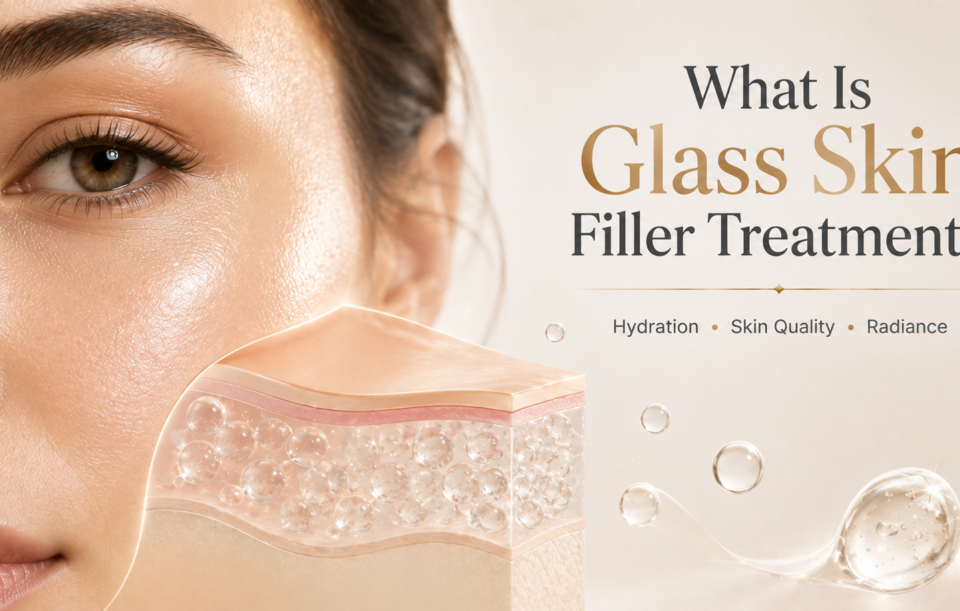
The term glass skin is often used to describe skin that looks smooth, hydrated, luminous and naturally refreshed. Because of this trend, many people searching for glass skin filler treatment assume it is a single injectable procedure designed to create flawless, poreless skin.
That is not quite accurate.
Glass skin filler treatment is better understood as a skin-quality focused injectable approach. Depending on the product and individual skin concern, injectable treatments may help improve hydration, fine texture and overall skin appearance. They are different from conventional dermal fillers that are mainly used to restore volume or reshape facial contours.
Most importantly, no injectable treatment can literally create permanently flawless or pore-free “glass” skin. A medically appropriate goal is healthier-looking, better-hydrated and more refined skin while preserving its natural texture.
First, What Does “Glass Skin” Actually Mean?
Glass skin is not a medical diagnosis.
It is a cosmetic term used to describe skin that appears:
- well hydrated,
- smooth,
- luminous,
- relatively even in tone and texture,
- and naturally fresh.
Real skin still has pores, fine lines and texture. Therefore, the purpose of treatment should not be to make the skin look artificially filtered.
The first question during consultation should be:
What is preventing your skin from looking healthy and refreshed?
The answer may be dehydration, pigmentation, acne scars, fine lines, volume loss or another concern. Each can require a different treatment.
Is Glass Skin Filler the Same as Normal Dermal Filler?
Not necessarily. Traditional dermal fillers and injectable skin-quality treatments can have different purposes.
Conventional fillers are commonly used when the goal is to restore volume or modify contours in areas such as the cheeks, lips or chin.
A treatment promoted for “glass skin” may instead focus more on skin hydration or quality.
This distinction is important because patients should know exactly what is being injected rather than choosing a procedure based only on a marketing name.
Before treatment, ask about the product, its intended purpose, expected benefits, limitations and possible complications.
Why Doesn’t Everyone Need the Same Glass Skin Treatment?
Imagine four people who all say:
“I want glass skin.”
The first has dry, dehydrated-looking skin.
The second has pigmentation.
The third has acne scars and uneven texture.
The fourth has age-related facial volume loss.
They may want a similar overall appearance, but medically they do not have the same problem.
That means giving all four people the same injectable treatment would not necessarily address their individual concerns.
If dehydration is the main concern
Skin-quality treatments may be considered depending on the patient’s skin and suitability.
If pigmentation is making the skin look dull
Pigmentation requires evaluation of its cause. Simply adding dermal filler does not treat most pigmentation problems.
If acne scars create uneven texture
The scar type matters. Different scar patterns may require different treatment strategies.
If facial volume has reduced
Carefully planned dermal filler may be appropriate in selected areas.
This is why assessment should come before the product.
How Can Injectable Treatments Improve Skin Quality?
Depending on the specific treatment being used, certain injectable approaches may be selected to improve aspects of skin hydration and appearance.
However, results depend on:
Product used → Treatment technique → Skin condition → Treatment area → Individual response
It is therefore misleading to describe every injectable as having identical “glass skin” benefits.
At Elegance Clinic, facial treatment planning begins with the patient’s actual concern rather than assuming that one procedure is appropriate for everyone.
Can Glass Skin Filler Remove Open Pores?
This is an important expectation to correct.
No treatment can make normal human skin permanently poreless.
Some treatments may make overall texture appear more refined, but pores are normal anatomical structures.
Photographs on social media can also be influenced by makeup, lighting, camera processing and filters.
A realistic medical objective is improvement in skin appearance rather than artificially flawless skin.
Can It Remove Fine Lines?
This depends on the type and cause of the line.
Fine lines related to dehydration or skin quality are different from deeper folds caused by facial movement, ageing or loss of structural support.
Therefore, a treatment designed primarily to improve skin hydration should not automatically be expected to correct every wrinkle.
This is another reason a facial assessment matters.
Will Glass Skin Treatment Make the Face Look Puffy?
A skin-quality treatment should not automatically mean creating a fuller face.
Traditional volumizing filler and skin-quality injectable treatments have different goals.
If someone mainly wants fresher-looking skin but does not have significant volume loss, unnecessarily adding large amounts of conventional filler may alter facial proportions without treating the real concern.
More filler does not automatically mean better skin.
Who May Consider This Type of Treatment?
A skin-quality injectable treatment may be discussed with adults concerned about issues such as dehydrated-looking, dull or early ageing skin, depending on the product being considered.
Suitability cannot be decided from the treatment name alone.
A medical consultation should review:
Skin concern → Medical history → Previous procedures → Facial anatomy → Product suitability → Expected outcome
Certain medical conditions, active skin problems, pregnancy or other individual circumstances may affect whether an elective injectable treatment is appropriate.
What Happens During the Consultation?
A good consultation should involve much more than choosing how many injections are required.
The clinician should first identify the patient’s main concern and examine the skin and facial anatomy.
Previous fillers and cosmetic procedures should also be discussed.
Only then should the available treatment options be compared.
This is particularly important for patients who have undergone multiple previous injectable treatments.
You can learn more about the clinical background and treatment philosophy of Dr. Ashutosh Shah before considering an aesthetic procedure.
Is Glass Skin Filler Painful?
Injectable procedures can cause temporary discomfort.
The experience depends on the product, injection technique, treatment area and individual sensitivity.
It is better to describe the procedure realistically than promise that it will be completely painless.
Patients should ask what comfort measures are normally used for the specific procedure being considered.
What Happens After Treatment?
The recovery experience varies with the injectable product and technique.
Temporary effects may include:
- redness,
- tenderness,
- swelling,
- bruising,
- and small injection-site changes.
These generally need time to settle.
The treating medical professional should provide aftercare instructions appropriate to the specific product used.
Are Glass Skin Injectable Treatments Safe?
Injectable cosmetic treatments have potential complications and should be approached as medical procedures rather than ordinary beauty treatments.
Possible problems can include bruising, swelling, infection, asymmetry, lumps, irregularities or an undesirable cosmetic result.
Certain injectable fillers can also have rare but serious vascular complications if material enters or compresses a blood vessel.
For that reason, the person performing treatment should understand facial anatomy, complication recognition and appropriate management.
How Long Do Glass Skin Filler Results Last?
There is no single accurate duration for something called “glass skin filler.”
Why?
Because the term can be used for different products and treatment approaches.
Duration can depend on:
- the injectable used,
- treatment area,
- skin characteristics,
- individual metabolism,
- and treatment objective.
Patients should ask for information about the specific product being recommended rather than relying on a generic duration advertised for “glass skin.”
How Is This Different From a Facial or Skin-Care Routine?
A good daily skin-care routine and an injectable treatment do different things.
Basic measures such as appropriate cleansing, moisturization and sun protection remain important even after cosmetic procedures.
Injectables should not be viewed as a replacement for ongoing skin care.
Likewise, lifestyle, sun exposure, ageing and underlying skin conditions can continue affecting the appearance of the skin after treatment.
How Do You Avoid an Over-Treated Look?
The answer starts with choosing the treatment according to the problem.
If the concern is skin quality, adding unnecessary facial volume simply because filler is available can move the face away from its natural proportions.
A conservative approach asks:
What needs improvement?
Then:
What is the least unnecessary treatment capable of addressing it?
That principle can help preserve natural facial character.
What Should You Ask Before Glass Skin Filler Treatment?
Before proceeding, make sure you understand:
- What exact product is being used?
- Is it a traditional dermal filler or another type of injectable?
- What specific skin concern is it intended to improve?
- What will it not improve?
- What are the possible side effects and complications?
- How long might its effects last?
- Who will manage a complication if one occurs?
These questions are more valuable than simply asking whether a clinic provides “glass skin treatment.”
Glass Skin Filler vs Traditional Filler
| Glass Skin / Skin-Quality Approach | Traditional Dermal Filler |
|---|---|
| Primarily discussed for skin-quality goals | Primarily used for volume and contour |
| May focus on hydration or overall appearance | Can restore or modify facial volume |
| Does not necessarily reshape the face | Frequently used for structural contouring |
| Product and technique vary | Product selection also varies by area and goal |
| Should not promise poreless skin | Should not promise perfect facial proportions |
The exact distinction depends on the product being used, so patients should always ask for the actual treatment name.
What Results Are Realistic?
A realistic outcome is improved skin appearance, not filtered perfection.
Depending on the patient’s concern and treatment selected, improvements may involve hydration, smoothness or an overall refreshed appearance.
But treatment cannot stop ageing, permanently remove every pore, erase every line or guarantee flawless skin.
Results also vary between individuals.
That difference between improvement and perfection should be clear before treatment begins.
The Right Treatment Starts With the Skin, Not the Trend
Glass skin filler treatment should not be approached as a shortcut to flawless skin.
“Glass skin” describes an appearance. The medical task is to determine why the skin does not currently have the quality the patient wants.
If dehydration is the problem, address hydration. If pigmentation is the issue, evaluate pigmentation. If volume has been lost, determine whether carefully planned filler is appropriate. And if texture or scarring is the concern, choose treatment according to that condition.
This concern-first approach helps avoid unnecessary injections and unrealistic expectations.
With 22+ years of surgical experience, Dr. Ashutosh Shah brings a plastic, reconstructive and cosmetic surgery perspective to facial aesthetic planning at Elegance Clinic.
For an individualized assessment, contact Elegance Clinic.
Frequently Asked Questions
It is a term used for injectable approaches intended to improve aspects of skin appearance or quality. It is not one universally standardized medical treatment.
Not always. Conventional dermal fillers primarily address facial volume and contour, while some skin-quality injectables have different objectives.
No. Pores are normal structures and permanently poreless skin is not a realistic medical expectation.
Selected skin-quality treatments may help certain patients, but dullness can have different causes that should first be assessed.
Not every acne scar responds to filler. Scar type, depth and surrounding skin need evaluation before choosing treatment.


Category
Latest From Blog
Advanced Botox Treatment: Beyond Just Freezing Wrinkles
What Is Glass Skin Filler Treatment?
How Can Uneven Lips Be Corrected?