

Written by Dr. Ashutosh Shah, M.Ch., DNB (Plastic Surgery)
Director, Elegance Clinic, Surat
Dr. Ashutosh Shah is a Board-Certified Plastic, Cosmetic and Reconstructive Surgeon with more than 22 years of surgical experience. He completed M.Ch. in Plastic Surgery from The M.S. University of Baroda and DNB in Plastic Surgery, with advanced training in microvascular surgery at Ganga Hospital, Coimbatore, and cosmetic surgery at Apollo Hospital, Chennai.
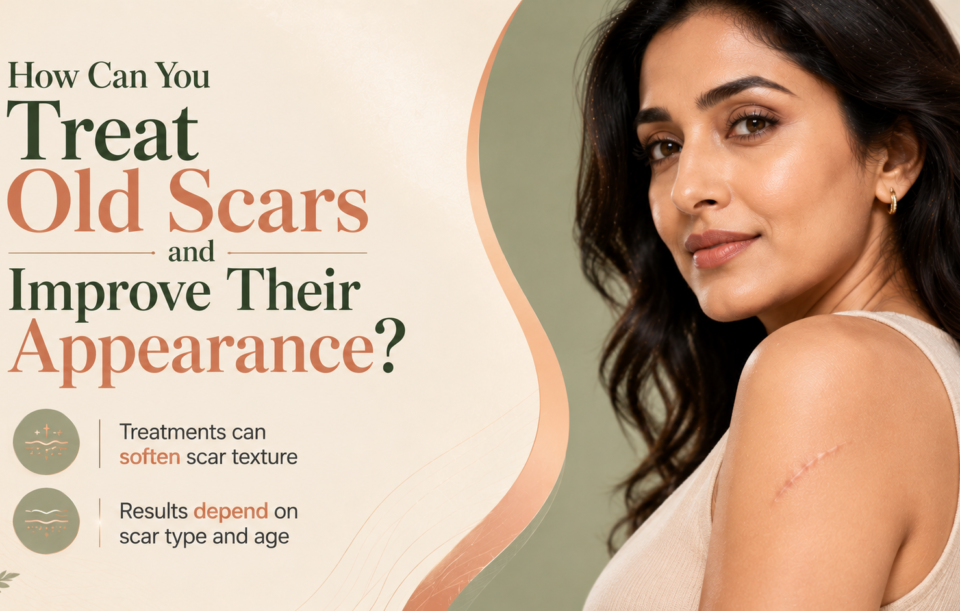
Old scars can often be made less noticeable with the right treatment, although completely removing a mature scar is generally not possible. The best approach depends on the scar’s type, depth, colour, texture, location, and how it has healed. Treatment may include laser resurfacing, microneedling, scar revision surgery, injections, fillers, or other techniques, depending on the individual scar.
A scar that has been present for years is not necessarily untreatable. However, there is no single procedure that works equally well for every scar. A flat, dark scar requires a different approach from a raised keloid, while a depressed or tightly attached scar may need treatment that addresses its depth and underlying tissue. Laser treatment can improve the appearance of several types of scars, but it cannot completely erase scar tissue.
The first step is therefore a proper clinical assessment. A specialist can determine what type of scar you have and whether the main concern is colour, thickness, texture, indentation, tightness, or a combination of these. In some cases, combining treatments can provide better improvement than using one technique alone. The goal of scar treatment is usually to make the scar softer, flatter, smoother, and less noticeable, rather than promising perfect skin.
Key Takeaways
- Old scars can often be improved, but they usually cannot be completely erased.
- Treatment depends on the scar’s type, depth, colour, texture, and location.
- Laser treatments may improve scar texture and discoloration.
- Microneedling can be considered for selected depressed or textured scars.
- Raised scars and keloids may require injections or other specialised treatments.
- Surgical scar revision may help selected large, deep, wide, or poorly positioned scars.
- A personalised assessment is important before choosing treatment.
Why Do Some Old Scars Remain Noticeable?
A scar develops as the body repairs damaged skin. Even after a wound has completely closed, the repaired area may differ from the surrounding skin in colour, thickness, texture, flexibility, or depth.
Some scars become less noticeable naturally over time, while others remain prominent. The appearance can be influenced by:
- The original injury
- Surgical incision
- Burn
- Infection
- Wound depth
- Location of the injury
- Skin type
- Healing response
- Tension around the wound
- Tendency to develop raised scars
Scars can be classified broadly as flat, raised, depressed, stretched, discoloured, hypertrophic, or keloid, and different types require different approaches.
Can Old Scars Really Be Improved?
Yes. Many old scars can be made less noticeable, although treatment cannot usually restore the skin completely to its original condition.
The American Academy of Dermatology notes that treatment can make scars less noticeable, while the American Society of Plastic Surgeons explains that scar revision aims to minimise the appearance of a scar rather than completely erase it.
Improvement may involve reducing:
- Uneven texture
- Raised scar tissue
- Depressed areas
- Redness
- Dark pigmentation
- Scar width
- Tightness
- Irregular edges
The amount of improvement varies considerably from person to person.
Which Treatments Can Improve Old Scars?
The treatment depends primarily on what type of scar you have.
Laser Resurfacing
Laser treatments can improve selected scars by changing the appearance and texture of the treated skin. Different laser technologies are used for different concerns, including redness, pigmentation, surface irregularities, and some depressed scars.
Microneedling
Microneedling creates controlled microscopic injuries in the skin to stimulate a healing response. It may be considered for certain depressed or uneven scars and is sometimes performed as a series of treatments.
Scar Revision Surgery
Surgical revision may be considered when an old scar is wide, deep, poorly positioned, significantly irregular, or causing functional problems. The surgeon removes or reshapes the scar and carefully closes the area to create a less noticeable result.
Injectable Treatments
Raised scars and keloids may sometimes be treated with injections such as corticosteroids or other medications. These treatments aim to reduce the size, hardness, itching, or discomfort associated with raised scar tissue.
Dermal Fillers
For selected depressed scars, fillers may help raise a sunken area and create a smoother contour. Results depend on the scar and the filler used, and maintenance treatments may be required.
Can Laser Treatment Reduce an Old Scar?
Laser treatment can make some old scars less noticeable, but it cannot completely remove a scar. The most suitable laser depends on whether the primary concern is redness, pigmentation, texture, thickness, or indentation.
Laser treatment may help:
- Improve uneven texture
- Reduce redness
- Improve some pigmentation concerns
- Soften certain raised scars
- Improve selected depressed scars
- Make scars blend better with surrounding skin
Some patients require multiple sessions rather than one treatment. Results may also take time to become apparent.
Is Laser Safe for Every Skin Type?
Laser treatment needs to be selected carefully according to skin type and scar characteristics. People with darker skin tones can have a greater risk of burns or post-treatment pigmentation changes with some laser procedures, making appropriate medical assessment especially important.
Can Microneedling Improve Old Scars?
Microneedling may be useful for selected scars that have an uneven or depressed texture.
The treatment uses fine needles to create controlled micro-injuries in the skin, stimulating the body’s wound-healing response.
It may help improve:
- Depressed scars
- Uneven texture
- Mild surface irregularities
- Overall scar visibility
Multiple sessions may be recommended depending on the scar and desired improvement. ASPS notes that microneedling can be used as a non-surgical scar treatment and may help improve scar texture and appearance.
Microneedling is not appropriate for every type of scar, particularly certain raised or active keloid scars.
When Is Scar Revision Surgery Considered?
Surgical scar revision may be considered when a scar cannot be adequately improved with non-surgical treatment or when its size, position, shape, depth, or tightness makes surgery appropriate.
The procedure may involve removing the existing scar and creating a carefully planned closure.
Depending on the scar, advanced techniques may be used to:
- Reduce scar width
- Change scar direction
- Improve contour
- Release tight or restrictive tissue
- Make the scar less conspicuous
Scar revision does not mean the area will have completely normal skin afterward. The aim is to replace or modify the existing scar so that the new scar is less noticeable.
What About Raised or Keloid Scars?
Raised scars need a different treatment strategy from flat or depressed scars.
A hypertrophic scar remains within the original wound area, while a keloid can extend beyond the original injury.
Possible treatments may include:
- Corticosteroid injections
- Other injectable treatments
- Laser or light treatments
- Silicone products
- Cryotherapy in selected cases
- Surgical treatment in appropriate cases
Keloids can return after treatment, so management may require a combination approach and follow-up.
How Is the Right Treatment Selected?
There is no universal best treatment for old scars.
A specialist may assess:
Scar type:
Flat, raised, depressed, stretched, hypertrophic, or keloid.
Colour:
Red, brown, darker, lighter, or similar to surrounding skin.
Texture:
Smooth, rough, thick, thin, or uneven.
Depth:
Whether the scar affects only the surface or extends into deeper tissue.
Location:
Scars on the face, joints, chest, abdomen, or other areas may behave differently.
Symptoms:
Pain, itching, tightness, or restricted movement can influence treatment selection.
The American Academy of Dermatology specifically recommends professional assessment because different scar types require different treatments.
Old Scar Treatment Options at a Glance
| Treatment | Common Use | Main Goal | May Require Multiple Sessions |
|---|---|---|---|
| Laser | Texture, redness, selected scars | Make scar less noticeable | Yes |
| Microneedling | Selected depressed/textured scars | Improve texture | Often |
| Scar revision | Deep, wide or irregular scars | Reshape or minimise scar | Sometimes |
| Steroid injections | Raised scars/keloids | Flatten scar | Often |
| Dermal filler | Selected depressed scars | Restore contour | Often |
| Silicone therapy | Some raised scars | Reduce thickness/appearance | Yes |
The appropriate treatment depends on the individual scar rather than its age alone.
What Is Recovery Like After Scar Treatment?
Recovery depends on the technique used.
After laser or microneedling, temporary redness, sensitivity, swelling, or peeling may occur depending on the treatment intensity.
After surgical scar revision, early healing may involve swelling, discoloration, and discomfort. The new scar continues to mature over the following months. ASPS notes that final scar refinement can take several months and, in some cases, up to a year.
Your doctor will provide specific instructions regarding:
- Wound care
- Sun protection
- Skin products
- Physical activity
- Follow-up appointments
Sun protection is particularly important because ultraviolet exposure can contribute to discoloration and interfere with scar healing.
What Results Can You Expect?
The goal of scar treatment is to reduce visibility rather than erase the scar completely.
Depending on the scar, improvement may include:
- Smoother texture
- Reduced redness
- Less noticeable pigmentation
- Improved contour
- Reduced thickness
- Better blending with surrounding skin
Results may develop gradually. Some treatments require several sessions, while surgical revision may involve a longer maturation period.
Realistic expectations are important because even successful scar treatment leaves some evidence that the skin was previously injured.
Can an Old Scar Be Treated Years After Injury?
Yes. The fact that a scar is several years old does not automatically mean that treatment is impossible.
However, the scar’s current characteristics are more important than simply how old it is.
A mature scar that is flat but dark may require a different treatment from a scar that is depressed, raised, or attached to deeper tissue.
A clinical assessment can help determine whether laser treatment, microneedling, revision surgery, injections, or a combination approach is most appropriate.
When Should You See a Specialist?
Consider professional evaluation if an old scar:
- Remains highly visible
- Is raised or continues to enlarge
- Is painful or itchy
- Restricts movement
- Is depressed or deeply uneven
- Has significant colour differences
- Developed after surgery or trauma
- Causes ongoing cosmetic concern
If you have a scar-like area that appeared without a known injury, it should also be medically evaluated rather than automatically assumed to be a scar. The AAD notes that some skin cancers can resemble scars.
Old scars cannot usually be erased completely, but the right scar treatment can make them considerably less noticeable. The best option depends on whether the scar is raised, depressed, discoloured, thick, wide, textured, or attached to deeper tissue. Laser treatments and microneedling may help selected surface and texture concerns, while injections can be useful for certain raised scars. Deep, wide, or restrictive scars may sometimes benefit from surgical scar revision.
Because every scar heals differently, treatment should begin with a professional assessment rather than choosing a procedure based only on the scar’s age. A personalised plan can help set realistic expectations and determine whether one treatment or a combination approach is most appropriate.
If an old scar is affecting your appearance, confidence, or movement, consult a qualified plastic surgeon or dermatologist to discuss your treatment options at Elegance Clinic, Surat.
Dr. Ashutosh Shah is a Board-Certified Plastic, Cosmetic and Reconstructive Surgeon with more than 22 years of surgical experience. His training includes M.Ch. in Plastic Surgery from The M.S. University of Baroda, DNB in Plastic Surgery, advanced microvascular surgery training at Ganga Hospital, Coimbatore, and cosmetic surgery training at Apollo Hospital, Chennai.
Elegance Clinic, established in Surat in 2014, provides cosmetic surgery, dermatology, hair restoration, laser treatments, and reconstructive procedures.
Have an old scar that affects your appearance or confidence? Explore personalised scar treatment options at Elegance Clinic, including laser treatment, microneedling, and scar revision.
Book a consultation with Dr. Ashutosh Shah in Surat to find the right treatment for your scar.
Frequently Asked Questions
No, but treatment can make old scars less noticeable.
Laser, microneedling, injections, or scar revision may help depending on the scar type.
Yes, laser treatment can improve scar texture, redness, and pigmentation.
Some can, but deeper scars may benefit from surgical scar revision.
The number varies depending on the scar and treatment method.
Category
Latest From Blog
What Are the Risks of an Eyebrow Lift?
Is Botox Safe for Forehead Lines?
How Can You Treat Horizontal Neck Lines?