




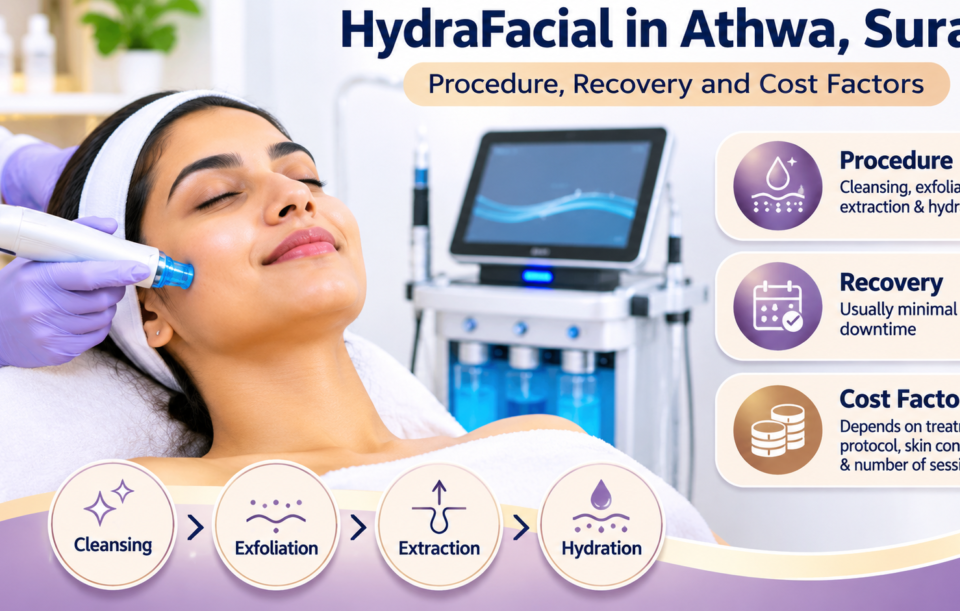
Planning a HydraFacial in Athwa, Surat involves understanding what the treatment does, how your skin may respond, and which factors influence the total cost. Although HydraFacial is generally a non-invasive facial treatment, a consultation helps determine whether it is appropriate for your skin.
For the full procedure, recovery timeline and cost factors, see our guide to HydraFacial in Surat.
HydraFacial combines cleansing, exfoliation, suction-assisted extraction, and the application of hydrating solutions. The aim is to improve the appearance and feel of the skin without the recovery associated with more aggressive resurfacing procedures.
However, results vary according to skin type, concerns, treatment settings, and the products used. Therefore, it is important to discuss your expectations and aftercare before booking.
Quick Answer: HydraFacial is a non-surgical facial treatment that cleanses, exfoliates, and hydrates the skin. Many people resume routine activities shortly afterward, although temporary redness or sensitivity may occur. Treatment duration, cost, and follow-up requirements depend on the individual plan.
HydraFacial Quick Facts
| Factor | What to Expect |
|---|---|
| Treatment duration | |
| Anaesthesia | Usually not required |
| Hospital stay | Generally not required; outpatient treatment |
| Back to work | Often the same day, if the skin responds normally |
| Follow-up visits | |
| Initial recovery | Temporary redness, tightness, or sensitivity may occur |
| Results | Some patients notice a refreshed appearance soon afterward |
| Maintenance | Depends on skin concerns and the treatment plan |
What Is HydraFacial and Who Is It For?
HydraFacial is a device-assisted facial treatment that combines several skincare steps in one session.
The treatment typically uses a specialised handpiece to cleanse the skin, remove surface debris, assist with extraction, and deliver hydrating solutions.
Which skin concerns may benefit?
HydraFacial may be considered for patients concerned about dull-looking skin, rough texture, surface congestion, and dehydration.
Some people also seek treatment to improve the temporary appearance of pores or maintain a regular skincare routine.
However, it is important to distinguish cosmetic improvement from treatment of an underlying skin disease.
HydraFacial cannot permanently eliminate pores, erase deep wrinkles, or reliably treat every type of acne or pigmentation.
Who should seek medical advice first?
Patients with active skin infections, open wounds, significant irritation, or certain inflammatory skin conditions should undergo assessment before treatment.
Additionally, tell the clinician about allergies, recent cosmetic procedures, prescribed skincare products, and any history of unusual skin reactions.
If you have persistent acne, pigmentation, or another diagnosed skin condition, a dermatologist may recommend a different treatment plan.
How does HydraFacial compare with other facials?
HydraFacial uses a specific device-assisted approach, while other facial treatments may use different cleansing, exfoliation, or rejuvenation techniques.
For more information, read HydraFacial vs MediFacial vs OxyGeneo.
Planning HydraFacial in Athwa Surat: Consultation and Skin Assessment
A consultation allows the clinician to understand your skin concerns and choose suitable treatment settings.
Discuss your main concern
Explain whether you are primarily concerned about dryness, uneven texture, congestion, or general skin maintenance.
The clinician should also ask about previous facial treatments and any reactions you experienced.
Review your skincare routine
Certain exfoliating products, prescription retinoids, and recent procedures may affect treatment planning.
Therefore, bring a list of the skincare products and medications you currently use.
Do not stop prescribed medication unless your treating clinician advises you to do so.
Examine skin sensitivity
The clinician checks for irritation, active lesions, and other conditions that could make treatment unsuitable.
In some cases, treatment may need to be postponed or modified.
Agree on realistic goals
HydraFacial can support cosmetic skin maintenance, but it does not replace every medical or aesthetic treatment.
For example, someone seeking correction of significant volume loss may need a different discussion.
You can explore HydraFacial vs dermal fillers to understand how their purposes differ.
How Is the HydraFacial Procedure Done, Step by Step?
The precise treatment sequence varies according to the device, selected products, and individual skin needs.
Step 1: Skin preparation
First, the clinician cleanses the face and removes makeup, sunscreen, and surface impurities.
The skin is then assessed for any irritation that could affect the session.
Step 2: Cleansing and exfoliation
Next, the treatment handpiece helps remove surface debris and dead skin cells.
This step aims to leave the skin feeling smoother and better prepared for subsequent treatment.
Step 3: Optional exfoliating solution
Depending on the protocol, the clinician may apply a mild exfoliating solution.
However, stronger exfoliation is not appropriate for everyone, particularly patients with sensitive or irritated skin.
Step 4: Suction-assisted extraction
The device may help remove some debris from congested pores through controlled suction.
Patients may notice a pulling sensation, but the clinician should adjust treatment if discomfort occurs.
Step 5: Hydrating serum application
The clinician applies selected hydrating solutions using the treatment system.
Product choice depends on the patient’s skin characteristics and the clinic’s available protocol.
Step 6: Finishing care
Finally, the clinician may apply moisturiser and sunscreen.
The patient receives advice about skincare, sun protection, and when to resume potentially irritating products.
[Doctor to confirm the clinic’s device, products, actual procedure steps, and typical duration.]
Recovery: What the First Weeks Look Like
HydraFacial generally requires less downtime than invasive cosmetic procedures. Nevertheless, the skin may need a short period of gentle care.
Immediately after treatment
Some patients notice smoother-feeling skin or a temporary refreshed appearance.
Others may experience mild redness, tightness, or sensitivity.
These responses can vary, especially if exfoliating solutions were used.
First 24-48 hours
Follow the clinician’s instructions about cleansing, moisturising, and sunscreen.
Additionally, avoid harsh scrubs or other irritating products until your skin has settled.
Do not assume that every patient can resume strong exfoliants immediately.
During the first week
Continue gentle skincare and monitor for unusual irritation.
If redness becomes more pronounced, discomfort increases, or a rash develops, contact the clinic.
Over the following weeks
Any cosmetic improvement may gradually diminish as normal skin processes continue.
Therefore, maintenance appointments should be based on your skin’s response and the clinician’s recommendation rather than a fixed schedule for everyone.
Which Factors Change the Cost of HydraFacial?
HydraFacial pricing depends on the treatment plan and services included.
Treatment areas
A standard facial session may differ in cost from treatment involving additional areas.
Treatment protocol
The number of steps, selected solutions, and any optional enhancements can affect the quotation.
Skin concerns
Patients with complex concerns may require a different treatment approach or additional consultations.
However, more expensive treatment does not necessarily mean better results.
Number of sessions
Some patients choose an occasional session, while others discuss a maintenance plan.
Ask whether the clinic recommends individual sessions or a package.
Professional assessment and facilities
Clinical expertise, device maintenance, hygiene procedures, and the treatment environment may also influence pricing.
Additional skincare products
Recommended cleansers, moisturisers, and sunscreens may be charged separately.
Reaching the Clinic from Athwa
Patients from Athwa can plan their consultation, treatment session, and any recommended reviews in advance.
Before your appointment
Contact the clinic to confirm its exact address, opening hours, and appointment availability.
Ask whether an initial discussion can take place online.
However, a remote consultation may not replace an in-person skin assessment.
On treatment day
Arrive with information about your skincare routine and recent treatments.
The clinic may recommend avoiding certain products before the session.
Confirm these instructions beforehand rather than making changes independently.
After your session
Most patients can return to routine activities relatively quickly, provided their skin responds normally.
Nevertheless, plan enough time for treatment, aftercare instructions, and any unexpected sensitivity.
Planning follow-ups
Not every patient requires the same number of reviews or maintenance sessions.
Therefore, ask whether a follow-up is necessary and whether it is included in the quoted price.
You can use the clinic’s appointment information page to explore its consultation arrangements. This page concerns chemical peel appointments, so confirm HydraFacial availability directly.
Risks, Limitations and Warning Signs
HydraFacial is generally considered a non-invasive treatment, but it is not completely risk-free.
Possible effects include temporary redness, dryness, irritation, sensitivity, or breakouts.
Additionally, reactions to skincare ingredients may occur.
Patients with certain skin conditions may require modified treatment or an alternative approach.
When should you contact the clinic?
Contact your clinician if you develop persistent or worsening redness, significant swelling, blistering, a concerning rash, or increasing pain.
Seek urgent medical attention for severe allergic symptoms, such as breathing difficulty or swelling of the tongue or throat.
For general information about skin health and cosmetic treatment safety, consult the American Academy of Dermatology.
Questions to Ask Before You Decide
Before booking HydraFacial, ask the clinician:
- Is this treatment suitable for my skin type and concerns?
- Are there any conditions that make it unsuitable?
- Which treatment steps and solutions will you use?
- How long will the appointment take?
- What results are realistic for my skin?
- What side effects should I expect?
- Which skincare products should I avoid afterward?
- How much will the complete session cost?
- Will I need follow-up or maintenance appointments?
- What should I do if my skin becomes irritated?
Frequently Asked Questions
The appointment duration depends on the selected treatment protocol, consultation requirements, and any optional steps.
Not everyone needs the same follow-up schedule. Patients considering hydrafacial in athwa surat should ask whether a skin review or maintenance appointment is recommended and whether it is included in the treatment price.
An initial online discussion may be possible if the clinic offers this service. However, an in-person assessment may still be necessary to check skin sensitivity and treatment suitability.
Many patients can travel shortly after a routine HydraFacial session if they feel comfortable and have no significant reaction. However, follow the clinician’s instructions and protect your skin from excessive sun exposure.
Some cosmetic changes may be noticeable soon after treatment. However, results vary and may be temporary. HydraFacial does not produce a permanent transformation, and any maintenance schedule should be personalised.
Conclusion
HydraFacial offers a non-surgical approach to cleansing, exfoliation, and skin hydration. However, the right treatment depends on your skin condition, goals, and response to the selected products.
For patients planning treatment from Athwa, a consultation helps clarify the procedure, expected recovery, cost factors, and follow-up requirements.
Before booking, request a personalised treatment plan and a clear quotation. Most importantly, choose treatment based on appropriate skin assessment rather than promotional claims alone.


Category
Latest From Blog
Laser Hair Removal vs Waxing: Which One Suits You?
HydraFacial in Athwa, Surat: Procedure, Recovery and Cost Factors
एंटी-एजिंग ट्रीटमेंट के बाद ठीक होने में कितना समय लगता है?