


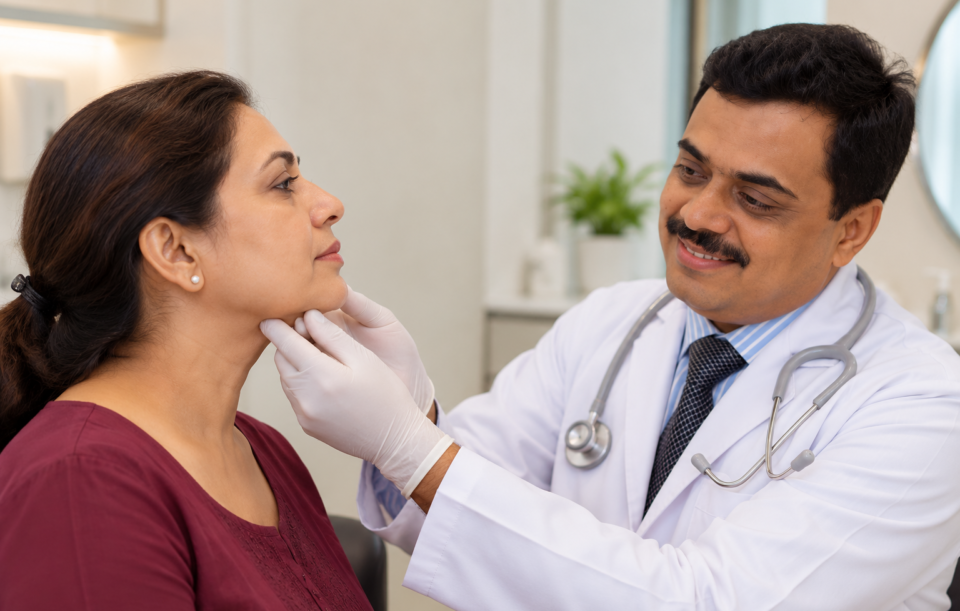
A laser for loose jawline concerns may help people who notice early skin sagging around their lower face. As skin ages, it gradually loses collagen and elasticity. Consequently, the jawline may look softer and less defined.
Laser skin tightening uses controlled energy to encourage collagen remodelling. As a result, some patients notice firmer skin and a slightly sharper jawline over the following months.
However, laser treatment has limits. It may improve mild skin laxity, but it cannot reliably lift heavy jowls or remove substantial loose skin. Therefore, understanding your degree of laxity helps you choose a suitable treatment.
How Is Jawline Laxity Graded?
Jawline laxity refers to loose skin and tissue around the lower face. Ageing, genetics, sun exposure and weight changes can all contribute to this concern.
Doctors assess the jawline by examining skin quality, facial structure, fat distribution and tissue descent.
Although clinicians use different assessment methods, the following four-grade guide can help patients understand their options.
| Grade | What You See | Energy-Based Tightening | Thread Lift | Surgery | Expected Results |
|---|---|---|---|---|---|
| None | Firm skin and a clearly defined jawline | Usually unnecessary | Usually unnecessary | Usually unnecessary | Little benefit expected |
| Mild | Slight skin looseness and early jawline softening | May provide modest improvement | Sometimes considered | Usually unnecessary | Subtle firming |
| Moderate | Visible jowls and reduced jawline definition | Limited improvement | Temporary lift in selected cases | May offer a more substantial correction | Results vary |
| Severe | Heavy jowls and significant loose skin | Unlikely to provide enough lifting | Often insufficient | Usually worth discussing | Surgical treatment may provide greater improvement |
This table offers general guidance rather than a formal diagnosis.
Why Does the Laxity Grade Matter?
Different degrees of sagging require different approaches.
For example, someone with mild laxity may benefit from collagen stimulation. In contrast, someone with heavy jowls may need treatment that repositions deeper tissues.
Therefore, identifying the correct grade helps prevent unrealistic expectations and unnecessary procedures.
How Does Laser Skin Tightening Work?
Laser skin tightening uses light energy to heat targeted layers of skin. The exact depth and effect depend on the device.
Controlled heating can stimulate the skin’s natural repair response. Over time, collagen remodelling may improve firmness and texture.
However, the process takes time. Patients usually cannot expect a dramatic change immediately after treatment.
With suitable devices, improvements may continue over three to six months.
What Happens to Collagen After Treatment?
Collagen provides structural support to the skin.
As we age, collagen production and organisation change. Consequently, the skin may become thinner and less firm.
Selected laser treatments stimulate a controlled healing response. This process may encourage collagen remodelling and improve skin firmness.
Nevertheless, the degree of improvement varies between patients.
Laser vs HIFU vs Radiofrequency
Patients often confuse laser treatment with HIFU and radiofrequency. Although all three may support non-surgical skin tightening, they use different types of energy.
| Treatment | How It Works | Common Goal |
|---|---|---|
| Laser | Uses selected wavelengths of light | Improve skin texture or firmness, depending on the device |
| HIFU | Uses focused ultrasound energy | Target tissue at selected depths |
| Radiofrequency | Uses electrical energy to heat tissue | Encourage collagen remodelling |
Each technology has different indications, risks and treatment schedules.
Therefore, a qualified clinician should select the device according to the patient’s skin condition and treatment goals.
Patients can learn more about laser skin tightening before discussing their options during consultation.
Who Is a Good Candidate for Laser Skin Tightening?
Laser tightening generally suits patients with mild skin laxity who want gradual, modest improvement.
For example, some people notice early jawline softening in their thirties or forties. Others develop similar concerns earlier or later because of genetics, sun exposure or weight changes.
Age alone does not determine suitability.
Signs That Laser Tightening May Help
A clinician may consider treatment when a patient has:
- Mild looseness around the jawline
- Early loss of skin firmness
- Slightly reduced jawline definition
- Minimal excess skin
- Realistic expectations about subtle improvement
Additionally, patients should understand that results vary by device and individual skin response.
Who May Need Another Treatment?
Laser tightening may disappoint patients with moderate or severe tissue sagging.
For example, patients with heavy jowls may need a treatment that lifts or repositions tissue rather than simply improving skin firmness.
Similarly, significant loose neck skin may require a surgical assessment.
In selected cases, a thread lift may offer temporary lifting. However, threads also have limitations and potential complications.
For substantial sagging, a surgical procedure may provide a more meaningful correction.
Clinic review note: In our practice, [confirm the clinic’s actual method for assessing jawline laxity and selecting patients before publication].
How Many Laser Skin Tightening Sessions Are Needed?
The number of sessions depends on the technology, treatment area and degree of laxity.
Some devices use a single session, while others require several appointments.
Therefore, patients should ask their clinician about the specific treatment schedule rather than assuming every laser works the same way.
Laser Skin Tightening Results Timeline
| Stage | What to Expect |
|---|---|
| Consultation | The clinician examines skin laxity and discusses treatment goals |
| Treatment day | Patients may notice warmth, redness or mild swelling |
| First few weeks | Early changes may remain subtle |
| 1-3 months | Some patients begin noticing gradual firming |
| 3-6 months | Collagen remodelling may become more noticeable |
| Follow-up | The clinician reviews progress and discusses further treatment if appropriate |
These timelines describe possible responses to selected treatments. They do not guarantee results.
How Long Do Results Last?
Results vary according to the device, skin condition, ageing and lifestyle.
For example, sun exposure and ongoing skin ageing may influence how long improvements remain visible.
Furthermore, some patients may need maintenance treatments.
However, patients should not assume that repeated sessions will correct heavy jowls or significant loose skin.
Laser Skin Lift Side Effects: What Should You Know?
Laser skin tightening can cause temporary side effects. Although many patients experience only mild discomfort, more serious complications can occur.
The risk depends on the device, treatment settings, skin type and clinician’s technique.
Common Temporary Effects
Patients may experience:
- Mild redness
- Temporary swelling
- Warmth or tenderness
- Short-term skin sensitivity
- Mild discomfort during treatment
These effects often improve with appropriate aftercare, although recovery time varies by procedure.
Less Common but Important Risks
Potential complications include:
- Burns or blisters
- Dark or light pigmentation changes
- Prolonged redness
- Infection
- Scarring
- Eye injury without appropriate protection
Therefore, patients should discuss their medical history, medications and previous skin reactions before treatment.
How Can You Reduce the Risk?
Choose a qualified clinician who understands the device and your skin type.
Additionally, follow the recommended preparation and aftercare instructions.
For example, the clinician may advise you to avoid unnecessary sun exposure and use suitable skin protection.
Contact the treating clinic promptly if you develop severe pain, blisters or unexpected skin changes.
Can Laser Tightening Improve a Double Chin?
A double chin can develop because of excess fat, loose skin or natural facial anatomy.
Therefore, the correct treatment depends on the underlying cause.
Skin-tightening devices aim to improve laxity. However, they do not necessarily remove significant fat beneath the chin.
For example, someone with mild loose skin may benefit from a skin-firming procedure. In contrast, someone with substantial fat may need a different treatment.
Patients can explore laser treatment for double chin fat to understand the distinction.
A proper assessment helps determine whether fat reduction, skin tightening or another approach makes sense.
Laser Skin Tightening vs Thread Lift vs Surgery
Patients often compare these options when searching for face tightening without surgery.
However, each treatment addresses different concerns.
Laser Skin Tightening
Laser tightening may suit patients with early skin laxity who want gradual improvement.
It does not reliably reposition heavy jowls.
Thread Lift
A thread lift may temporarily reposition selected facial tissues.
Nevertheless, the results vary, and threads cannot remove substantial excess skin.
Surgical Lift
A surgical lift can reposition deeper tissues and remove excess skin when appropriate.
However, surgery involves anaesthesia, recovery and procedure-specific risks.
For more information, explore sagging face treatment options.
Ultimately, the best approach depends on anatomy, laxity severity, health and personal goals.
Is Skin Tightening Near Olpad Suitable for Mild Jowls?
Patients considering skin tightening near olpad should first identify the cause of their jawline concerns.
For example, mild skin looseness may respond to selected energy-based treatments. However, prominent jowls often require a different treatment plan.
A consultation should focus on realistic improvement rather than dramatic promises.
Questions to Ask Before Treatment
Ask the clinician:
- Which laser or energy device will you use?
- What degree of laxity can this treatment improve?
- How many sessions might I need?
- When should I expect visible changes?
- What side effects could affect my skin type?
- Would threads or surgery provide a better result?
These questions help patients make informed decisions.
Frequently Asked Questions
Laser skin tightening may improve mild jawline laxity in selected patients, but the result is generally modest rather than equivalent to a surgical lift. Suitability depends on the device, skin condition and depth of tissue laxity. Heavy jowls and substantial loose neck skin usually need a different treatment discussion.
Energy-based tightening may be considered for mild skin laxity, while a thread lift may provide temporary lifting for selected patients with appropriate anatomy. Neither option reliably corrects severe sagging or substantial excess skin. A clinician should explain the likely benefits, risks and limitations of each approach before recommending treatment.
The number of sessions depends on the device, the degree of laxity and the treatment protocol. Some devices use a single session, while others may require a series. Your clinician should explain the recommended schedule, likely recovery and when results should be assessed before deciding whether more treatment is useful.
The duration varies with the technology used, the degree of laxity, ageing, sun exposure and individual factors. Skin continues to age after treatment, so results are not permanent. Ask the clinician how long results from the specific device may last and whether maintenance sessions are appropriate.
The sensation depends on the device and treatment depth. Some people experience warmth, stinging or discomfort during treatment, followed by temporary redness or tenderness. More intensive procedures may require additional pain management or recovery time. The treating team should explain what to expect from the exact procedure being offered.
Laser treatment may improve skin firmness with selected technologies, but it does not necessarily remove the fat responsible for a double chin. The clinician should assess whether the concern is excess fat, loose skin or both before recommending a procedure. Different concerns may need different treatments.
There is no single age at which skin tightening works best. The degree of laxity, skin quality, facial anatomy and treatment goals matter more than age alone. People with mild laxity may be more satisfied with modest non-surgical changes than people expecting a major lift of heavy jowls.
Conclusion
Laser skin tightening may be worth considering for early jawline softening when the goal is modest improvement rather than a dramatic lift. Mild laxity may respond to selected energy-based treatments, with changes developing gradually over several months. Moderate or severe jowls need an honest discussion about limitations and alternatives, including threads or a surgical opinion. A personalised assessment helps determine which approach is appropriate and what results can realistically be expected.


Category
Latest From Blog
Laser Skin Tightening for a Loose Jawline: Realistic Results
Laser Treatment for Bardoli Patients: A Multi-Session Plan
Lip Lightening Laser: Which Dark Lips Respond To Treatment