




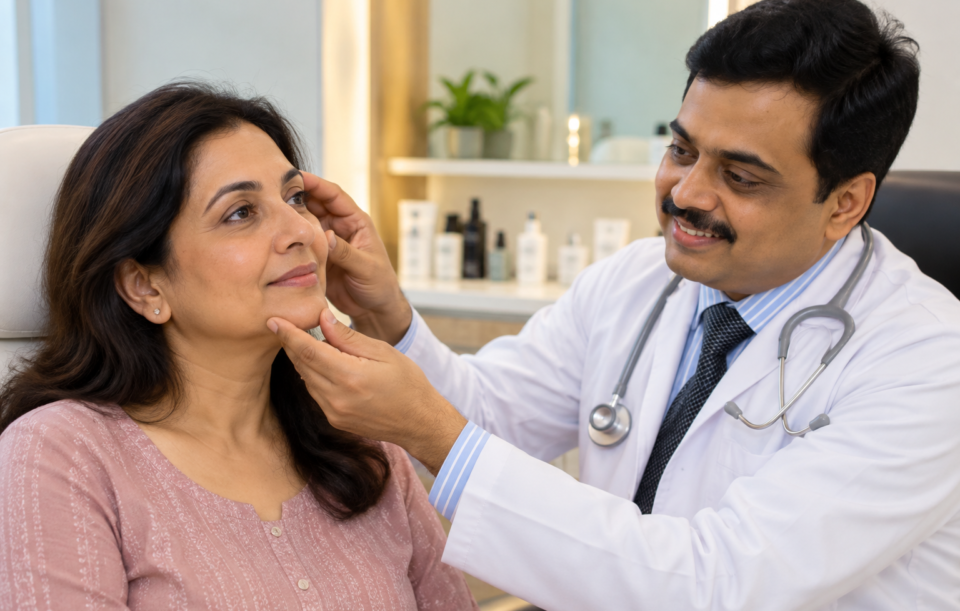
Non-surgical facial rejuvenation can help soften fine lines, improve skin texture, restore some facial volume and reduce the appearance of uneven pigmentation without an operation. Options include medical-grade skincare, chemical peels, selected laser treatments, injectables and energy-based procedures. The best choice depends on your skin, the changes you want to address, your medical history and realistic expectations.
What Causes Facial Ageing?
Facial ageing is a gradual process influenced by genetics, sun exposure, smoking, hormonal changes and the natural reduction of collagen and elastin. Over time, skin may become thinner, fine lines may deepen, pigmentation may appear, and facial volume can shift or decrease.
Different concerns need different treatments. Fine lines and rough texture may respond to skin-focused procedures, while volume loss may require a different approach. Loose skin or significant tissue descent may not improve substantially with non-surgical methods.
Which Non-Surgical Treatments Can Help With Facial Ageing?
The most suitable treatment depends on whether the main concern is skin texture, pigmentation, wrinkles, volume loss or mild skin laxity.
1. Medical-Grade Skincare
Daily sunscreen, moisturisers and selected active ingredients can help protect the skin and improve some visible signs of ageing. A dermatologist may recommend a retinoid, vitamin C or other ingredients depending on your skin type and concerns. Results develop gradually, and irritation is possible with some products.
2. Chemical Peels
Chemical peels use carefully selected solutions to exfoliate the skin. Depending on the peel, they may improve uneven tone, dullness, some fine lines and selected types of pigmentation. The strength and suitability of a peel should be assessed by a qualified professional, especially for darker skin tones or sensitive skin.
3. Laser and Light-Based Treatments
Some laser and light-based procedures target pigmentation, redness, uneven texture or selected signs of sun damage. The type of device, settings and number of sessions depend on the concern being treated. These procedures can cause burns or pigment changes if unsuitable settings or techniques are used.
4. Botulinum Toxin Injections
Botulinum toxin temporarily relaxes selected muscles responsible for certain expression lines, such as frown lines and some forehead or eye-area lines. It does not remove excess skin or restore lost facial volume. The effect is temporary, so repeat treatments may be needed.
5. Dermal Fillers
Dermal fillers can restore volume or soften selected facial folds. They do not stop the ageing process, and excessive filler can make facial features look unnatural. Fillers also carry risks, including rare but serious blood-vessel complications, so treatment should be performed by an appropriately qualified and experienced medical professional.
6. Radiofrequency and Ultrasound-Based Treatments
Selected energy-based treatments aim to improve mild skin laxity by stimulating tissue responses, including collagen remodelling. Results are variable and usually more modest than those from surgery. These procedures are not suitable for every person or every type of skin laxity.
How to Choose the Right Treatment
Before choosing a procedure, identify the main concern rather than selecting a treatment based only on popularity.
| Main concern | Options a clinician may discuss | Important consideration |
|---|---|---|
| Fine lines and early wrinkles | Skincare, selected peels, botulinum toxin | Different lines respond to different treatments |
| Uneven pigmentation | Sunscreen, selected peels or laser treatments | Pigment changes can worsen after unsuitable treatment |
| Loss of facial volume | Carefully selected dermal fillers | Overfilling can distort natural proportions |
| Rough texture or sun damage | Skincare, peels or selected laser procedures | Downtime and risks vary |
| Mild skin laxity | Selected energy-based treatments | Results are often modest and variable |
| Significant sagging or excess skin | Surgical consultation may be appropriate | Non-surgical procedures may not achieve the desired change |
Can a Non-Surgical Face Lift Replace Surgery?
A non-surgical face lift is a broad term used for treatments intended to create a fresher or firmer appearance without traditional surgery. It may refer to energy-based procedures, injectables or a combination of treatments.
These approaches can help selected people with early changes, but they cannot reliably reproduce the results of a surgical face lift when there is substantial loose skin or tissue descent. A consultation can help establish what is realistically achievable without surgery.
How Long Do Results Last?
Results vary by procedure, skin condition, lifestyle and individual response. Skincare requires consistent use, while injectables and many in-clinic procedures provide temporary or gradual benefits. Some treatments require multiple sessions or maintenance appointments.
Daily sun protection, avoiding smoking and following professional aftercare advice can help support skin health. No treatment permanently stops facial ageing.
Who Should Get a Professional Assessment First?
A consultation is especially important if you have a history of scarring, active skin disease, frequent cold sores, allergies, previous cosmetic procedures or medicines that may affect healing. Tell the clinician about your medical history and any previous fillers or implants before treatment.
Avoid choosing a procedure based only on social media photographs or guaranteed-result claims. Ask about expected benefits, downtime, side effects, alternatives and the qualifications of the person performing the treatment.
If you are exploring ways to improve visible signs of facial ageing, learn more about our anti-ageing treatment options, including treatments for fine lines, skin quality and facial volume. You can also read about facial fillers and liquid facelift treatment to understand how selected non-surgical procedures may help refresh facial contours. A personalised face analysis can help determine which options are appropriate for your skin, facial features and treatment goals.
Frequently Asked Questions
Yes. Depending on the concern, skincare, chemical peels, laser treatments, botulinum toxin, fillers or selected energy-based procedures may improve some signs of ageing. Results vary, and non-surgical treatments generally cannot correct substantial excess skin in the same way as surgery.
There is no single best treatment for everyone. Skincare and sunscreen can support skin health, while injectables or in-clinic procedures target specific concerns. A qualified clinician can recommend an approach based on your skin, facial anatomy, health history and desired result.
Some energy-based procedures may produce modest improvement in mild skin laxity, but results are variable. Significant sagging or excess skin usually responds less predictably to non-surgical treatment. An assessment helps clarify which options are likely to meet your expectations.
They can be appropriate when the treatment is selected carefully and performed by a qualified professional, but no procedure is risk-free. Possible complications include irritation, burns, pigmentation changes, infection and injection-related complications. Ask about risks, alternatives and aftercare before proceeding.
Use broad-spectrum sunscreen regularly, follow a suitable skincare routine, avoid smoking and follow the clinician’s aftercare advice. Some treatments need maintenance sessions. The timing depends on the procedure and your individual response, so follow-up should be planned with your treating professional.
Consider a surgical consultation if significant loose skin, deeper tissue descent or pronounced changes in facial contours are your main concerns. Surgery has its own risks and recovery period, so it is important to compare expected outcomes and alternatives with a qualified surgeon.
Final Takeaway
Non-surgical facial rejuvenation can improve selected signs of ageing without an operation, but the outcome depends on the concern being treated. A personalised assessment helps match the procedure to your skin, health and expectations while avoiding treatments that are unlikely to provide meaningful benefit.


Category
Latest From Blog
Can Facial Ageing Be Treated Without Surgery?
Red Veins On The Face: What Causes Them And Which Vascular Laser Fits
CO2 Laser Or MNRF For Acne Scars: Which Suits Your Scar Type And Skin Tone