




Red Veins On The Face: Causes And Treatment Options
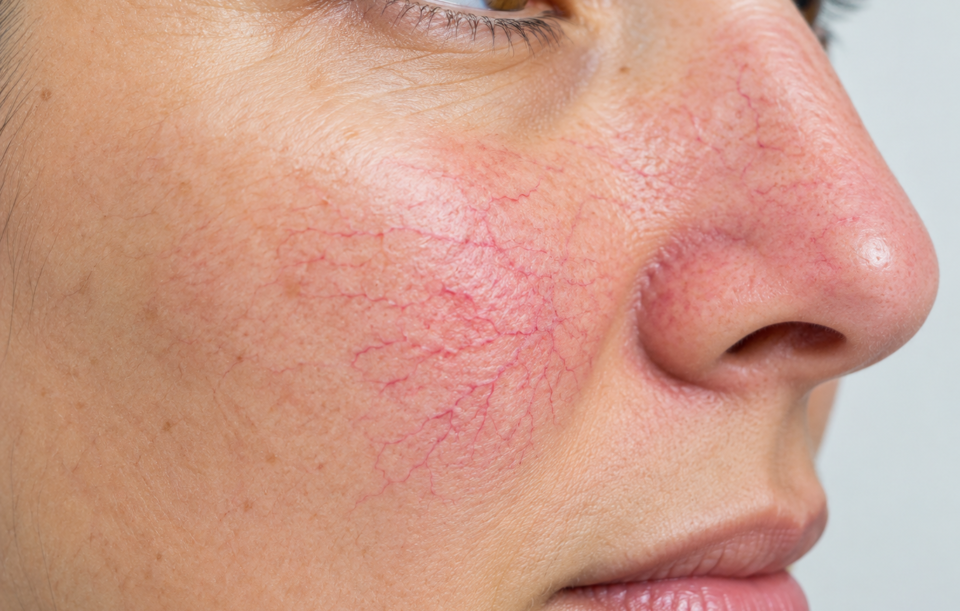
Red veins on the face, also called spider veins or telangiectasia, are small widened blood vessels near the surface, usually on the nose and cheeks. Sun damage, rosacea, heat, alcohol and genetics are common causes. A vascular laser like a 532 nm KTP or long-pulsed Nd, or IPL on lighter skin, clears them in one to three sessions.
Treatment choice depends on the size, depth and colour of the vessels, the cause of the redness and your skin tone. Some people need one session, while others need several treatments or ongoing management of an underlying condition such as rosacea. No laser can guarantee that new vessels will never appear.
Why Do Red Veins Appear on the Nose and Cheeks?
Facial telangiectasia develops when small blood vessels become widened and visible through the skin. The vessels may look like fine red lines, branching threads or small clusters around the nostrils and cheeks.
Common contributing factors include:
- Sun exposure: Ultraviolet radiation damages the skin over time and can contribute to visible vessels and uneven redness.
- Rosacea: This chronic inflammatory skin condition may cause flushing, persistent redness and visible facial blood vessels.
- Heat and steam: Hot showers, saunas and hot environments can trigger flushing in susceptible people.
- Alcohol: Alcohol can trigger facial flushing in some people, particularly those with rosacea.
- Genetics: Some people are more likely to develop visible vessels because of inherited skin and vascular characteristics.
- Ageing: Skin changes over time can make superficial blood vessels more noticeable.
- Topical steroid misuse: Repeated or prolonged use of potent steroid creams on facial skin can contribute to skin thinning, visible vessels and steroid-related rosacea-like changes.
Not every red mark is a broken capillary. Acne-related redness, dermatitis, rosacea and other skin conditions can look similar. A dermatologist should assess persistent or changing redness before treatment.
Which Lasers Treat Facial Veins and How Do They Differ?
Vascular devices target blood-related structures in the skin. The light is absorbed by haemoglobin within the vessels, producing controlled heating that helps close or reduce the appearance of selected vessels.
The right device depends on vessel depth, diameter, colour, skin tone and the clinician’s assessment.
| Treatment | Common use | Important considerations |
|---|---|---|
| 532 nm KTP laser | Selected fine, superficial red vessels | Often suited to small red vessels near the surface; requires careful settings to reduce pigment and burn risks |
| Pulsed dye laser (PDL) | Superficial red vessels and some forms of persistent redness | Often used for facial vascular concerns, including selected rosacea-related redness; temporary bruising or redness may occur |
| Long-pulsed 1064 nm Nd | Selected deeper or larger vessels, including some bluish vessels | Penetrates deeper, but requires careful technique because excessive heating can damage surrounding tissue |
| Intense pulsed light (IPL) | Diffuse redness and selected superficial vascular changes | Uses a range of wavelengths rather than one laser wavelength; suitability depends on skin tone, device filters and settings |
These treatments are not interchangeable. A device that works well for a tiny red vessel may be less suitable for a deeper bluish vessel or widespread flushing. Your clinician should explain why a particular device is recommended for your skin and vessel pattern.
Which Device Is Appropriate for Brown Skin?
Brown skin can be treated for selected vascular concerns, but device selection and settings require particular care. Melanin in the skin also absorbs light energy, which can increase the risk of burns and post-inflammatory hyperpigmentation if treatment is poorly matched to the patient.
The 1064 nm Nd wavelength generally has lower melanin absorption than shorter visible wavelengths and may be considered for selected deeper vessels. However, it is not automatically the safest or best choice for every person with darker skin. Vessel depth, size, device characteristics and operator experience remain important.
A dermatologist may consider a test spot, conservative settings and a cautious treatment plan, particularly if you have a history of pigmentation after inflammation or procedures. IPL may be suitable for selected patients, but broad-spectrum light is not automatically appropriate for every darker skin tone.
Avoid choosing a treatment based only on a device name or a promise of permanent results. The clinician should assess your skin tone, the vessels and the risk of pigmentation before proceeding.
How Many Sessions Are Needed?
The number of sessions varies with the type and number of vessels, the device used and your skin’s response.
Some fine superficial vessels may improve after one treatment. Others may need two or three sessions, while diffuse redness or rosacea-related changes can require a longer treatment plan. The interval between sessions depends on the device, treatment intensity and recovery.
During consultation, ask:
- How many sessions are likely for my specific vessels?
- What improvement is realistic after the first session?
- How long should I wait between treatments?
- What temporary redness, swelling or bruising may occur?
- Could I develop pigmentation or a small scar?
- Will I need ongoing treatment for rosacea or another underlying condition?
The phrase “one to three sessions” is a general estimate, not a guarantee. Your treatment plan should be based on examination and response.
Why Do New Facial Veins Keep Appearing?
Laser treatment can reduce the visible vessels that are targeted, but it does not remove every underlying trigger. New vessels may develop because of continued sun exposure, rosacea, inherited tendency, ageing or repeated flushing.
To reduce the chance of recurrence:
- Use broad-spectrum sunscreen with SPF 30 or higher and reapply as directed.
- Wear a hat and seek shade when outdoors for extended periods.
- Identify whether heat, steam, alcohol, spicy foods or hot drinks trigger flushing.
- Follow a dermatologist-recommended plan if you have rosacea.
- Avoid using potent steroid creams on your face unless specifically prescribed with clear instructions.
- Use gentle skincare and avoid products that repeatedly cause burning or irritation.
You do not necessarily need to avoid every possible trigger. Focus on the factors that affect your own skin and follow a sustainable prevention routine.
Trigger and Prevention Checklist
Use this checklist to identify possible triggers before your consultation and during recovery.
| Trigger | What to consider changing | After laser treatment |
|---|---|---|
| Sun exposure | Use broad-spectrum sunscreen and protective clothing | Protect treated skin carefully and follow the clinician’s sun-care instructions |
| Heat and steam | Reduce hot showers, saunas or other activities that reliably trigger flushing | Avoid excessive heat for the period advised by your clinician |
| Spicy food and hot drinks | Track whether these trigger facial flushing; reduce them if they affect you | Follow any short-term restrictions given for your skin |
| Alcohol | Notice whether alcohol causes flushing or worsens redness | Avoid it if advised during early recovery or if it is a clear trigger |
| Steroid creams | Review facial steroid use with a qualified clinician; do not self-treat persistent redness | Do not restart or change prescribed treatment without professional advice |
| Rosacea control | Seek diagnosis and a suitable long-term skincare or medical plan | Continue the agreed rosacea plan as directed |
After treatment, follow the clinic’s specific instructions for cleansing, moisturising, sun protection and restarting active skincare products. Do not apply strong exfoliants, retinoids or irritating products to freshly treated skin until your clinician says it is appropriate.
What Happens During and After Vascular Laser Treatment?
Before treatment, the clinician should review your medical history, skin tone, recent tanning, medications, previous reactions to laser procedures and the nature of your redness. Protective eyewear is essential for laser and IPL procedures.
During treatment, you may feel brief snapping, warmth or stinging sensations. Cooling may be used to improve comfort and protect the skin. The exact experience depends on the device and settings.
After treatment, temporary redness, swelling, tenderness or bruising can occur. Some vessels may darken temporarily before fading. Less common but important complications include blistering, burns, prolonged pigment changes, scarring and eye injury if appropriate precautions are not followed.
Contact your treating clinician if you develop severe or worsening pain, blisters, increasing swelling or signs of infection. Seek urgent care for a significant eye symptom following a facial procedure.
When Should You Avoid or Postpone Treatment?
Vascular laser or IPL may need to be postponed or modified if you have:
- A skin infection or open wound in the treatment area.
- Recent tanning or a significant sunburn.
- An active skin flare that needs assessment first.
- A history of unusual scarring or significant pigment changes after procedures.
- Medicines or medical conditions that may affect healing or photosensitivity.
- Unexplained, rapidly changing or bleeding lesions that have not been diagnosed.
Suitability depends on the device, your health and the skin condition being treated. Tell the clinician about all medications and skincare products you use. Do not stop prescribed medication without medical advice.
Vascular Laser in Adajan: What Should You Ask Before Treatment?
If you are considering vascular laser in adajan, arrange a skin assessment before selecting a device. Ask the clinician to identify whether the visible marks are telangiectasia, rosacea-related redness or another skin condition.
Discuss which wavelength or IPL device is appropriate, the likely number of sessions, the risk of burns and pigmentation, and how the treatment will be adjusted for your skin tone. You should also receive clear aftercare instructions and understand that laser treatment may improve existing vessels without preventing every new one.
Learn more about laser treatment for vascular lesions. For diffuse redness, a clinician may also discuss whether photo facial treatment using IPL is suitable. The choice should follow a diagnosis and individual skin assessment, not a one-device-fits-all approach.
If you are unsure whether the redness is caused by visible vessels or an underlying skin condition, you can book a skin consultation to discuss assessment and treatment options.
Frequently Asked Questions
Creams generally cannot permanently remove established facial telangiectasia. Skincare and prescription treatments may help manage an underlying condition such as rosacea, reduce irritation or improve the skin barrier, but visible vessels often require a suitable vascular laser or another clinician-selected procedure.
Temporary redness, swelling, tenderness or bruising can occur after vascular laser treatment. Burns, pigment changes and scarring are less common but possible, especially if the device or settings are unsuitable. A trained clinician should assess your skin, explain the risks and provide aftercare instructions.
Selected vascular laser treatments can be considered for brown skin, but settings and wavelength require careful individual assessment. Melanin-related pigment changes and burns are important risks. A qualified clinician may recommend conservative settings or a test spot and should explain why the selected device suits your skin.
Treated vessels may fade or disappear, but new vessels can develop later. Sun exposure, rosacea, inherited tendency, ageing and repeated flushing may contribute to recurrence. Sun protection and management of underlying skin conditions can help reduce triggers, although they cannot guarantee that new vessels will never appear.
Alcohol can trigger facial flushing in some people, particularly those with rosacea. It may contribute to repeated episodes of redness, but it is not the only cause of visible facial vessels. Track your own triggers and discuss persistent redness with a dermatologist rather than assuming alcohol is the sole explanation.
Selected vascular lasers and IPL devices can reduce persistent redness and visible vessels in some people with rosacea. They do not cure rosacea, and ongoing medical or skincare management may still be needed. A dermatologist should assess your skin type, symptoms and treatment goals before recommending a device.
Conclusion
Red veins on the nose and cheeks are commonly caused by superficial widened blood vessels, sun damage, rosacea and other contributing factors. KTP, pulsed dye laser, Nd and IPL each have different uses, and the safest option depends on vessel depth, skin tone and clinical assessment. A tailored treatment plan, sensible trigger management and sun protection can improve results while reducing avoidable risks.


Category
Latest From Blog
Can Facial Ageing Be Treated Without Surgery?
Red Veins On The Face: What Causes Them And Which Vascular Laser Fits
CO2 Laser Or MNRF For Acne Scars: Which Suits Your Scar Type And Skin Tone