




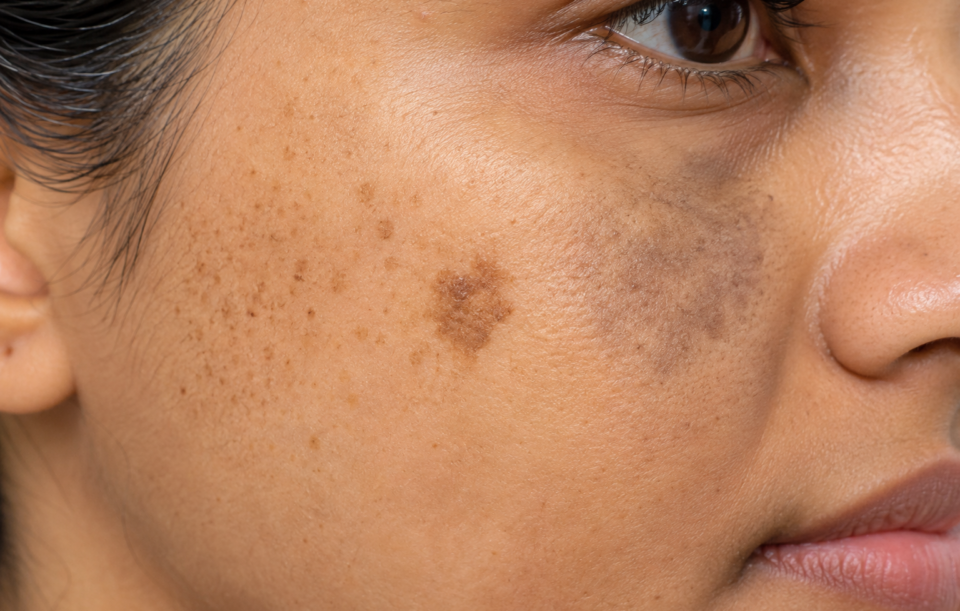
Freckles, Sun Spots and Hori’s Nevus: Why Spot Identification Matters
Freckles and sun spots usually involve pigment in the upper skin and may improve after one to three suitable laser sessions. Hori’s nevus contains deeper dermal pigment and commonly needs multiple Q-switched or picosecond laser sessions. Melasma may look similar but usually needs sun protection and topical treatment first because laser treatment can aggravate it.
The correct treatment depends on the diagnosis, pigment depth, skin tone and risk of post-inflammatory pigmentation. A dermatologist should identify the type of spot before choosing a device or estimating the number of sessions.
How Can You Tell Freckles, Sun Spots, Hori’s Nevus and Melasma Apart?
Freckles
Freckles are generally small, flat, light-brown or dark-brown spots on sun-exposed skin, particularly the cheeks and nose. They often become darker after sun exposure and fade during periods of lower exposure. They may run in families.
Selected pigment-targeting lasers can lighten freckles, but treatment does not remove the tendency to develop new ones. Sun protection remains essential after treatment.
Sun Spots or Age Spots
Sun spots, also called solar lentigines, are flat, well-defined brown marks associated with cumulative ultraviolet exposure. They may appear on the face, hands and other exposed areas.
Unlike ordinary freckles, sun spots tend to persist throughout the year. Some respond to pigment-targeting lasers, intense pulsed light or other dermatologist-selected treatments. However, a changing or atypical spot must be assessed before cosmetic treatment because some skin conditions can resemble a harmless sun spot.
Hori’s Nevus
Hori’s nevus, also called acquired bilateral nevus of Ota-like macules (ABNOM), often appears as scattered grey-brown or blue-brown spots on both cheeks. Its pigment lies deeper in the dermis, which makes treatment different from that for superficial freckles.
A suitable Q-switched or picosecond laser may be considered. Several treatments are often required, with intervals commonly around six to eight weeks or longer, depending on the device, skin response and dermatologist’s plan.
Melasma
Melasma typically produces broader, irregular brown or grey-brown patches across the cheeks, forehead or upper lip. Sun exposure, visible light, hormonal influences and individual susceptibility can contribute.
Melasma may involve superficial, deep or mixed pigment. It is a relapsing condition, and aggressive laser treatment can worsen discoloration. Topical treatment and consistent sun protection are generally considered before laser, with procedures reserved for carefully selected cases when appropriate.
Which Laser Suits Each Type of Spot?
There is no single best laser for all brown spots. The choice depends on the diagnosis, pigment depth, skin tone, tanning history and risk of post-inflammatory hyperpigmentation.
- Freckles: Selected pigment-targeting lasers may lighten existing spots.
- Sun spots: A suitable pigment laser or another dermatologist-selected procedure may be considered after the lesion is confirmed as benign.
- Hori’s nevus: Q-switched or picosecond pigment lasers may be considered for deeper dermal pigment.
- Melasma: Topical therapy and sun protection usually come first. Laser is not recommended as a routine first-line treatment.
The device name alone does not guarantee a good result. Correct diagnosis, appropriate settings and careful aftercare matter, particularly for darker skin tones that can develop additional pigmentation after inflammation.
How Many Sessions Does Each Type Need?
Session numbers are estimates rather than guarantees. They depend on pigment depth, lesion size, skin type, the device used and the individual’s response.
Freckles and selected sun spots may improve in one to three sessions. Hori’s nevus often needs several sessions, sometimes more than five, with treatment commonly spaced six to eight weeks or longer apart. The interval may be extended according to healing and response.
Melasma has no standard laser-session target because laser is not first-line treatment and may aggravate the condition. A dermatologist should explain the expected benefit, downtime, possible side effects and recurrence risk before treatment starts.
Spot Identification Table: Depth, Treatment and Recurrence
| Spot type | Typical depth | Typical look and location | First-line approach | Possible laser choice | Usual session range | Recurrence risk |
|---|---|---|---|---|---|---|
| Freckles | Mainly epidermal | Small brown spots, often on cheeks and nose | Sun protection; topical options where suitable | Selected pigment-targeting laser | Often 1-3 | New freckles can develop |
| Sun spots / solar lentigines | Mainly epidermal | Flat, well-defined marks on sun-exposed skin | Confirm diagnosis and protect from sun | Suitable pigment-targeting laser | Often 1-3 | Possible with continued UV exposure |
| Hori’s nevus / ABNOM | Dermal | Grey-brown or blue-brown macules, often on both cheeks | Specialist assessment | Q-switched or picosecond laser in suitable cases | Multiple sessions | Residual or recurrent pigment possible |
| Melasma | Epidermal, dermal or mixed | Broad, irregular facial patches | Sun protection and topical treatment | Not usually first-line; selected cases only | No standard laser target | High tendency to recur |
These are general estimates, not promised outcomes. Some lesions need another treatment, and not every brown spot should be lasered.
Which Spots Need Creams Before Any Laser?
Melasma commonly needs a carefully planned medical treatment before a procedure is considered. Depending on the diagnosis and the person’s medical history, a dermatologist may recommend topical ingredients such as hydroquinone, azelaic acid, a retinoid or other prescription treatments.
These products are not interchangeable. Some are unsuitable during pregnancy or for certain skin conditions, and they should not be combined without professional guidance.
Daily broad-spectrum sunscreen, shade and protective clothing are important. For melasma-prone skin, a dermatologist may recommend tinted sunscreen containing iron oxides because visible light can also contribute to pigmentation in darker skin tones.
Do not apply bleaching creams or arrange laser treatment for a spot that is changing, bleeding, irregular or otherwise suspicious until it has been medically assessed.
What Is the Best Laser for Freckles on Indian Skin?
Indian skin tones can be more susceptible to post-inflammatory hyperpigmentation after irritation or an overly aggressive procedure. A suitable treatment therefore depends on skin type, the diagnosis, previous reactions and the specific device.
A dermatologist may perform a test spot when appropriate, particularly for patients at increased risk of discoloration. Ask about the laser type, expected improvement, number of sessions, recovery period and risk of temporary or persistent dark or light marks.
Avoid choosing a treatment based only on social-media photographs or a promise that every spot will disappear in one session.
How Do You Stop Spots Returning After Treatment?
Laser treatment can lighten existing pigment but does not eliminate the tendency to develop new spots. Prevention and aftercare are important for maintaining results.
- Use broad-spectrum SPF 30 or higher daily, following the treating clinician’s advice.
- Reapply sunscreen as directed, especially during extended outdoor activity.
- Use shade, hats and protective clothing.
- Avoid picking, scrubbing or irritating treated skin.
- Follow the prescribed aftercare routine and attend follow-up appointments.
- Seek review if pigmentation becomes darker, spreads or develops an unusual appearance.
Melasma needs particular attention because it can return even after initial improvement. Maintenance treatment and consistent sun protection may be necessary.
When Should a Brown Spot Be Examined Before Laser?
Arrange a clinical examination before cosmetic treatment if a spot is new and unusual, changes in size or colour, develops an irregular border, bleeds, crusts or itches persistently. A lesion that looks different from the others also deserves assessment.
A dermatologist may examine it using a dermatoscope. If the diagnosis remains uncertain or the lesion appears suspicious, further investigation or biopsy may be necessary.
Laser treatment should not be used to disguise a potentially serious lesion. Confirming the diagnosis first protects both the patient’s health and the accuracy of the treatment plan.
What Should You Ask Before Choosing a Pigmentation Laser Near Parle Point?
A useful consultation should establish the diagnosis before recommending a device. Ask the dermatologist:
- Is the spot a freckle, solar lentigo, Hori’s nevus, melasma or another condition?
- Is the pigment superficial, dermal or mixed?
- Should topical treatment come before a procedure?
- Which laser, if any, suits my skin tone and pigment depth?
- How many sessions may be needed, and how far apart?
- What is the risk of burns, scarring or post-inflammatory pigmentation?
- What aftercare and sun protection will I need?
A clear explanation of the expected results and limitations is more useful than a fixed package promising complete removal.
Frequently Asked Questions
No. Freckles are often small spots that become more visible with sun exposure and may fade when exposure decreases. Sun spots, or solar lentigines, are associated with cumulative ultraviolet exposure and tend to persist. Both may respond to selected treatments, but a dermatologist should confirm the diagnosis before laser.
Yes. Laser treatment may lighten existing freckles, but it does not remove the skin’s tendency to form new ones. Continued ultraviolet exposure can cause new freckles or make existing pigmentation more noticeable. Consistent sun protection is important for maintaining improvement.
No. Hori’s nevus generally involves deeper dermal pigment and may appear as blue-grey or brown spots on both cheeks. Melasma usually produces broader, irregular patches and can involve several skin depths. Their treatments differ, so accurate diagnosis is essential before selecting a procedure.
Treatment timing depends on tanning, sun exposure, skin type and the device. Recent tanning or unavoidable intense sun exposure may increase the risk of complications. A dermatologist may recommend postponing treatment until the skin is less tanned and consistent sun protection is practical.
Follow your treating clinician’s instructions and use broad-spectrum sunscreen, generally SPF 30 or higher, once the skin is ready for it. Reapplication and physical sun protection are important. For melasma-prone skin, tinted sunscreen containing iron oxides may help protect against visible light. Avoid applying products to raw or irritated skin without guidance.
Medical Evidence
Dermatology references distinguish freckles from solar lentigines by their clinical behaviour and persistence. Solar lentigines are associated with cumulative ultraviolet exposure and may be treated with selected pigment lasers, although discoloration can recur and treatment can sometimes cause light or dark marks. Read more in DermNet’s guide to brown spots and freckles and its solar lentigo overview.
The Indian Pigmentary Expert Group’s consensus review states that laser is not first-line treatment for melasma. Selected procedures may be considered for resistant cases after careful patient selection and counselling, because outcomes can be unpredictable and pigmentation may recur. See the consensus review on lasers in melasma.
Laser treatment in darker skin requires particular care because inflammation may lead to post-inflammatory pigmentation. Review DermNet’s guidance on laser therapy in skin of colour.


Category
Latest From Blog
Can Facial Ageing Be Treated Without Surgery?
Red Veins On The Face: What Causes Them And Which Vascular Laser Fits
CO2 Laser Or MNRF For Acne Scars: Which Suits Your Scar Type And Skin Tone